
Judicial races are supposed to be boring. That’s the deal.
The candidates talk about fairness, impartiality, judicial temperament, and the rule of law. Bar associations issue ratings. Lawyers quietly pick sides. Most voters skip the race entirely or vote based on whose last name sounds familiar.
But somebody apparently forgot to tell that to the people targeting Miami-Dade Circuit Court Judge Mavel Ruiz, who just happened to draw the  short straw in the lawsuit filed last year against the Miami Dade College giveaway of Biscayne Boulevard property for the Donald Trump Library, which was done without proper notice. And she agreed, granting an injunction, which she later lifted after the board of trustees had a second meeting, properly noticed.
She followed the law. What a concept!
Still, this obviously drew the ire of the diehard MAGAists who found someone to run against her. Or maybe just seized the opportunity.
Read related: Donald Trump Library back on track after judge lifts MDC injunction
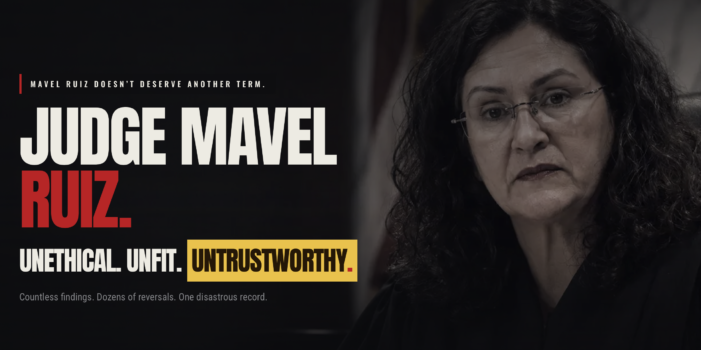
On Thursday, voters began receiving text messages from a political committee directing them to a website with a simple message about the incumbent Miami-Dade circuit judge: “Unethical. Unfit. Untrustworthy.”
Unsubtle.
The site then lays out a timeline of allegations and alleged judicial missteps — super cherry-picked technical stuff — designed to convince voters that Ruiz should not be returned to the bench.
Whether voters ultimately buy those arguments is one thing. The more interesting question is who is paying to make sure they see them?
Because this isn’t your typical judicial campaign website. This is opposition research packaged for public consumption. Complete with the unflattering photos. And the domain name mavelruiz.com was secured in May. Bet you Her Honor is kicking herself in the, er, robe for not getting it first.
And it arrives as the race between Judge Ruiz and challenger Destiny Alvarez — aka Destiny Goede and then Destiny Goede Alvarez — has 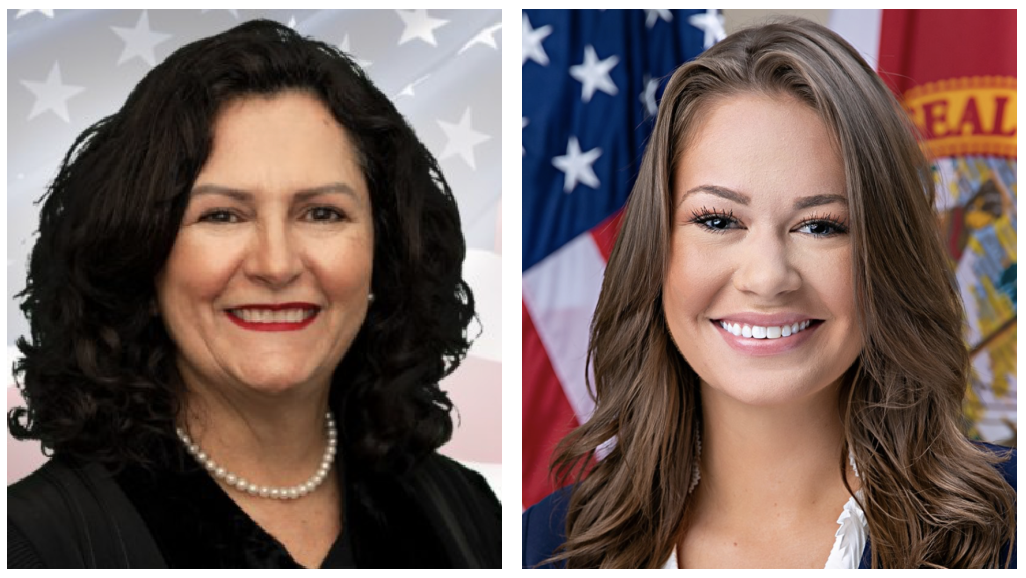 evolved from a relatively obscure judicial contest into one of the most explosive and politically charged judicial races in Miami-Dade this year.
Follow the money trail and things get even more interesting.
The brand new political action committee behind the text blast wasn’t exactly overflowing with grassroots bake-sale money. Instead, the $24,000 funding appears to flow through the familiar labyrinth of other political committees, where one PAC funds another PAC, which funds another PAC, which receives money from still more PACs.
It’s basically Russian nesting dolls for campaign finance.
Only with lawyers.
And developers.
And lobbyists.
Read related: Trump library and the ‘name game’ will feature in Miami-Dade judicial race
Among the contributors sitting somewhere along the funding chain are interests tied to real estate development, construction, major entertainment venues, and some of South Florida’s most influential business players, including entities connected to billionaire developer Jorge Pérez, according to campaign finance records reviewed by Ladra.
Which raises a fascinating question. When a judicial race starts attracting the attention of major development interests (read: investment), is it  really still just a judicial race? Or has it become something else?
Goede Alvarez has political consultant Alex Miranda working on her campaign. She has people like former State Rep. and Ambassador Carlos Trujillo and current House Speaker Daniel “Danny” Perez supporting her. While the campaign finance report for Ruiz (who has raised $164,824) lists mostly attorneys and law firms as contributors, Goede Alvarez’s report (with $162,500 as of June 12) looks more like a regular non-judicial campaign, with lobbyists, real estate investors and at least 17 political action committees donating to her.
Ruiz, of course, is no stranger to controversy.
She found herself in the political crosshairs after presiding over litigation involving the proposed Donald Trump presidential library project and the controversial transfer of Miami Dade College property connected to that effort. That case transformed what would normally have been a low-profile judge into a recognizable political target.
Now voters are being bombarded with attack messages accusing her of misconduct and poor judgment.
The website’s allegations are serious.
But so is the money being deployed to spread them.
And that’s what makes this race different.
Because judicial campaigns traditionally revolve around qualifications. This one is beginning to resemble a county commission race.
Or a mayoral race.
Or one of those development fights where millions of dollars are riding on who ultimately sits in the decision-making chair.
Read related: After the April Fool’s fake-out, six real Miami-Dade judicial races remain
Ladra isn’t suggesting every contributor has the same motivation.
Some may genuinely believe Ruiz shouldn’t be reelected. Some may simply support her opponent. Some may just enjoy writing checks to political committees the way other people do Pilates.
But when a judicial race starts generating attack websites, text-message campaigns, PAC networks, and funding trails that run through some of Miami’s most powerful development interests, voters are entitled to ask a simple question: Why is this race suddenly so important?
Because somebody appears willing to spend a lot of money making sure Judge Mavel Ruiz loses.
And in Miami politics, when that much money starts moving, there’s usually a bigger story underneath.
Nobody else is covering the judicial races like Political Cortadito. This kind of independent, government watchdog reporting is crucial to transparency and democracy. And more so every day. If you want to read more about the judicial and other campaigns in 2026, please help with a contribution to Political Cortadito. Click here.Independent reporting is more important than ever. Ladra thanks everyone for their support.

Somebody really wants Miami-Dade Judge Mavel Ruiz off the bench added by Ladra on
View all posts by Ladra →
