

The biggest story in the scant few Miami-Dade judicial races this year isn’t who is running. It’s who isn’t running after all.
Former state rep and school board member Renier Diaz de la Portilla, who has run for judge twice unsuccessfully, made good on his April Fool’s joke filing, and failed to follow through. Qualifying came and went last week — and poof. No fee paid. No  paperwork. No race.
Which means Miami-Dade Judge Gordon Charles Murray Sr. gets another term without breaking a sweat. And somewhere in Miami’s legal circles, a collective sigh of relief could probably be heard from the courthouse steps to Miami Gardens. Because it spares the legal community from what could have been a very messy — and very political — challenge against a jurist with deep community ties and strong standing in Miami’s Black community.
That could have been a fight with consequences far beyond one courtroom.
Read related: In the 2026 Miami-Dade judicial races, look like there’ll be no ballot contest
But don’t get too comfortable. Because while 27 circuit judges and nine county judges coasted into automatic re-election, six judicial races remain contested, and Ladra suspects at least a couple of them could get spicy before August.
Let’s break them down. We’ll start with the circuit bench — the big leagues — where retirements opened the door and ambitious lawyers came running.
In Group 5, there is a three-way scramble to replace retiring Judge Angelica Zayas. They are:
- Alexander Annunziato is a former Florida State Trooper and former adjunct professor at the Miami-Dade School of Justice with experience in civil litigation. In 2016, he was the legislative director for former Miami-Dade Commissioner Esteban Bovo. In 2019, he was temporarily suspended from the Florida Bar after his arrest a year earlier for buying $20 worth of heroin from an undercover officer near his office when he was an assistant public defender.
 Arthur Lamar “Marty” McNeil has 19 years experience practicing in Florida, including several years in the Miami-Dade Public Defender’s office, where he has served as senior supervising attorney. Last year, he defended a Hungarian man charged with two murders staged to look like accidents in Miami and Miami Beach after overstaying his visa waiver.
- Monica Segura practices in the areas of construction law, real estate law, premises liability, products liability, insurance coverage, casualty and toxic tort defense. She has worked for the past four years as senior managing associate general counsel at Universal Property and Casualty Insurance. She is also wife of Coral Gables Commissioner Ariel Fernandez.
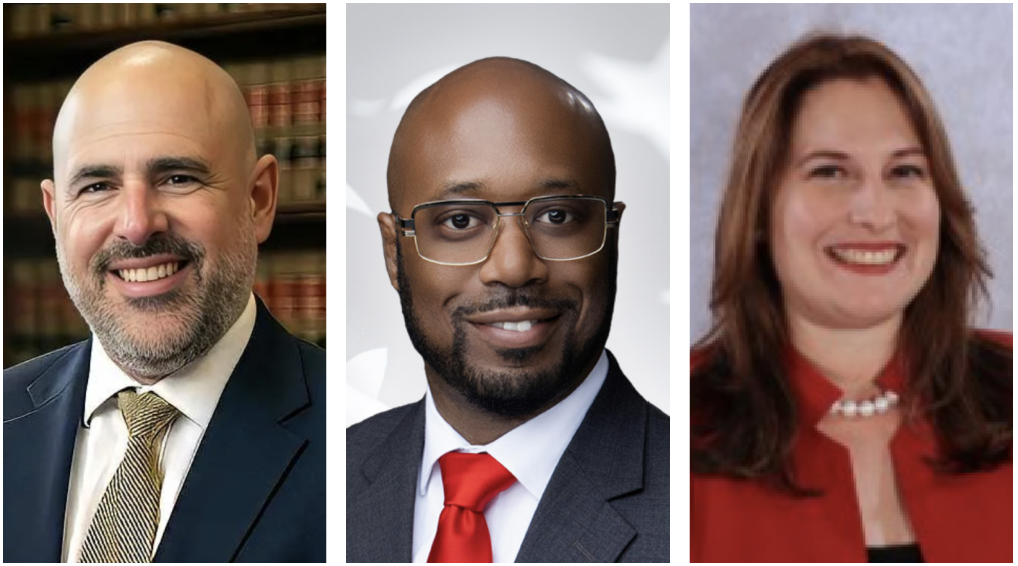
Three candidates. Three very different backgrounds. No incumbent. Translation: It’s anybody’s game.
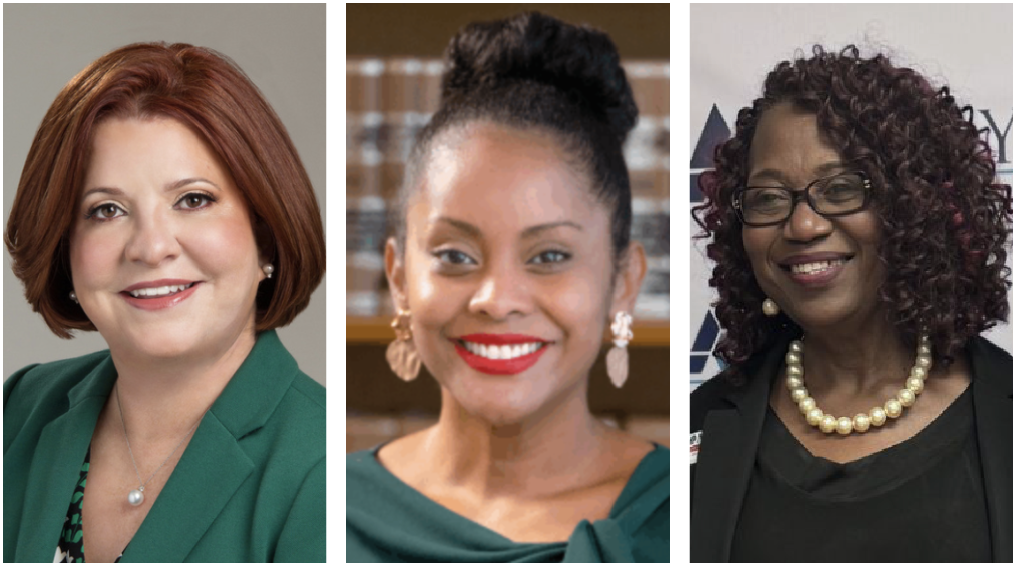
In Group 35, where Judge Orlando Prescott is stepping aside, we have a head-to-head race between a longtime public defender and a sole practitioner family lawyer:
- Renee Gordon worked at the Miami-Dade Public Defender’s office for seven years before she founded her own firm
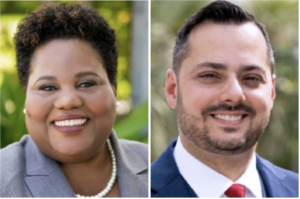 specializing in child advocacy and juvenile justice. She had that for 12 years and then returned to the public defender’s office in 2015.
 - Cristobal Padron ran for judge in 2024 and lost to Judge Heloiza Correa. He has only worked at his own Coral Gables law firm specializing in family law since 2012.
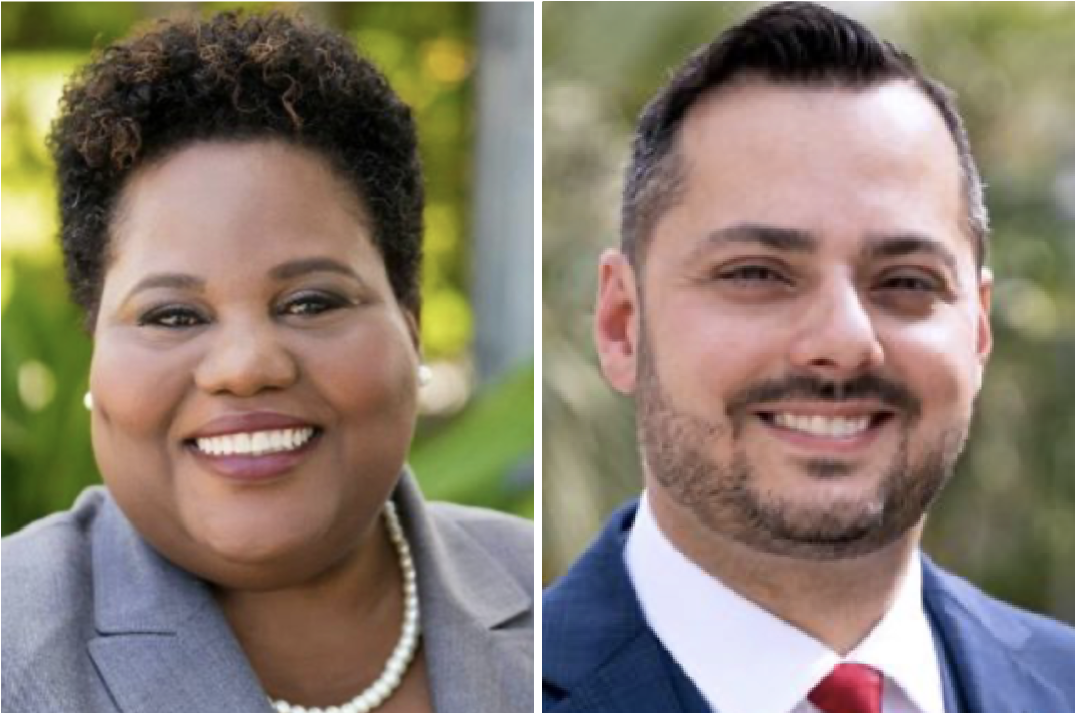
Expect this one to quietly build momentum. These head-to-head races can get very strategic, especially when endorsements start stacking up.
Read related: Trump library and the ‘name game’ will feature in Miami-Dade judicial race
In Group 67, there’s already drama — though not the legal kind.
In one corner, we have incumbent Judge Mavel Ruiz, who had the bad luck to draw the short straw on the lawsuit against the 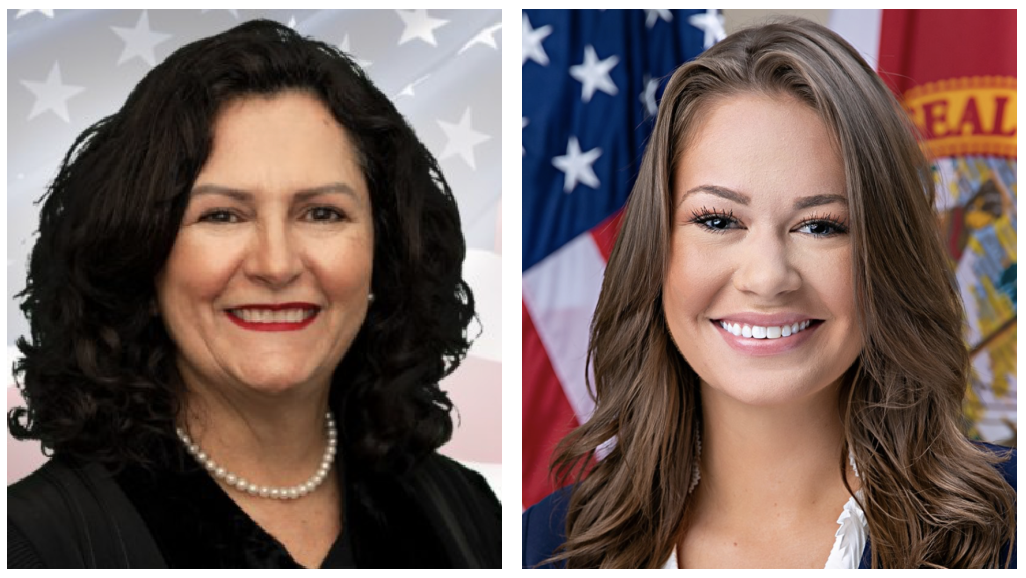 Miami Dade College Board of Trustees after they gave away the Biscayne Boulevard property Donald Trump for a library/hotel. Because Ruiz had the audacity to rule with the law — providing a temporary injunction that blocked the land deal and forced Miami Dade College to redo its vote with proper public notice after allegations the original decision violated Florida’s Sunshine Law — she has also drawn an opponent.
And if the name Destiny Goede Alvarez sounds familiar, it’s probably because her multiple name changes leading into qualifying already raised eyebrows across courthouse hallways. She was Destiny Goede months ago. She’ll be Destiny Alvarez on the ballot.
And here Ladra thought judicial races are about qualifications — not clever ballot branding.
There’s another kind of name game going on in the Group 69 race: A Baez vs. Baez showdown.
Yes, really. Of the three candidates running to replace Judge Richard Hersch two of them share a last name. The three are:
- Rita Maria Baez first ran against incumbent Judge Christopher Green in 2024 and lost. She has been a practicing
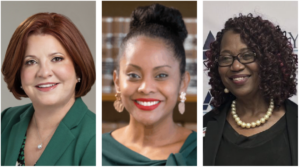 attorney since 1996 and has her own law firm in Coral Gables since 2005.
 - Yaneth Del Carmen Baez has worked in the Miami-Dade State Attorney’s Office human trafficking division for nine years. She has a kickoff campaign fundraiser at Miami River Landing this Thursday starting at 6 p.m.
- Bonita Jones-Peabody, who may have an advantage simply by not being another Baez, is managing partner at Summit Law Group specializing in elder care. She’s hoping to do better than she did in 2024, when she lost to Judge Jason Bloch with 38% of the vote.
Ladra doesn’t love coincidences — especially when name confusion has a long, messy history in Miami judicial elections. Expect lawyers to whisper about this one for months.
In Group 76, incumbent Judge Spencer Eig, who was appointed by former Gov. Jeb Bush in 2005 and won re-electiion every time since, faces Yenly Dominguez, who has had seven years of practice experience.
Eig, who in August of 2020 sided with Gov. Ron DeSantis to reopen schools after the COVID pandemic, is currently presiding 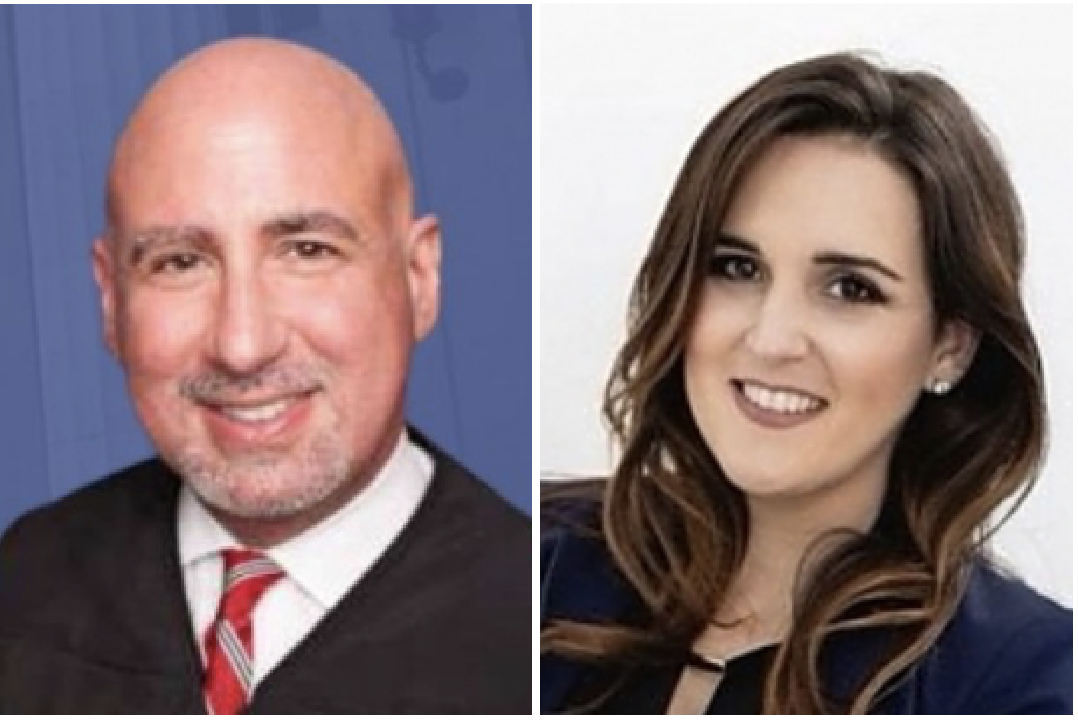 over the long-running “Old Smokey” class-action lawsuit against the city of Miami. He also ruled in favor of Doral and against the Martini Bar in 2024 when the establishment sued over last call.
Dominguez was admitted to the Florida Bar in 2019 — 20 years after Eig — and opened her own firm, which stayed active for three years and then was reinstated with the Florida Division of Corporations this past February.
Seven-ish years of practice versus an incumbent judge. Not impossible — but historically, incumbents have the edge unless something unexpected happens.
Read related: April Fool’s joke? Nope. Renier Diaz de la Portilla runs for judge — again
That brings us to the county court, where there is only one contested race against incumbent Luis Perez-Medina, who spent 13 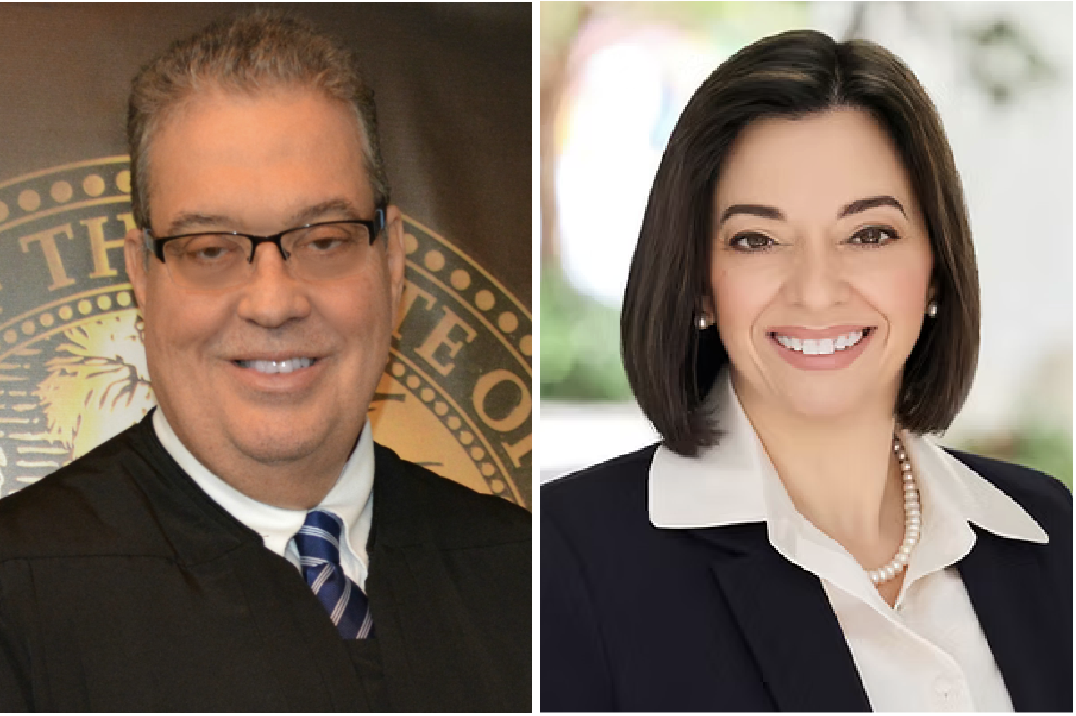 years as a prosecutor before he was appointed to the bench by Gov. Rick Scott in 2018. He won re-election in He’s been challenged by Maribel Diaz, a real estate attorney at the Miami-Dade Tax Collector’s Office who said she knew she wanted to be a judge since she was 6 years old.
All in all, this qualifying season delivered a quite but very real and undeniable message: Incumbents are still king.
Twenty-seven circuit judges and nine county judges were re-elected without opposition. That’s not stability — that’s a system where challengers think twice before jumping in.
Judicial races usually fly under the radar, but they are never as sleepy as they pretend to be. They are low-visibility, low information but tremendously high-stakes for our community.
These are the people who control docket speed. In civil court, they rule on summary judgments that can end an insurance case before a jury ever hears it, or watch carriers and policyholder attorneys fight over leverage while homeowners wait. In family court, they see conflict escalate as fees climb and savings evaporate and then they decide custody schedules that shape children’s lives for years. In criminal court, they preside over plea negotiations that resolve the overwhelming majority of criminal cases.
And yet, the races are typically decided by endorsements, name recognition and ballot position. First listed is pole position.
Now the real campaign season begins. Mailers will start showing up. Bar associations will weigh in. Slate cards will circulate quietly in churches, community centers, and political meetings.
And voters — many of whom don’t know these candidates — will be asked to decide in August who gets to wear the robe.
Nobody else is covering the judicial races like Political Cortadito. This kind of independent,
government watchdog reporting is crucial to transparency and democracy. And more so every day. If you want to read more about the judicial and other campaigns in 2026, please help with a contribution to Political Cortadito. Click here. Independent reporting is more important than ever. Ladra thanks everyone for their support.


After the April Fool’s fake-out, six real Miami-Dade judicial races remain added by Ladra on
View all posts by Ladra →
