

If you think judicial races are sleepy affairs decided by bar polls and last names nobody recognizes, think again.
Because the race that has suddenly appeared against Miami-Dade Circuit Court Judge Mavel Ruiz is starting to look less like routine ballot housekeeping and more like political payback wrapped in judicial robes.
And yes — the shadow hanging over this contest has a very familiar name: Donald Trump., the star in the case that put Ruiz in the crosshairs in an election where dozens of incumbent judges are still unopposed a couple weeks before qualifying ends.
Judge Ruiz didn’t become a lightning rod by accident. She became one after presiding over the legal fight surrounding the  proposed Trump presidential library and hotel — the one tied to that highly controversial land giveaway from Miami Dade College, a property worth hundreds of millions on Biscayne Boulevard near the historic Freedom Tower. A property that was supposed to be used for the college’s growth.
Remember the drama? Prime public land. Minimal public notice. A deal critics called a giveaway.
When historian and university professor Marvin Dunn challenged the land transfer, Ruiz did something that made headlines — and likely made enemies. She hit pause.
Her temporary injunction blocked the land deal and forced Miami Dade College to redo its vote with proper public notice after allegations the original decision violated Florida’s Sunshine Law.
That ruling stopped momentum cold. It forced transparency. It triggered hours of public testimony. It embarrassed powerful people who preferred the deal move quietly and quickly.
Eventually, after the college repeated the vote with proper notice, Ruiz dismissed the lawsuit — ruling the legal defect had been fixed.
Read related: Donald Trump Library back on track after judge lifts MDC injunction
But by then, the damage — political damage — had been done. Because once you slow down a project tied to Trump, you don’t just make headlines. You make lists.
Still, one might have thought that the angry MAGA establishment would have found someone better than a challenger whose 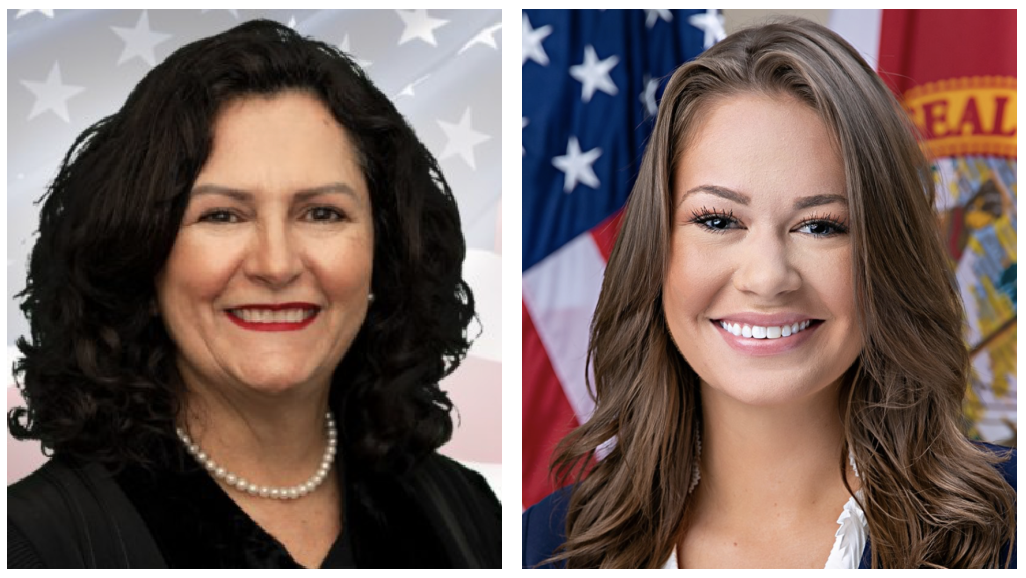 biography reads less like seasoned jurist and more like fast-track résumé.
Meet Destiny Alvarez — formerly Destiny Goede, and briefly Destiny Goede Alvarez, depending on which month you were paying attention.
She’s young. Connected. Just over five years out of law school — the bare minimum required to wear a robe.
Her résumé includes:
- A stint inside the Florida Department of Transportation under the Gov. Ron DeSantis administration
- Work at the powerhouse firm GrayRobinson
- Current ties to a firm carrying the family name
- Membership in the Federalist Society
- The 2022 Jeb Bush Outstanding Achievement Award recipient
That last honor was given to her by DeSantis for her “Funding Florida’s Future” proposal, which she drafted when she was a member of the Florida Gubernatorial Fellows Class XV. She proposed a framework for using private investment and electric vehicle infrastructure to combat the projected decline of Florida’s Gas Tax through 2027 and ensure the State Transportation Trust Fund had the means to continue building on Florida’s transportation infrastructure.
None of that is inherently bad. It just sounds more like a track to state rep instead of the bench.
But the timing of her name changes? That’s where eyebrows start lifting. Because for nearly two years after marrying Nicholas Alvarez in 2023, and as first reported on the longstanding and credible justice building insider blog, she remained professionally  known as Destiny Goede.
Mortgage documents? Goede. Legal filings? Goede. Professional listings? Goede.
Then came January 2026 — right when judicial openings appeared. And, suddenly, voila. Or more like, alabao. Goede became Goede Alvarez. Then, within weeks, Goede Alvarez became just Alvarez.
And a ballot-ready surname materialized just in time for a judicial run.
Three names. Weeks apart. Perfectly timed.
Ladra doesn’t believe in coincidence. So this looks more like strategic branding. Maybe she should have changed her first name, which sounds more like a musical artist’s name or maybe a stripper.
But in Miami politics, last names are like currency and rarely accidental — especially when Hispanic surnames carry weight with voters scanning a long judicial ballot. All the political observers say that a candidate whose name ends in a vowel or a Z has an automatic advantage in a countywide race. So, Alvarez vs Ruiz stands a much better chance than Goede vs Ruiz. Everyone knows that.
Even Ruiz, who was one of 40 incumbents facing no challenge a month ago. She’s going to have to sharpen her message now.
But this isn’t Ruiz’s first rodeo, and she’s already got almost $70,000 — collected in 138 contributions and only $100 out of her pocket — according to her last campaign finance report. And she will likely start collecting more now that she’s got an opponent. Like she did when she raised almost $200K in her last race.
Ruiz first won her seat in 2014, unseating incumbent Fleur Lobree with 54% of the vote — no small feat in a judicial race. In 2020, she turned back another challenger, winning again with 55%. She raised nearly $200K and loaned herself another $78,000.
But this race different. Because now the backdrop includes one of the most politically explosive land fights Miami has seen in  years. And whether anyone says it out loud or not, the Trump library case looms large over this contest.
So the question that is just hanging over this race: Is this just another routine judicial challenge? Or is this what political memory looks like?
Because judges don’t usually draw serious challengers out of nowhere — especially ones with deep institutional connections and fast-moving résumés, but little actual experience.
And when a judge slows down a politically sensitive project tied to powerful interests, it’s not unreasonable to wonder whether the next election becomes the venue for settling scores.
Not legally. Politically.
Read related: April Fool’s joke? Nope. Renier Diaz de la Portilla runs for judge — again
Also, as Political Cortadito has reported every election cycle, judicial races rarely get headlines. They’re quiet. Technical. Low turnout.
But occasionally, one becomes something else — a referendum not just on qualifications, but on independence.
Judge Ruiz forced transparency in a deal that many believed was moving too quickly. She followed the law. She required process. She ultimately ruled the case moot after corrections were made.
But in politics, even temporary delays can carry permanent consequences. And now, voters will decide whether experience — or branding — wins the day.
Stay tuned. Because this race has all the ingredients of a Political Cortadito follow-up: A judge tied to a politically radioactive case. A challenger with fresh credentials and evolving surnames. A high-profile land deal hovering in the background. And a political ecosystem that never forgets who slowed what down.
In Miami, justice may be blind.
But politics? Politics keeps receipts.
This kind of independent, government watchdog reporting is crucial to transparency and democracy. And more so every day. Help shine a light on the darker corners of our community with a contribution to Political Cortadito. Click here. Ladra thanks you for your support.

Trump library and the ‘name game’ will feature in Miami-Dade judicial race added by Ladra on
View all posts by Ladra →
