

For several hours Thursday, Miami City Hall looked like it was heading toward a political moment.
Dozens of speakers packed commission chambers urging elected officials to rescind the city’s controversial 287(g) agreement with Immigration and Customs Enforcement — and shared stories about fear.
Fear of being stopped. Fear of being profiled. Fear of leaving home. Fear of coming home. Parents worried about their children. Children worried 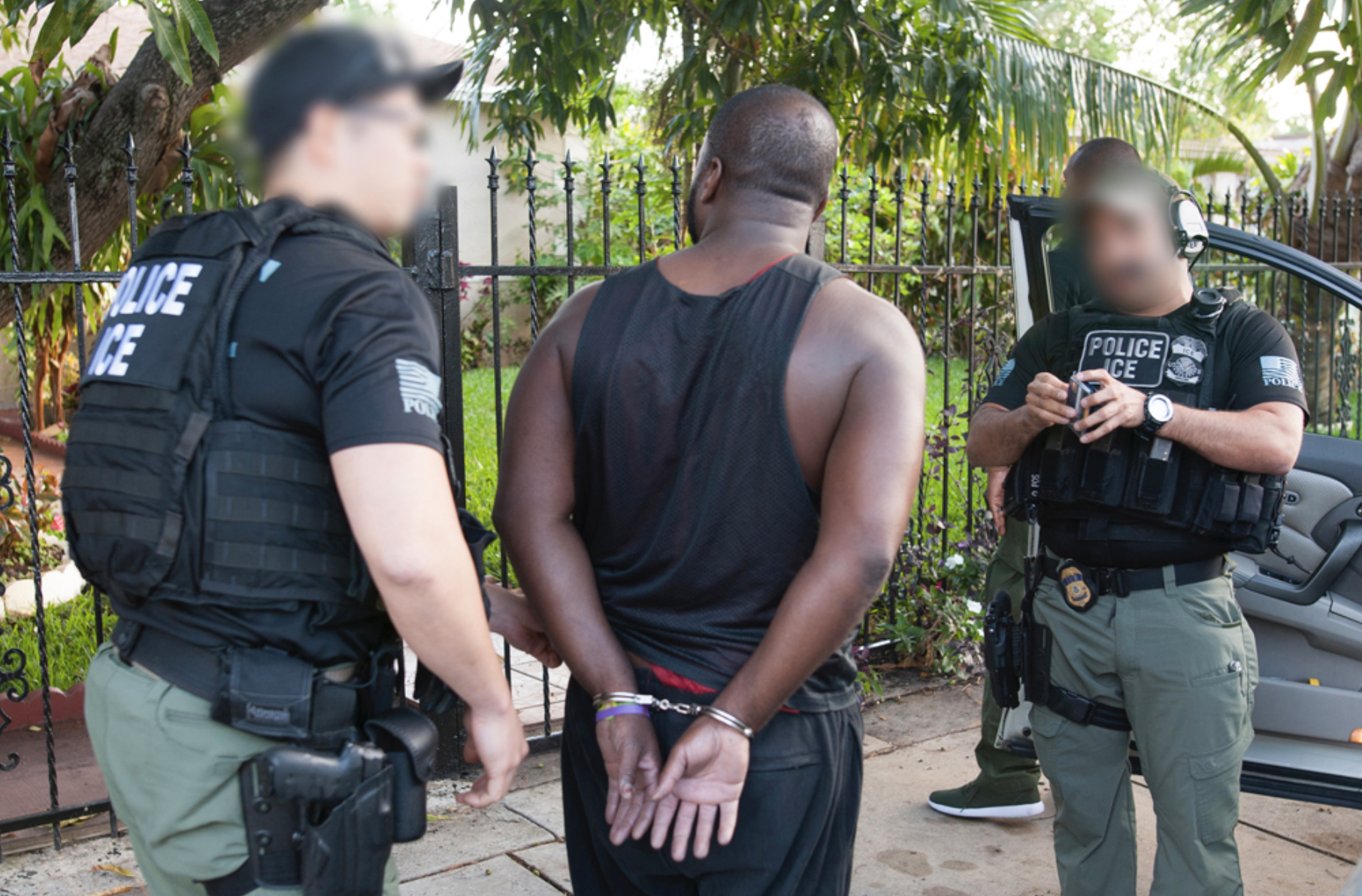 about their parents.
Citizens spoke about carrying U.S. passports because they were afraid they might be detained anyway because of their accent or color of their skin.
And if you were paying attention — and Mayor Eileen Higgins was not because she was a climate change thing in London — something else became increasingly clear: The votes appeared to be there to ditch the agreement that was passed narrowly last year — 3-2 with Commissioners Ralph Rosado, Miguel Gabela and former Commissioner Joe Carollo in favor. Commission Chairwoman Christine King and Commissioner Damian Pardo voted no the first time.
Well, Carollo is gone. Commissioner Rolando Escalona now occupies that seat. And Thursday, Escalona sounded like someone ready to reverse the decision.
In one of the meeting’s most emotional moments, the commissioner — who came from Cuba 12 years ao — became visibly shaken while describing the fear his own family experienced after becoming a father to twins seven months ago. “Two weeks after they were born, I was right there, getting a passport because I was afraid,” Escalona said, pointing toward the city clerk’s office. “And I’m a U.S. citizen.”
His wife, who has residency status, got a letter from immigration three weeks ago and that panicked them also.
“My wife has no criminal record, she has never been stopped, nothing,” Escalona said. “She had to go do her fingerprints or something like that. 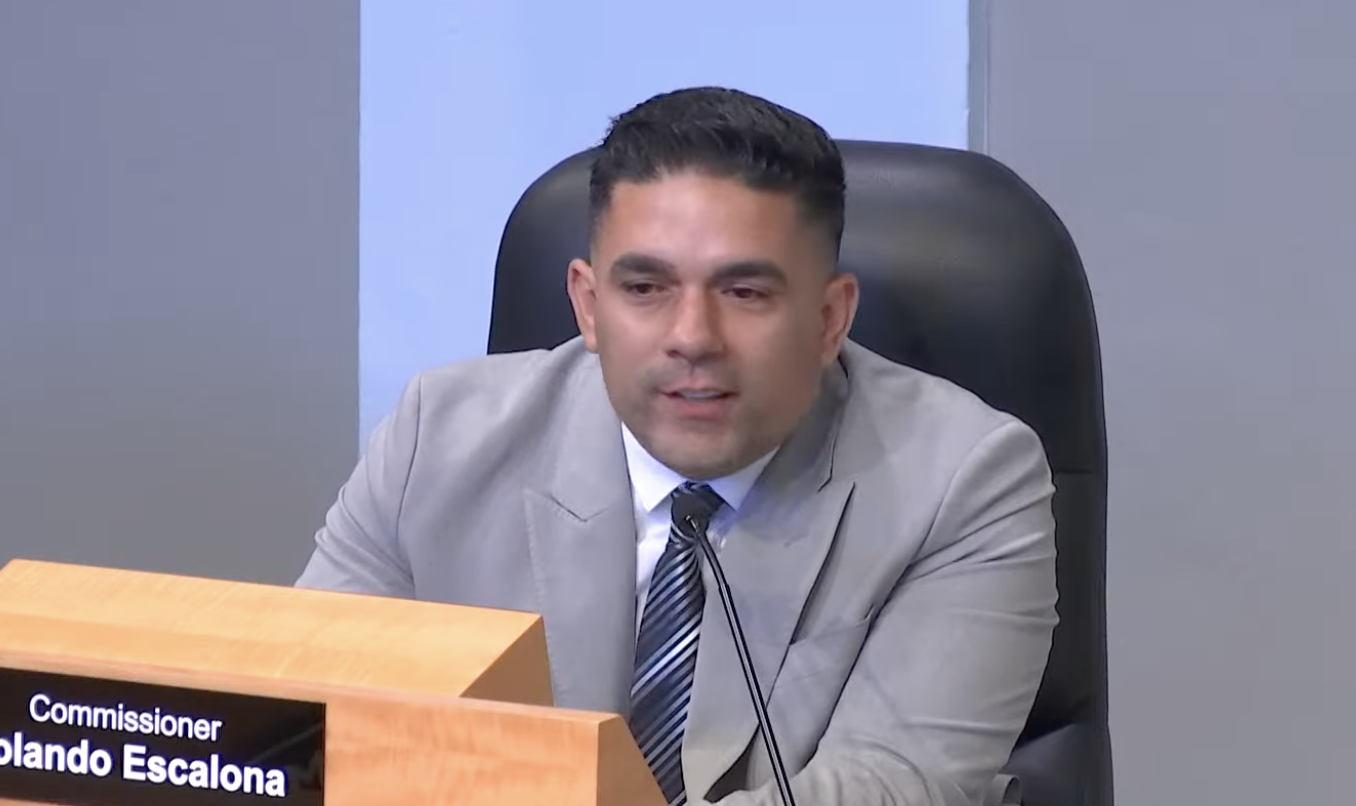 For a full week, we couldn’t sleep. For a full week, my wife couldn’t sleep.
“And we were thinking what many of them have said here,” he said regarding the speakers.
It was one of the most powerful moments of the day.
“I believe everybody should follow the law,” Escalona said. “Buy I don’t think that’s what we’re seeing. I think we are going too far.”
Read related: Miami commission to discuss 287(g) ICE agreements–sans Mayor Eileen Higgins
Escalona told the city manager and new Police Chief Edwin López — who has been at the city for all of five minutes — that they missed the point when they went out of their way to explain how the city really has very little actual involvement with ICE detentions, having only two officers “on 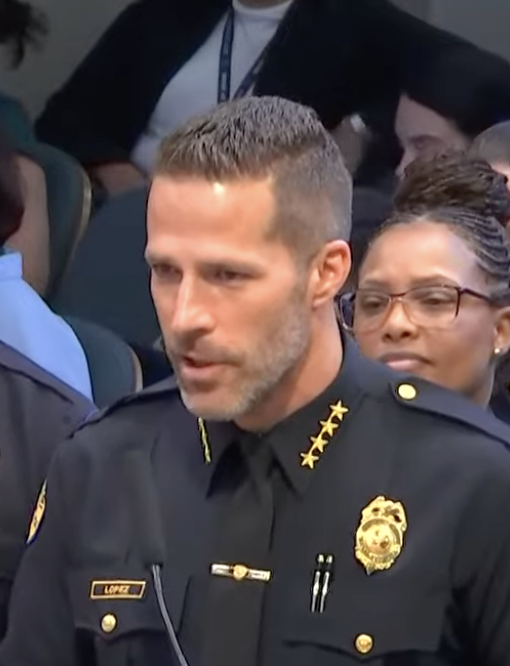 call,” not permanently assigned, and applying only 14 287(g) detainers in the city.
Only.
Lopez said that as the child of immigrants (his dad was a political prisoner in Cuba) and the former chief of Doral — which is where a lot of the local Venezuelans live — he was very sensitive to the issue. “We do not want anyone in the community to feel that we are the boogeyman or we are out to get them when they need help,” he said, adding that, sure, they’ll use deportation power when they arrest a bad guy they want off the streets.
King said that distinction was important. She brought the item to the dais so that the police could explain how they really aren’t targeting immigrants. She said people were “misinformed” and asked the manager and the chief of police to explain the city is not targeting immigrants.
“People are scared. My residents are scared. In District 5, I’m the melting pot,” King said. “While the city of Miami may be predominantly Hispanic, I have so many immigrants in my community. But it’s important to let our community know what we are and are not doing.
Said Manager James Reyes: “We are not applying 287 to individuals who have not been charged with a crime.” He added that three officers were 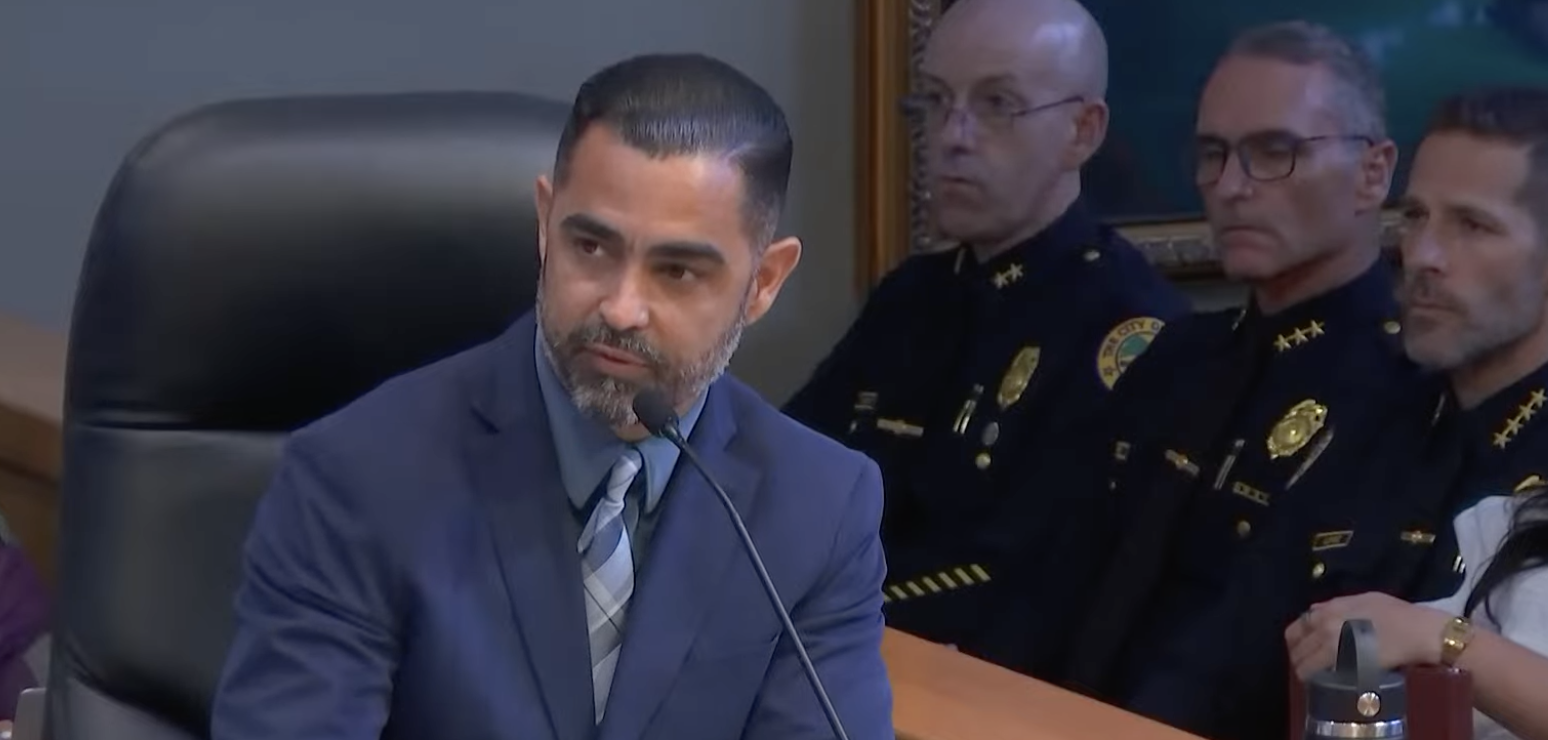 selected for the task force and trained by ICE, but only two are involved now. “These are not full time detachments. These are folks that are detectives that, when needed, they are sought out,” Reyes said, adding that it only was with serious criminal arrests.
Additionally, he said, 25 “repeat offenders” were identified by the patrol division to be reviewed by the task force “to make sure that they were here legally. Three of the 287(g) detainers issued by the city of Miami were among these 25. Another 11 were identified by the investigative division.
The Florida Suspected Unauthorized Alien Encounters Dashboard puts Miami in the top 20 jurisdiction when it comes to encounters through the 287(g) program, at 451. But Reyes said that it was really only 14. There’s that word again: Only. The others were attributed to the city because Miami Police was the arresting agency, but they were applied post booking in the corrections system, he said.
Read related: Miami could join 250 Florida cities with 287g contract to help ICE vs immigrants
City Attorney George Wysong repeatedly warned commissioners that terminating the agreement could trigger retaliation from Gov. Ron DeSantis and Attorney General James Uthmeier, because Miami could be deemed a “sanctuary city,” which has repercussions in Florida.
He spoke about how the cities of Fort Meyers — who voted not to approve the 287(g) agreement — and Key West, which “voided” it, got letters from 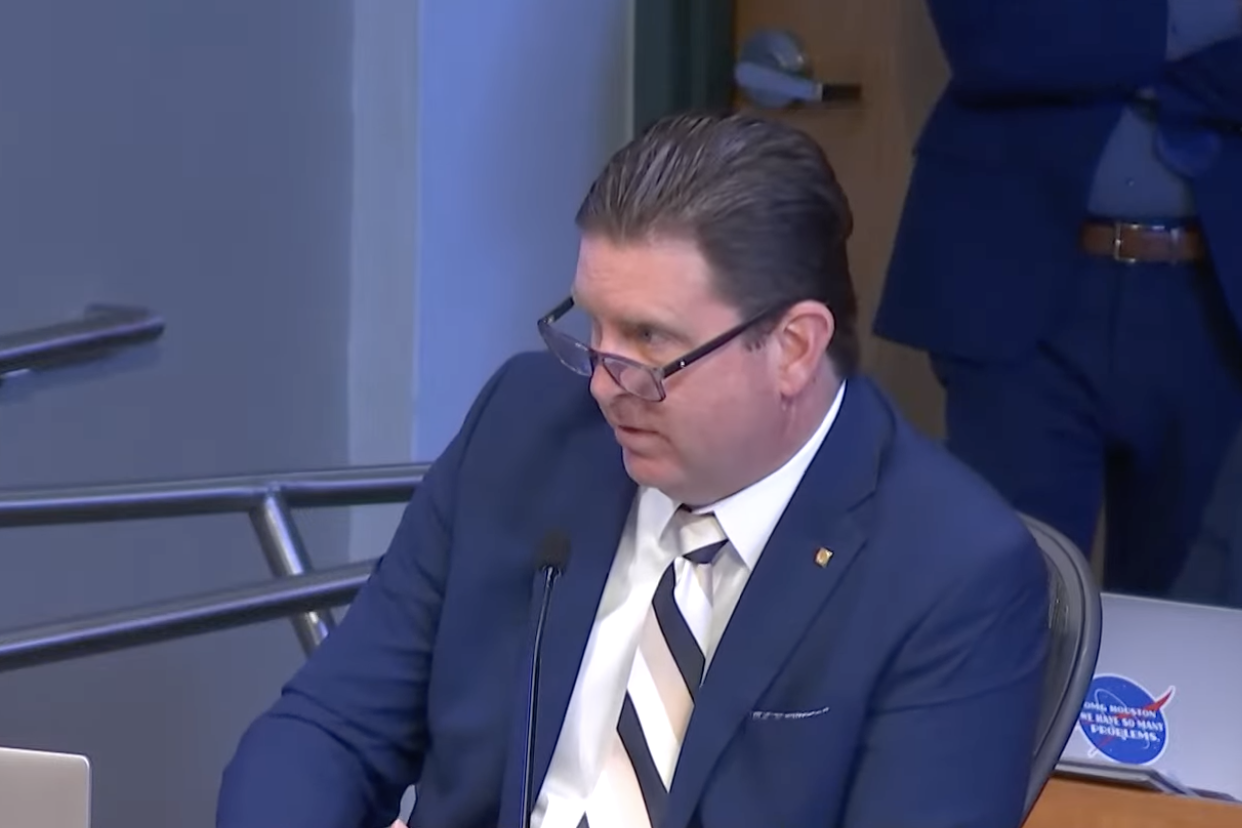 Uthmeier threatening that they would be subject to all penalties. Fort Meyers “changed their mind” and entered into the agreement. He said Key West “directly violated Florida law” for adopting a “sanctuary policy.”
Wysong used a lot of scare tactics, telling commissioners that any lawsuit would likely be filed in Tallahassee and that he didn’t even know if he or his office could represent the city or any individual commissioner. Nevermind that the state has not yet filed suit against any city.
Possible consequences, Wysong said, include the loss of state and federal funds — the guv could veto up to $7.5 million allocated by legislators this year — and even removal from office. Pardo said he wasn’t worried about that because it would be “a badge of honor.”
Escalona was unimpressed. Commissioner Sexy Fish told Reyes and Lopez that their excuses, er, explanation fell flat “because of the fear we have in our community.
“Look at all of us here, all of our employees. All of us are from somewhere,” he said. “If you, Mr. City Attorney, if you tell me that we can legally get out of this agreement, I will vote for it.”
Said Pardo: “I would too.”
Then King chimed in. “I’ve never changed my mind,” she said, turning to the city attorney and kinda scolding him for putting a price on the item. “Seven and a half million is worth saving a life, a family,” King said. “We’ll make it up some kind of way.”
And just like that, it seemed to signal that Miami’s political math had changed.
Three commissioners — King, Pardo and Escalona — openly stated they would be willing to terminate the agreement if it could be done legally.
Three votes. A majority. Case closed.
Pero nooooo.
Because after hours of testimony, tears, warnings, legal arguments and emotional appeals, commissioners didn’t vote to rescind anything. Instead, they did what politicians often do when they find themselves standing between what they want to do and what Tallahassee might do to them. They punted.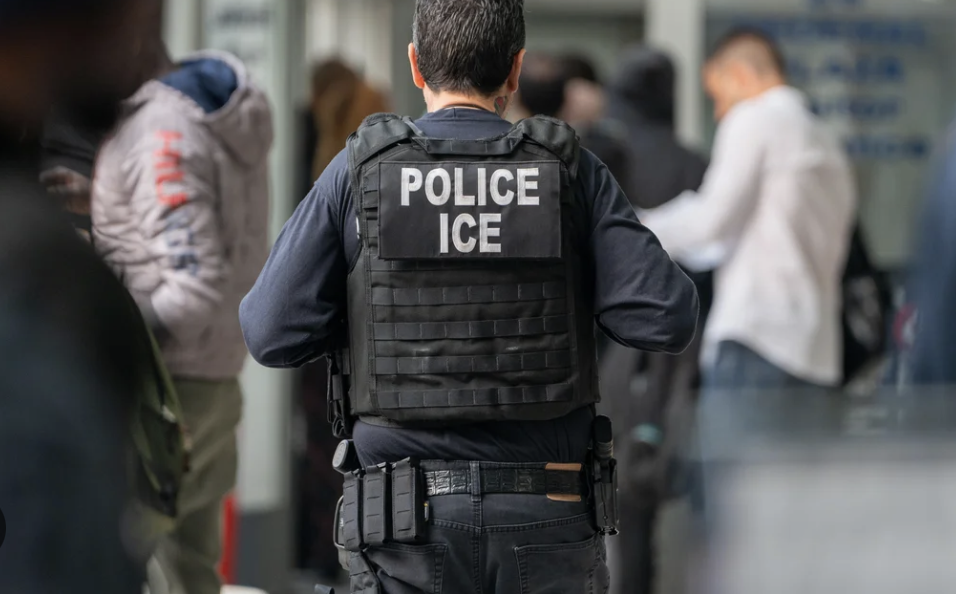
Read related: Miami names Edwin López next police chief — as Political Cortadito predicted
The speakers who came to City Hall Thursday weren’t asking for a discussion. They thought they already had one. Two, actually, after hundreds showed up last year to oppose entering into the agreement in the first place. Many of those speakers were back Thursday, where there was not one single person from the public, again, who said the city should have this agreement and act like border patrol.
There has been consistent, overwhelming public opposition. What people wanted now was action.
Instead, they got legal analysis.
To be fair, the city’s legal concerns are not imaginary. Florida has made immigration enforcement a priority. AG Uthmeier has previously threatened local officials elsewhere in the state. Nobody a Miamit City Hall wants to become the test case.
But the result was still striking.
For the first time since Miami entered the agreement, a majority of commissioners publicly signaled they may no longer support it. Electeds spent much of the afternoon acknowledging the fear many residents feel. Several openly questioned whether the city should remain in the program. One commissioner became emotional discussing his own family’s experience.
And still, no action was taken. The agreement remains in place.
Because while the commission appears to have the votes to rescind the agreement, it isn’t yet clear whether it has the courage — or the legal cover — to use them.
This kind of independent, government watchdog reporting is crucial to transparency and democracy. And more so every day. Help shine a light on the darker corners of our community with a contribution to Political Cortadito. Click here. Ladra thanks you for your support.

Miami commissioners had the votes to ditch ICE 287(g) agreement — but didn’t added by Ladra on
View all posts by Ladra →
