
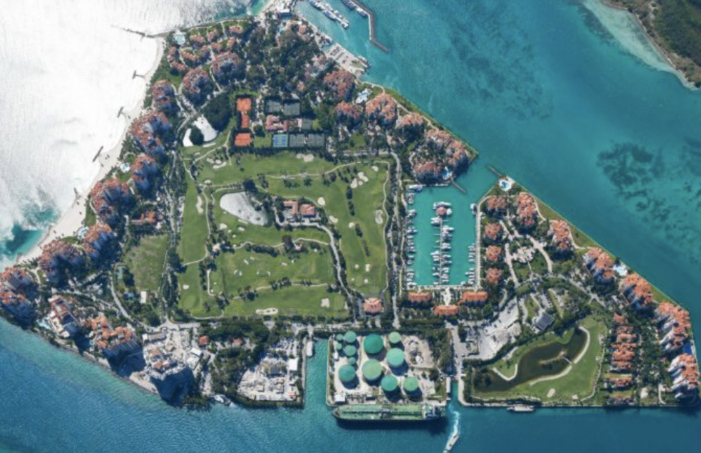
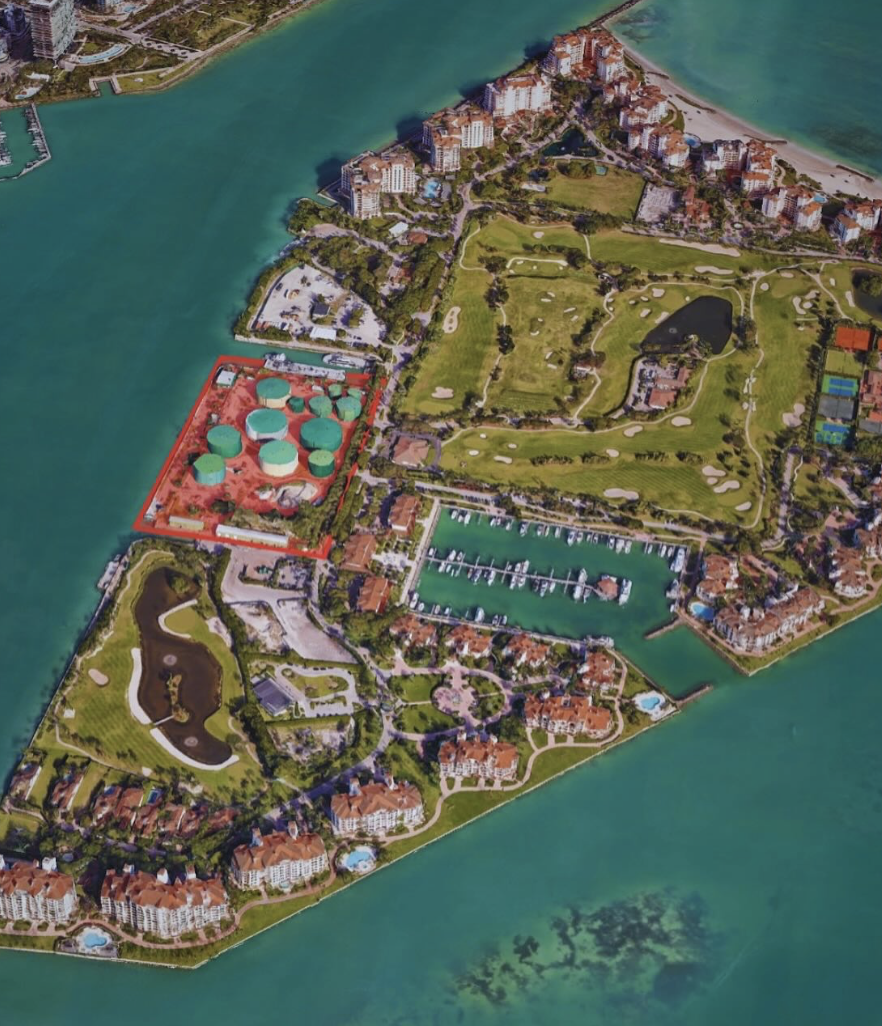
Miami-Dade County commissioners will be asked Tuesday to approve the designation of the fuel depot on Fisher Island as condemned in order to possibly begin eminent domain proceedings and seize a property they declined to buy at half the price it’s being sold for now.
Welcome back to PortGate.
This is about the fiasco over the 10-acre industrial property that Miami-Dade ignored when it was openly for sale. The same property the county apparently didn’t realize it couldn’t live without until after developers bought it. The same property that is now at the center of what may become one of the most expensive eminent domain battles in local history.
Tuesday’s resolution would formally authorize Mayor Daniella Levine Cava and county attorneys to pursue condemnation proceedings against HRP Fisher Island, the development group that purchased the property last year for about $180 million and then found itself sitting on what suddenly became the most important piece of real estate in Miami-Dade County.
 Funny how that works.
For months, the county negotiated with the developers behind closed doors. Those negotiations reportedly produced a deal worth roughly $400 million over time — about $200 million upfront and another $200 million spread out over decades. That’s one hell of a return on investment.
Then everybody found out. And all hell broke loose.
Former Congressman Joe Garcia called it a punch to the jaw. Political observers called it a windfall. Ladra called it what it looked like: a flip. A con. These developers, who include Russel Galbut — the immediate past chairman of Norweigan Cruise Lines Holdings — and The Related’s Jorge Perez bought it for $180 million knowing that the county will buy it back from them at more than twice the price eight months later.
These are not newbies.
Read related: Daniella Levine Cava goes eminent domain on Fisher Island fuel farm deal
But last week Levine Cava finally pulled the plug, declaring the deal too expensive and forcing the resignations of two of the officials who helped negotiate it — former Chief Operating Officer Jimmy Morales and former Port Director Hydi Webb.
Now the administration wants to take the matter to court instead.
The theory is simple. The county believes it can convince a judge that the fuel depot is essential public infrastructure and therefore subject to eminent domain.
But the real fight won’t be whether the county can take it. The real fight will be how much the county has to pay, the court’s valuation of the property. The resolution also says the county can offer developers a last chance offer of 15% over the land’s assessed value.
Good luck with that.
The county’s position is that PortMiami cannot function properly without the Fisher Island fuel facility. And that’s not a crazy argument.
PortMiami is the economic engine everybody suddenly discovered after the property sold. County officials say the port supports more than 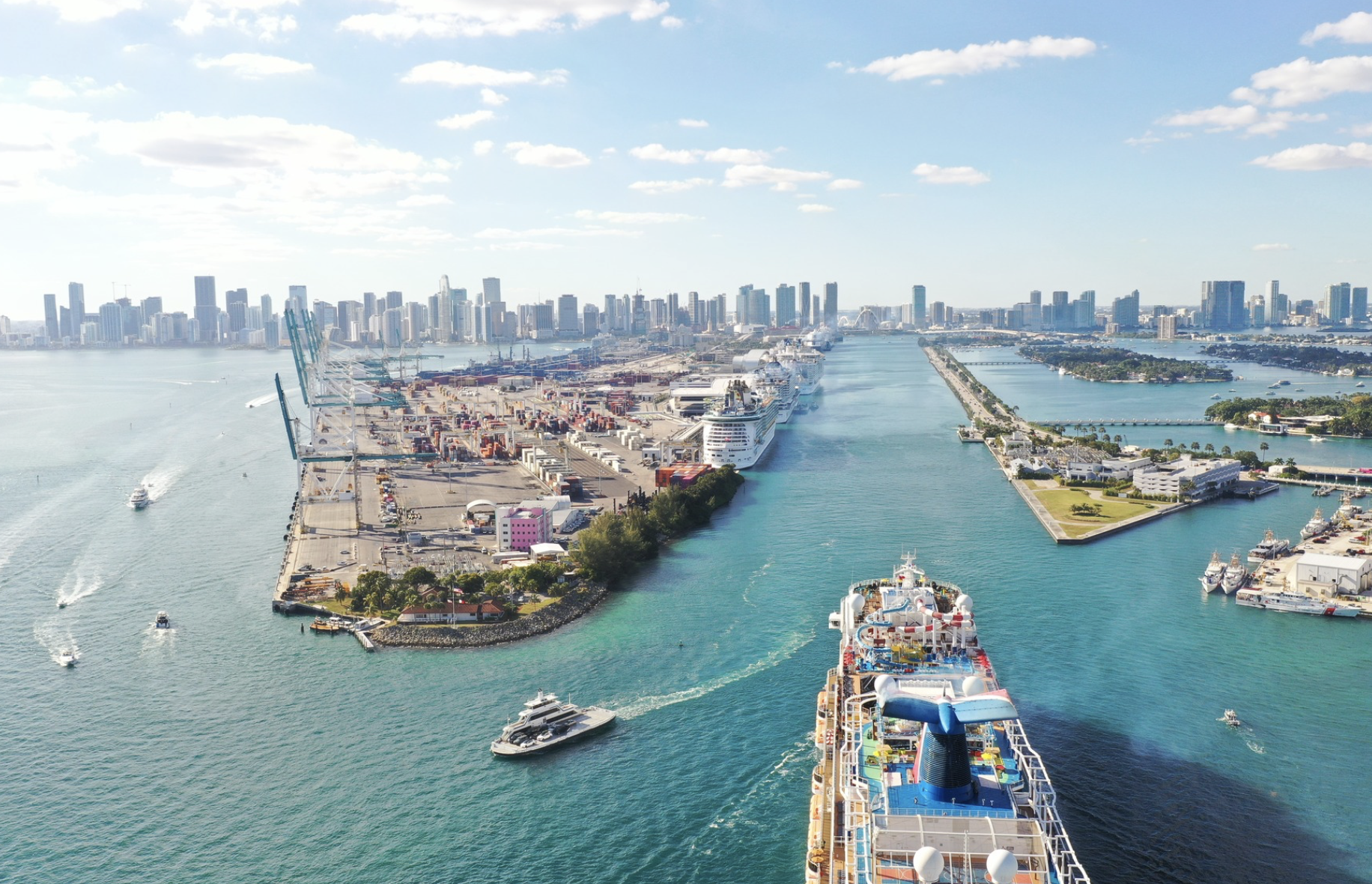 340,000 jobs and generates roughly $61 billion in economic activity.
The fuel depot has supplied ships for decades. County officials now argue there is no realistic replacement. Building a new facility could take ten years and cost between $700 million and $1.1 billion.
So instead of paying $400 million today, the county wants a judge to determine what the property — which is zoned heavy manufacturing and industrial — is actually worth.
The developers aren’t exactly rolling over. HRP has already signaled that it intends to fight. Hard.
Their argument is equally straightforward: Miami-Dade knew the property existed. Miami-Dade knew it was for sale. Miami-Dade was approached before the sale. Miami-Dade declined to buy it. Repeatedly.
The county’s failure to plan, HRP says, is not a justification for seizing private property now. And honestly? That’s not a crazy argument either.
Read related: Miami-Dade’s $400 million ‘oops’ — Fisher Island fuel depot fight explodes
That’s what makes this story so deliciously Miami.
Everybody has a point. Everybody looks guilty. Everybody looks like a victim.
And taxpayers somehow get stuck in the middle.
Meanwhile, the clock is ticking. As pointed out in the Miami Herald by Doug Hanks, the current fuel operations agreement expires in May 2027. If this case drags on — and lawsuits involving billionaire developers, eminent domain, Fisher Island and Miami-Dade government have a tendency to drag on — the county could face a situation where fuel sales stop before ownership is resolved.
County officials insist they have backup plans, including floating fuel barges. Because apparently the backup plan for the world’s cruise capital is now a giant floating gas station.
Totally normal.
Even more remarkable is how quickly the narrative has changed.
A few weeks ago the question was whether Miami-Dade would pay $400 million to rescue a fuel depot it failed to buy. Now, the question is whether  Miami-Dade can convince a judge to save it for less.
And make no mistake: this isn’t just a property dispute anymore. This is a public trial of government competence.
Commissioners will have to explain how a piece of infrastructure they now describe as absolutely essential somehow sat on the market without being purchased. The administration will have to explain why taxpayers were nearly presented with a $400 million deal. The developers should have to explain how a property bought for $180 million magically became worth more than double that amount before they even broke ground.
Maybe they’ll take 15% over the purchase price?
Read related: Fisher Island fuel depot flipping fiasco smells like a long con on Miami-Dade
And somewhere in all this, Fisher Island residents are still suing because they don’t want the fuel tanks there in the first place.
The cruise industry wants the fuel. The residents want the tanks gone. The developers want condos. The county wants a discount. The lawyers want billable hours.
And taxpayers want to know how we got here.
Tuesday’s vote won’t answer that question. It will simply mark the beginning of the next chapter.
The county is about to ask a judge to fix a problem that government created, developers capitalized on, and politicians spent months trying to explain.
Only in Miami could a fuel farm become the hottest piece of waterfront real estate in town.
The meeting Tuesday starts at 9:30 a.m. Tuesday in commission chambers at County Hall, 111 NW 1st Street, and is streamed live on the county’s website. It can also be seen on the Miami-Dade Commission’s YouTube Channel.
This kind of independent, government watchdog reporting is crucial to transparency and democracy. And more so every day. Help shine a light on the darker corners of our community with a contribution to Political Cortadito. Click here. Ladra thanks you for your support.

Miami-Dade Commission will consider seizing Fisher Island fuel depot for port added by Ladra on
View all posts by Ladra →