
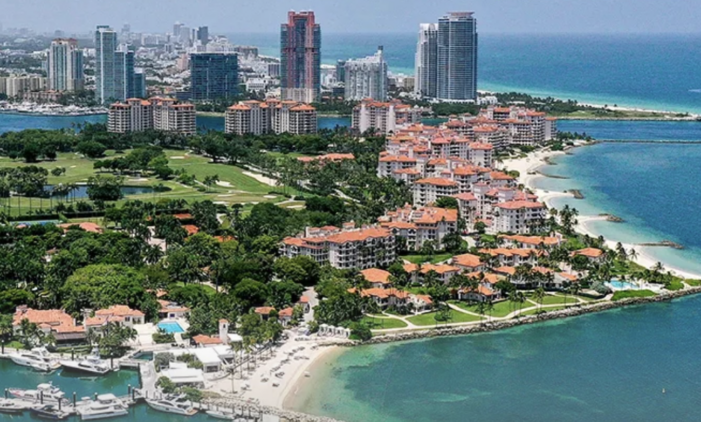
Miami’s billionaires have finally met the one thing standing in the way of another luxury condo tower: Diesel.
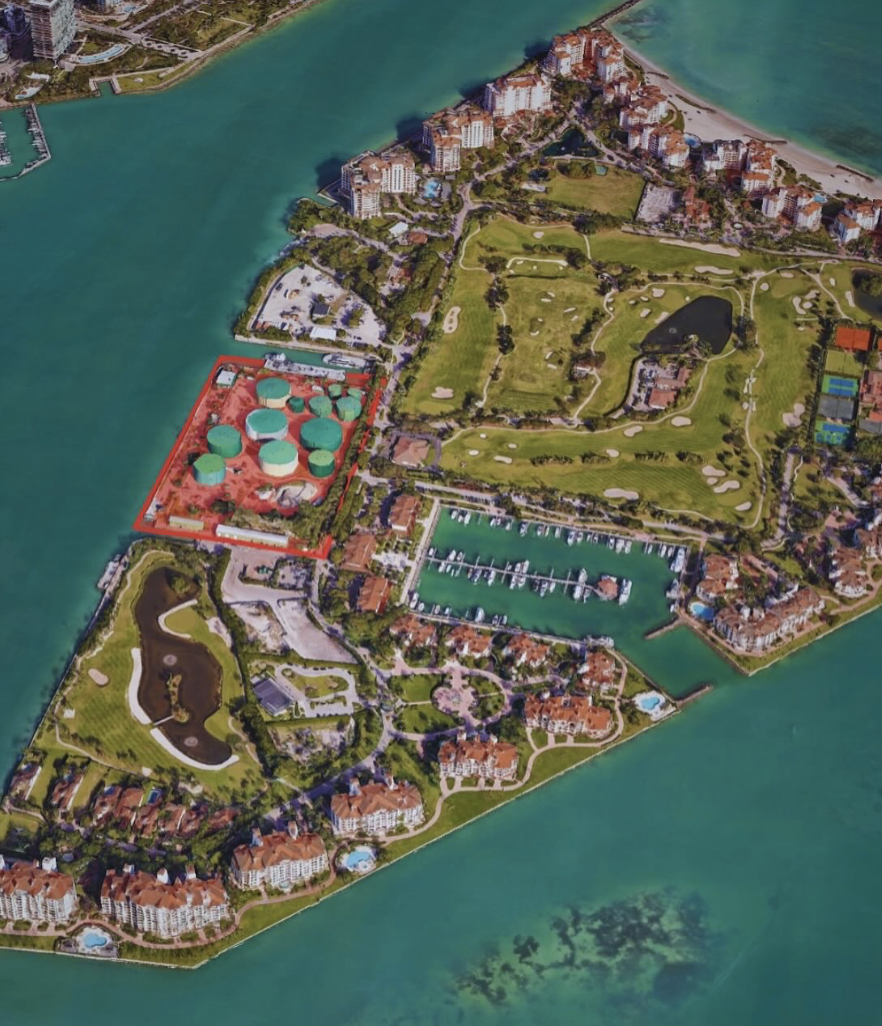
Specifically, 28 million gallons of it sitting in giant aging fuel tanks on Fisher Island — the same ultra-exclusive playground where the average resident probably spends more on wine storage than most Miamians make in a year.
After decades of serving the PortMiami travel industry (read: thousands of jobs), the fuel depot land was sold to a developer who wants to demolish it and build luxury high-rises, instead. No more gas and go for the big ships.
 And now everybody is scrambling.
The cruise industry is screaming. Fisher Island residents are screaming. Activists are screaming.
Developers are suing. County Hall is panicking.
And taxpayers may soon get handed a $400 million bill because, according to critics, Miami-Dade government once again realized there was a crisis only after the closing papers were signed.
Welcome to the latest episode of “Only in Miami.”
At the center of the political explosion is the Fisher Island fuel depot — an ugly industrial marine fuel facility that supplies PortMiami’s cruise and cargo ships. Nobody on Fisher Island wants it there. But PortMiami also apparently cannot function without it.
Which would have been useful to fully appreciate before the property sold for $180 million last year to Chicago developer HRP Group.
Read related: Eminent domain item at Miami-Dade could be result of fuel depot debacle
HRP bought the site with plans to tear down the century-old fuel farm and build luxury condos because, bueno, that’s what they do. And this is Fisher Island. If somebody could build luxury condos on top of a parking lot, they would.
Now Miami-Dade County is trying to buy the property after failing to buy it when it first hit the market in 2024. At a dramatically higher price. With taxpayer money.
Suddenly everybody is discovering “marine fuel logistics” like it’s a graduate course at FIU.
Last weekend, former congressman Joe Garcia — who certainly looks like he’s running for something again with his super active social media — held a press conference at South Pointe Park alongside activists, candidates and professional Miami loudspeaker Billy Corben to warn that losing the fuel depot could devastate PortMiami and cripple one of South Florida’s largest economic engines.
Garcia dramatically declared Miami could become “the only port in the world” without its own fuel depot. “This is one of the most dangerous things that could happen,” he warned. And to hear the county and cruise industry tell it, civilization itself may collapse if giant floating casinos have to fuel somewhere else temporarily.
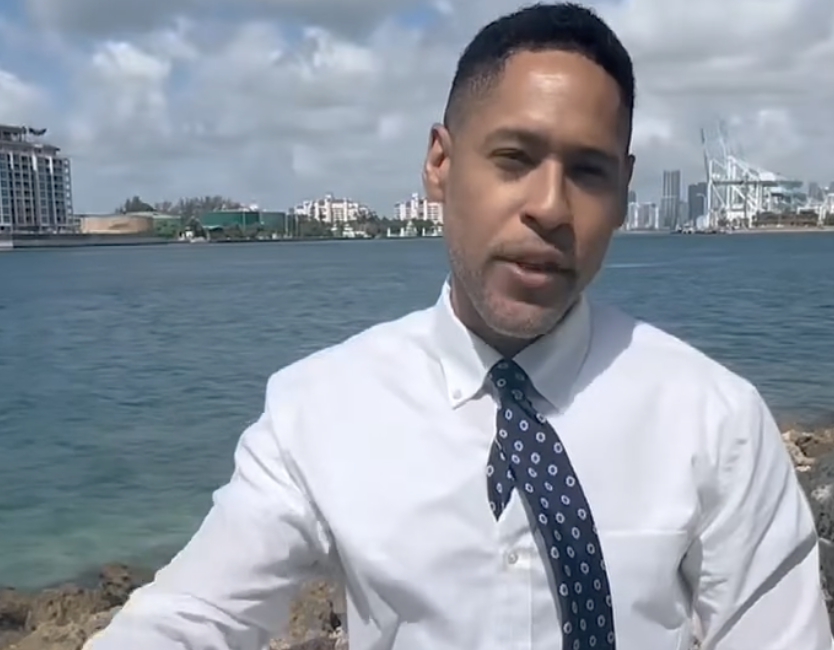 Robin Peguero, a former federal prosecutor and Jan. 6 investigator running for congress, was there too. “This is another example of how the system is completely rigged in favor of the powerful, of the corrupt, of corporations and billionaires,” Peguero said, adding that the developers’ plans will threaten the livelihoods of those who depend on the fuel depot.
They’re not wrong. Miami will lose its appeal to become the home of so many international cruise lines if you can’t get gas nearby.
But Fisher Island residents say hold on a second.
Their response has essentially been: Why should taxpayers spend hundreds of millions rescuing a problem the county ignored for years while preserving a massive industrial fuel facility next to our homes, school and hurricane evacuation routes?
And honestly, that’s not a crazy question either.
This week, the Fisher Island Community Association and Fisher Island Club sued HRP in state court to block any sale of the property to Miami-Dade County — which commissioners could have considered next month — claiming the developer already promised residents to carve out four acres of the fuel depot in exchange for supporting residential redevelopment.
Read related: Proposed Trump library and hotel in downtown Miami is hit second lawsuit
According to the lawsuit, residents believed HRP was going to remove the fuel tanks and replace them with condos and community uses — not flip the site back to the county for what they describe as a gigantic taxpayer-funded payday. After all, HRP now stands to walk away with a 100% return on its investment in less than a year without ever building anything. That’s very Miami.
“HRP came to Fisher Island promising to clean up a century-old hazard and build a residential community. Instead, they saw a pile of taxpayer cash, sold out our residents, and decided to leave a dangerous fuel farm sitting right next to our homes and our children’s school” said James L. Ferraro, Chairman of Fisher Island Community Association, in a statement.
“The hazard of the century-old fuel farm goes far beyond Fisher 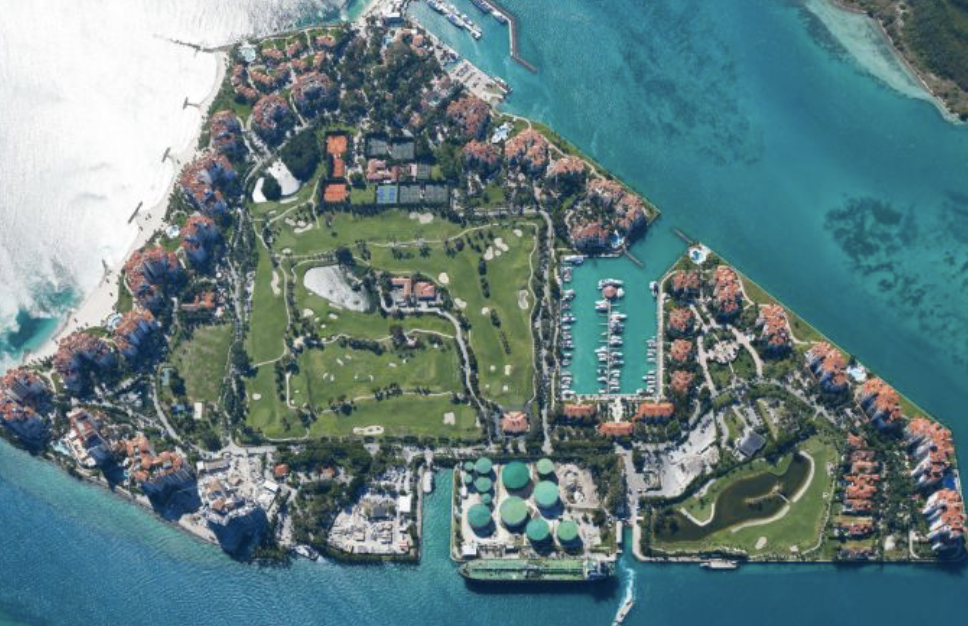 Island. This is potentially an Exxon Valdez disaster waiting to happen with one hit from a strong hurricane. The risk is not just to Fisher Island, but all the surrounding islands, including Key Biscayne, as well as Miami Beach and mainland Miami itself.Their response has essentially been: Why should taxpayers spend hundreds of millions rescuing a problem the county ignored for years while preserving a massive industrial fuel facility next to our homes, school and hurricane evacuation routes?
“This is a classic backroom bait-and-switch,” Ferraro added. “HRP legally promised this land to the residents, and FICA holds a recorded veto right over any sale—they cannot sell what they do not own. By filing this lawsuit and notice of lis pendens today, we are freezing the title. No one—not the County, not a lender, and not a title insurer—will touch this property until HRP honors its binding bargain.”
And honestly, that’s not a crazy question either.
The lawsuit alleges the county and HRP have had “months of closed-door negotiations… out of the public view.” The secret deal, the lawsuit says is worth roughly $400 million total — about $200 million upfront plus another $200 million over 20 years.
Which is a breathtaking amount of money for a property the county could have pursued earlier while it was openly marketed. And then purchased with $180 mil.
Now the county may have to pay luxury-condo prices to preserve ancient industrial infrastructure because, according to critics, officials were asleep at the wheel.
Fisher Island residents are also hammering the safety issue hard.
And this is where the story gets politically fascinating because both sides are suddenly accusing the other of risking catastrophe.
The county says losing the fuel depot threatens PortMiami’s future. Residents say keeping it there risks an Exxon Valdez-level environmental disaster sitting inside a wealthy residential island in a hurricane zone.
The fuel facility reportedly stores 28 million gallons of combustible fuel in aging tanks dating back nearly a century. Residents say homes sit within 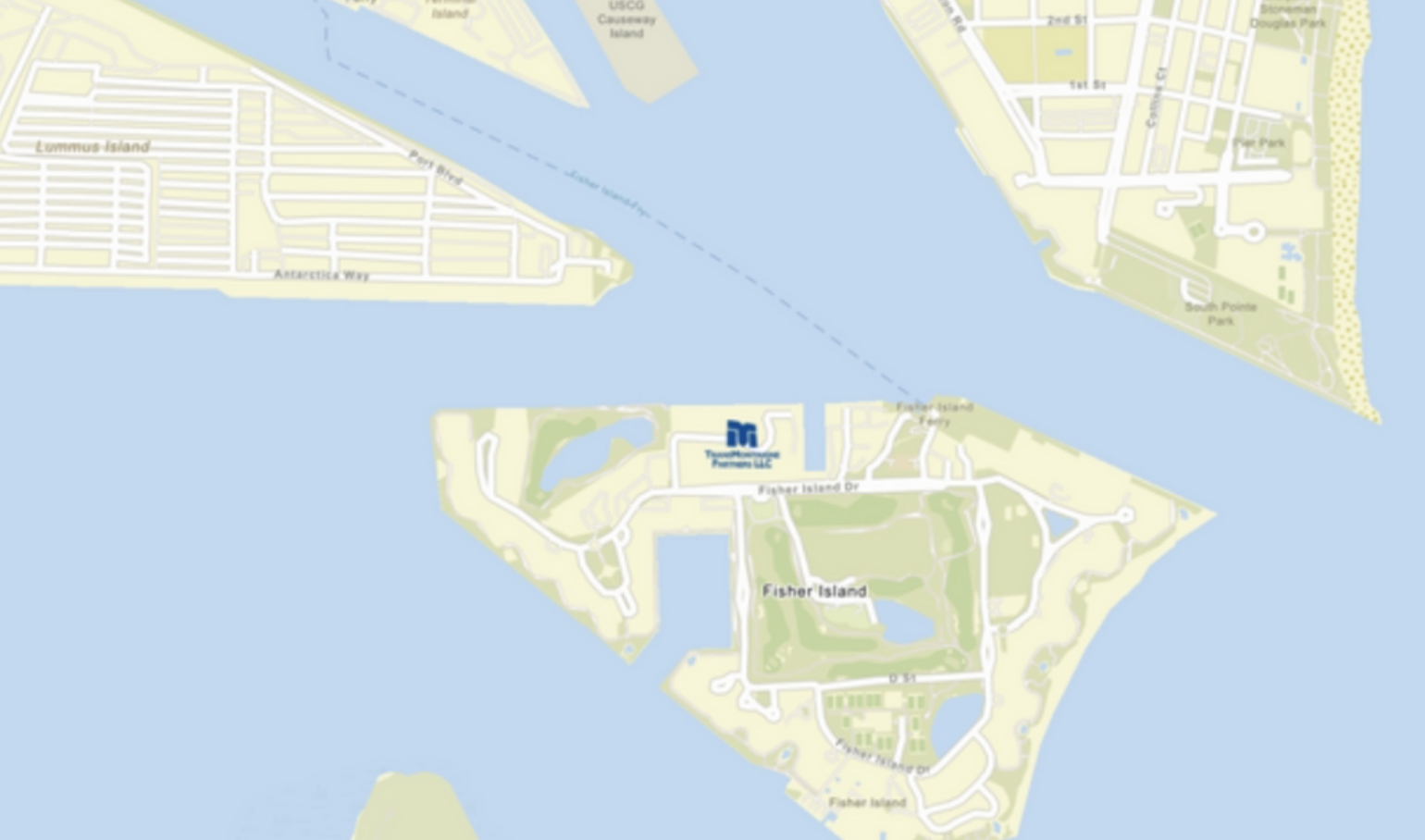 hundreds of feet of the tanks and a school serving more than 160 children is nearby.
Meanwhile, Miami-Dade insists alternatives are limited, expensive and time-consuming.
Residents counter that the county had years to plan alternatives and ignored the issue until the “ninth inning,” as even commissioners themselves complained publicly last year.
County Chairman Anthony Rodriguez and Commissioner Danielle Cohen Higgins openly questioned how it fell through the cracks. Commissioner Oliver Gilbert talked about using eminent domain to take the land, which would cost less than $400 million. Commissioner René Garcia warned the county was suddenly facing the possibility of not being able to fuel the very cruise industry Miami endlessly brags about. And Mayor Daniella Levine Cava said the loss of the depot would put Miami at “an extreme competitive disadvantage.”
Read related: County to spend $381 million on new PortMiami terminals for MSC Cruises
And then there’s the political cherry on top: Fisher Island residents are represented by Quinn Emanuel — one of the most aggressive and expensive litigation firms in the country.
Which only means this fight is going to get uglier. Much uglier.
Because this is no longer just about fuel tanks. This is now a full-blown war involving billionaire island residents, cruise line economics, eminent domain, environmental fears, luxury condo dreams, government incompetence — and hundreds of millions in taxpayer exposure.
In other words, it’s the perfect Miami story.
Everybody involved insists they’re protecting the public interest.
The county says it’s protecting the port. The cruise industry says it’s protecting jobs. Residents say they’re protecting safety and taxpayers. Developers say they’re protecting property rights.
And somewhere in the middle of all this are Miami-Dade taxpayers, who may soon discover they’re financing one of the most expensive governmental “oops” moments in recent local history.
This kind of independent, government watchdog reporting is crucial to transparency and democracy. And more so every day. Help shine a light on the darker corners of our community with a contribution to Political Cortadito. Click here. Ladra thanks you for your support.

Miami-Dade’s $400 million ‘oops’ — Fisher Island fuel depot fight explodes added by Ladra on
View all posts by Ladra →
[…] Read related: Miami-Dade’s $400 million ‘oops’ — Fisher Island fuel depot fight explodes […]
[…] Read related: Miami-Dade’s $400 million ‘oops’ — Fisher Island fuel depot fight explodes […]
[…] Read related: Miami-Dade’s $400 million ‘oops’ — Fisher Island fuel depot fight explodes […]
[…] Read related: Miami-Dade’s $400 million ‘oops’ — Fisher Island fuel depot fight explodes […]
[…] Read related: Miami-Dade’s $400 million ‘oops’ — Fisher Island fuel depot fight explodes […]
Lpl Miami. Sunny place for shady people.
Mayor Daniella Cava and her idiot corrupt commissioners should have solved this problem years ago. Now it is another Miami Disaster like forcing taxpayers to pay over $3 Billion for the Marlins Stadium AND we lost 40 acres of Orange Bowl Park. And the owner of the Marlins gets to keep 100% of all revenues.
It’s beyond shameful that an oil company would build a fuel depot right next to the residential area of Fisher Island.
Dear Estela, the fuel depot was there first.
Love, Ladra
Ahh, as usual, the FIX is in… Follow the money… When are miami residents gonna learn…pathetic. But hey, life is good, right… So have condo association fees gone down yet…? Bunch of sheep bheeeeh lol
” Perhaps the oil companies should come to the rescue with the mega-billions being made from the increase in fuel prices.”
Regardless of President and crises be it real or not they are the price gouging Kings
A pipeline from Port Everglades serves MIA with jet fuel. PortMiami had better secure an inland location for storage tanks and start digging a pipeline.
Did we not learn from the alleged Indian Mound at the mouth of the Miami River? Same issue. Property sells, high rise announced, hue and cry to buy the land with public funds follows. Facts are different, a few less zeroes in the dollars needed and the economic implications of losing the tanks are immeasurable.
Perhaps the oil companies should come to the rescue with the mega-billions being made from the increase in fuel prices.
“IT Fell True The Crack as it always Do “$$$$$$$ Lobbyist That Run County Hall and It’s Commissioners !
Very rich of Fisher Island residents to complain about nobody wanting the fuel depot there when THEY moved there next to the fuel depot that’s been on the island for a century!
County staff dropped the ball and didn’t alert the electeds that the land was going for sale, and now we have a potential and real economic disaster in our hands: millions of dollars in legal fees, millions of dollars in purchasing the land or eminent domain if the County has to go that route, or risking losing over 340,000 jobs, thousands of small businesses that service the cruise industry plus the billions of tourist dollars that would go elsewhere.
What a mess!