
Almost every candidate is self-funding their campaign
Both primaries in the Florida House District 113 race are master classes in self-financing, where the biggest donor might be staring back at at the candidate in the mirror.
The Democratic contest is shaping up to be a tale of two piggy banks.
Candidate Gloria Romero Roses is touting a headline-grabbing fundraising total: nearly $200,000 raised. That’s the number featured in her press release. The one meant to signal momentum, viability, and a growing coalition of supporters.
But here’s the part that doesn’t fit neatly into the headline: About $120,000 of that total came from Romero Roses herself. First, she loaned $30,000 to her campaign in the final quarter of 2025 and now she’s added another $90K in this first 2026 quarter.
That means well over half of her campaign cash isn’t donor enthusiasm. It’s personal investment.
Nothing illegal about that. Self-funding is as old as politics itself. But when campaigns brag about fundraising strength, voters —  and opponents — tend to look past the press release and into the ledger.
Because there’s a difference between money raised and money loaned. One signals support. The other signals commitment — or necessity. Sometimes both.
Meanwhile, opponent Justin Mendoza Routt is playing a smaller but similar game. He raised roughly $35,000 between the first and second quarters — respectable for an early-stage local race.
Then came his own wallet moment. In the latest reporting period, Mendoza Routt loaned his campaign another $35,000 — effectively doubling his available funds in one stroke.
Different scale. Same strategy: Write yourself a check. Keep the campaign alive. Stay competitive.
Read related: Florida House 113’s mystery poll: Testing the knives before the knife fight
Still, $80K in small contributions from real people means something.
“This campaign is powered by people who are ready for real leadership focused on solving problems, not political theater,” Romero Roses said in a statement.
“We’re building a coalition of supporters who understand that Miami’s working families are being squeezed by rising costs, and the ripple effect undermines the backbone of our economy, our small and mid size businesses. Policy isn’t abstract, it affects real lives every day and people are ready for a leader who solves problems, without the chaos and the extremes .”
Romero Roses also rolled out a lengthy endorsement list — a political roll call heavy with familiar names from South Florida’s Democratic bench.
Among those backing her: Miami-Dade Commissioner Oliver Gilbert III, former county commissioner Katy Sorenson, Miami-Dade School Board Member Luisa Santos, former Congresswoman Donna Shalala and former gubernatorial candidate Alex Sink.
It’s a strong list — the kind meant to telegraph establishment confidence and signal to donors that the candidate is worth betting  on. But endorsements don’t pay for yard signs. Cash does.
And in this Democratic primary, much of that currency — on both sides — is still coming from the candidates themselves. Neither candidate is swimming in grassroots donations — at least not yet. Instead, both appear to be priming the pump with personal funds, betting that early financial viability will attract outside support later.
That’s a gamble. Sometimes it works. Sometimes it turns into an expensive hobby.
Because in local legislative races, the biggest predictor of success isn’t just money — it’s where the money comes from.
Community donors suggest enthusiasm. Self-loans suggest ambition. Big difference.
Read related: Campaign contributions flow for HD 113 election that doesn’t exist — yet
And that brings us to the Republican primary, where all three candidates are also fueling their own dreams. Some to a bigger extent than others.
Let’s start with former Miami-Dade Commissioner and state rep Bruno Barreiro, who didn’t exactly dip his toe into the race. He cannonballed into it by writing himself a $100,000 loan check before donors even had time to find their checkbooks. Outside 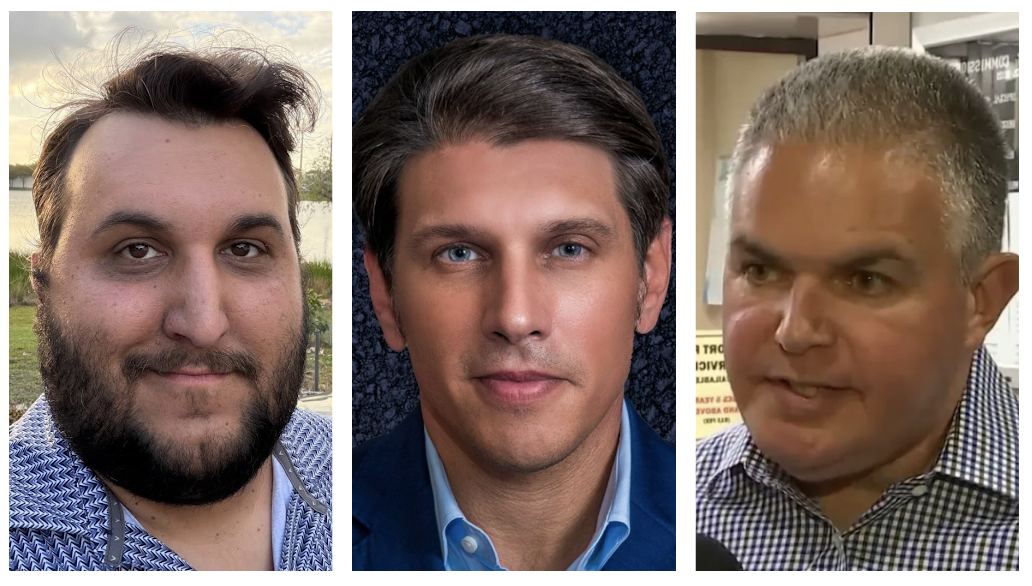 money? About $13,800 — barely enough to cover signs and t-shirts, let alone a competitive campaign.
That’s not fundraising. That’s self-propulsion.
And it tells voters something important: Barreiro isn’t waiting for permission to run. He’s financing his own comeback tour.
Then there’s Frank Lago, widely seen as the establishment-friendly contender after receiving early backing from former Rep. Vicki Lopez. who was appointed to the county commission in November, which means the district has remained unrepresented throughout this session.
Lago has posted roughly $142,000 in contributions, plus a $25,000 loan to himself — meaning even the candidate with the strongest donor backing still leaned on his own resources to bulk up early totals.
And his donor list reads like a who’s who of developers, business interests, and political insiders — the usual suspects in a South Florida legislative race. In the first quarter report filed last week, 19 of the 48 contributions were from political committees. Most of those were in Tallahassee. Nine more are lobbyists or law firms. The rest were construction and real estate interests.
Read related: Tony Diaz files early, leans in, talks big in Florida HD 113 Republican primary
Then there’s Tony Diaz, who has positioned himself as the outsider candidate — heavy on social media, lighter on traditional fundraising. He is running a leaner campaign, half of it with his own money.
Diaz reported raising almost $42,000 with$26,000 coming from his own pocket. Not a loan. More like a boost.
Again. Different candidates. Same pattern. Write yourself a check and keep moving. It’s what happens when ambition meets campaign finance reality. Because running for office in South Florida isn’t cheap.
Roses and Diaz have spent the most so far, with a little over $30,000 each. Romero Roses has spent the most on field staff (already?) and consulting from Blue Velocity, a firm owned by Steven Jackson, who came to Florida in 2012 as part of the Barrack 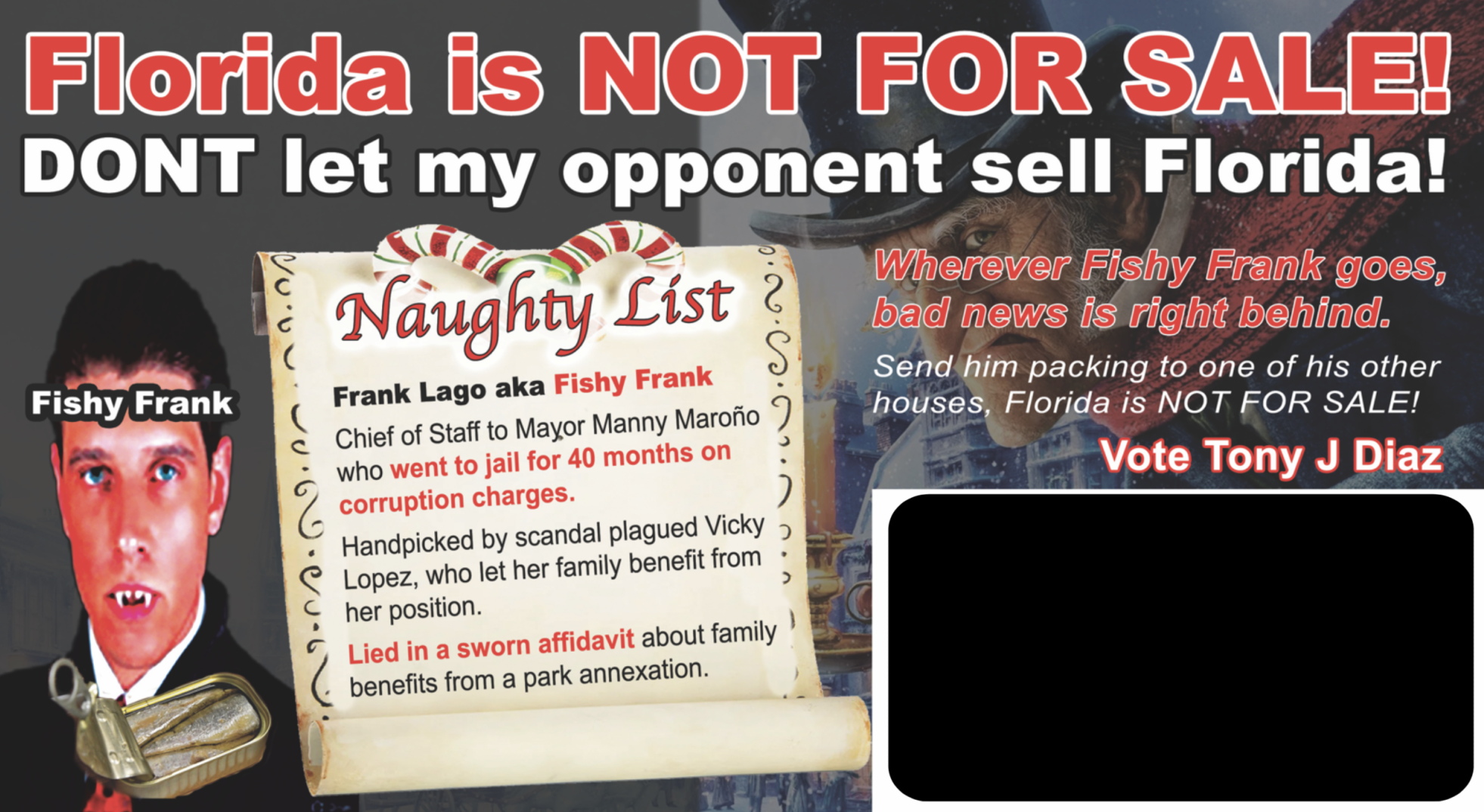 Obama state operations and was later hired by the Florida Democratic Party. Diaz had big expenses for mailers, including one attacking “Fishy Frank” Lago, social media ads, website creation and radio.
“Our campaign had a strong quarter putting in place a lot of systems as our ground game and advertising ratchets up,” Diaz said in a statement earlier this month. He was the first to file. “A lot of this one time spending happened in February and March giving us large expenses. We are happy to get these out of the way and continue racing towards Tallahassee.
Read related: Tony Diaz goes on offensive in HD 113 with “Fishy Frank” Lago narrative
Barreiro comes in third place in spending, with $24,113 in total, including a $16,200 poll he paid for March 18. That must be the mystery puss poll that voters got in February. It seemed soft on Barreiro while harsh on Lago, who is seen as the front runner. Please share, Bruno.
Frank Lago comes in next with a total of almost $18,000 spent. That includes more than $4,000 to an image consulting firm in Tampa, $3,000 to State Rep. Juan Carlos Porras, who seems to be his media consultant, and $1,500 to The American Strategies Group, a consulting firm owned by Coral Gables Commissioner Ariel Fernandez.
Mendoza Routt has only spent $7,430, most of that (more than $5,500) went to political consultants Christian Ulvert and Michael Worley for a kick-off event and direct mail consulting and digital ads.
Right now, the House District 113 Democratic primary isn’t a money war. It’s a liquidity test. Across both primaries, candidates aren’t just raising money. They’re fronting it.
That tells you that either the seat is seen as valuable enough to invest personal cash or donor enthusiasm hasn’t fully caught up yet.
Also, some donors may be waiting to see who survives the primary before writing bigger checks.
But if campaign finance reports are supposed to measure grassroots enthusiasm, these are sending a very different message. This isn’t a donor-driven race. It’s a candidate-financed one. Which, naturally, raises the question every voter should ask: Is this a race powered by community support — or personal ambition?
Because in HD 113, no matter what party you belong to, the answer so far looks like the latter.
This kind of independent, government watchdog reporting is crucial to transparency and democracy. And more so every day. Help shine a light on the darker corners of our community with a contribution to Political Cortadito. Click here. Ladra thanks you for your support.

Following the money in both primaries for Florida House District 113 is easy added by Ladra on
View all posts by Ladra →
