
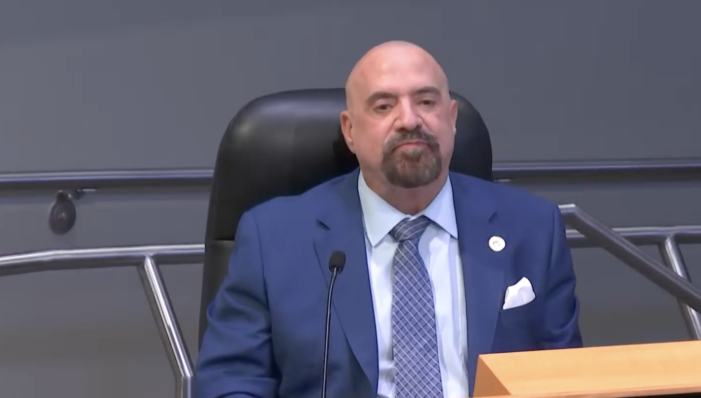
Miami Commissioner Damian Pardo showed just how transparent thin skin can be Thursday — and it happened after one of his own neighbors walked up to the podium with slides, facts, and a raised hand.
Literally.
At issue was PZ-1, the latest zoning tweak of the carefully crafted Miami 21 code making its way through the city commission — a proposal critics say adds yet another layer of incentives for density in a city already groaning under the weight of cranes, traffic, and developer wish lists.
And the messenger who got under Pardo’s skin? None other than Morningside resident and activist Elvis Cruz — a neighbor who came, as usual, prepared, polite, and packing PowerPoint. But his slide deck hit to close to home, apparently.
Read related: Damian Pardo passes double-density double-down for Miami developers
Cruz wasn’t just speaking in generalities. He brought visuals. Policy references. Charts. Numbers about the current availability of land for affordable housing, saying the city already has had the capacity for eight times the current number of homes under current zoning rules. And that was before adding special planned area zoning and rapid transit zoning and transit oriented zoning and other bonus programs. Then came Live Local.
And two of the examples Cruz cited of the city stretching that further landed squarely in Pardo’s lap.
One was Pardo’s controversial “double density” incentive in Edgewater — a policy pushed after he took office that allows 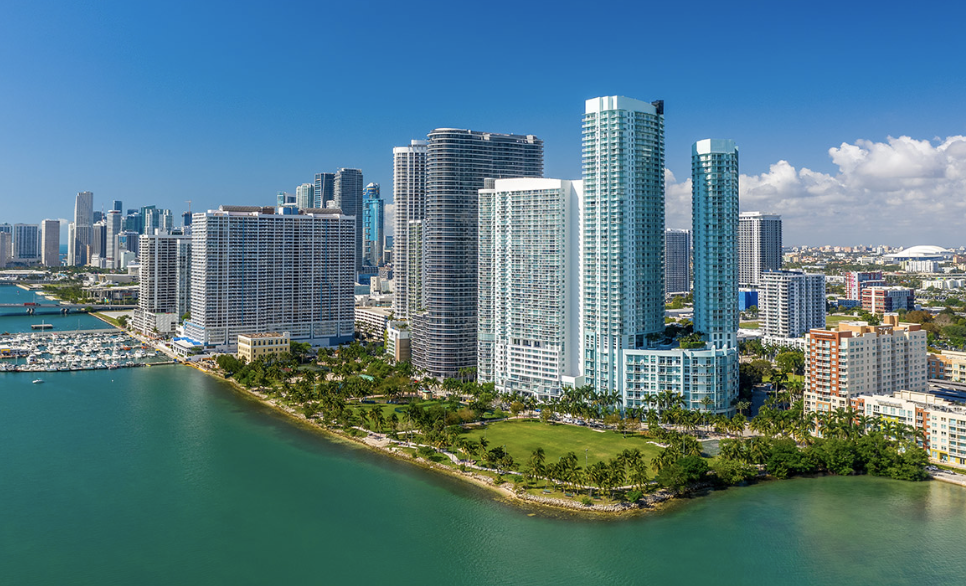 developers in certain zones to double the number of units otherwise allowed, typically by leveraging affordability or redevelopment bonuses.
Sounds technical. Feels very real if you live next door.
Residents in historic neighborhoods like the Morningside Historic District say doubling density doesn’t just mean more units — it means:
- Taller structures creeping into low-scale neighborhoods
- More traffic squeezing onto narrow streets
- Greater strain on aging infrastructure
- A slow erosion of neighborhood character
Critics argue these incentives are sold as affordability tools but often become accelerants for speculation.
The second flashpoint in Cruz’s presentation: Watson Island, where Pardo supported — and critics say lobbied behind the scenes — plans tied to the development of two residential 48-story towers. That vote resurfaced Thursday in slide form. A reminder that votes cast months ago have long political shadows.
Read related: Parting gift: Miami commission pushes through Watson Island fire sale
And then came the show of hands. After finishing his presentation, Cruz did something simple — and devastatingly effective. He 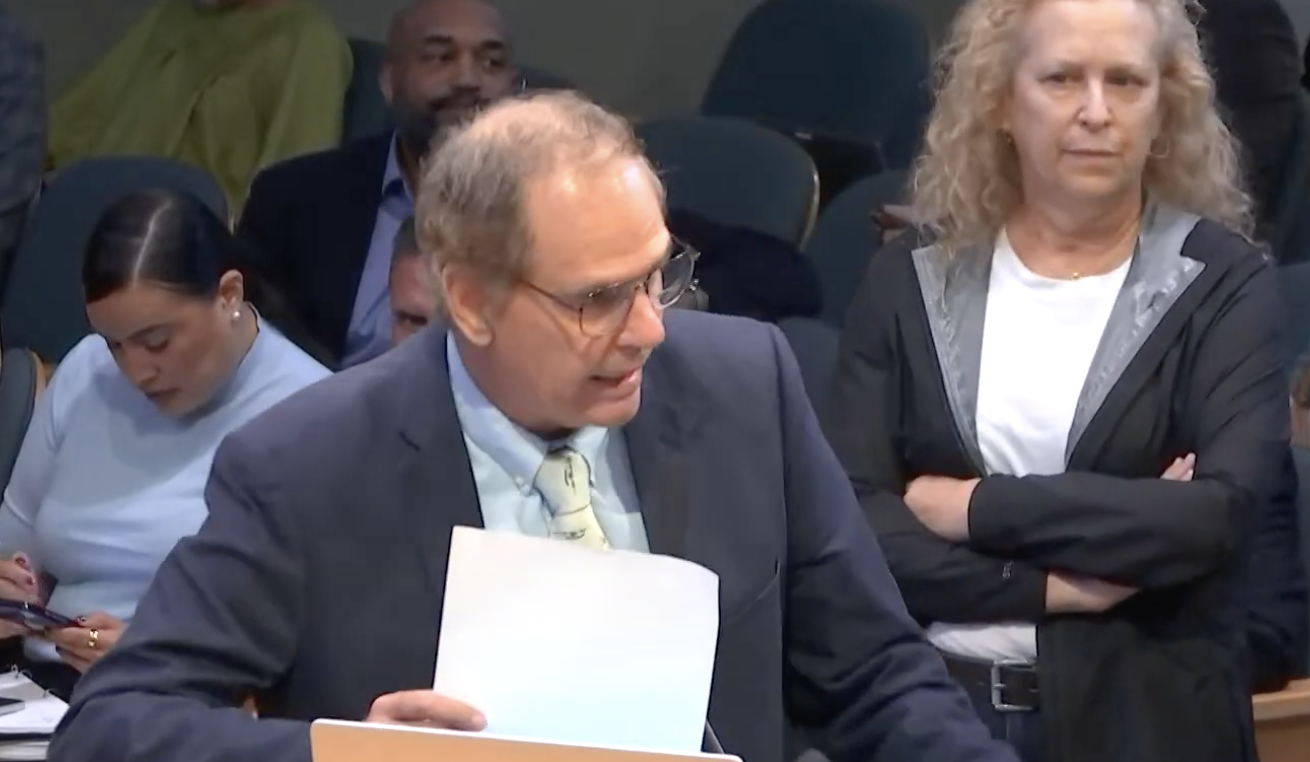 asked residents in the chamber to raise their hands if they opposed PZ-1. About 20 hands shot up. Several of the people attached to those arms also urged the commission to vote against PZ-1.
But the moment ended with an intervention.
“I know there’s a policy not to mention a commissioner’s name specifically so they’re not weaponized politically from, from the outside,” Pardo said, in what sounded less like rebuttal and more like discomfort.
“And I think, I think, I think, that should be followed if that’s the policy.”
That triple “I think” did a lot of work. So did the word “weaponized.”
Because here’s the thing: public comment isn’t supposed to be comfortable. It’s supposed to be accountable. And when residents cite specific votes, specific policies, and specific elected officials — that’s not weaponization.
That’s democracy.
“Why is that not a freedom of speech issue?” Cruz asked before he was shuffled off the podium by a sergeant-at-arms. That question lingered in the chamber — unanswered, but definitely heard.
The answer is that it is a freedom of speech issue. And it’s also a violation of the city’s own Citizens’ Bill of Rights in its charter,  which states: “This government has been created to protect the governed, not the governing. In order to provide the public with full and accurate information, to promote efficient administrative management, to make government more accountable, and to insure to all persons fair and equitable treatment, the City of Miami adopts the provisions of the Miami-Dade County Citizens’ Bill of Rights as applied to municipal governments located within Miami-Dade County and guarantees the following additional rights.”
Listed as number three: “The City shall not interfere with the rights: (i) of freedom of speech; (ii) of freedom of the press; (iii) to petition the government, or (iv) to peaceable assembly.”
And it is absolutely within our freedom of speech to name names.
Read related: Miami Commission, attorney stifle public comment on noise ordinance
What’s really interesting is that under (C) in this bill of rights is the “remedies for violations” part. Residents can sue if their rights are violated. And guess what? “Any public official, or employee who is found by the court to have willfully violated this section shall forthwith forfeit his or her office or employment.”
Said Cruz: “The Miami City Commission has been violating the Citizen’s Bill of Rights at their own peril.”
Is it wrong for Ladra to hope he takes it to court?
Commissioner Christine King tried to step in diplomatically.
“That’s a sticky… It…” she began — then stopped mid-thought. She didn’t finish the sentence. But what she appeared to be getting 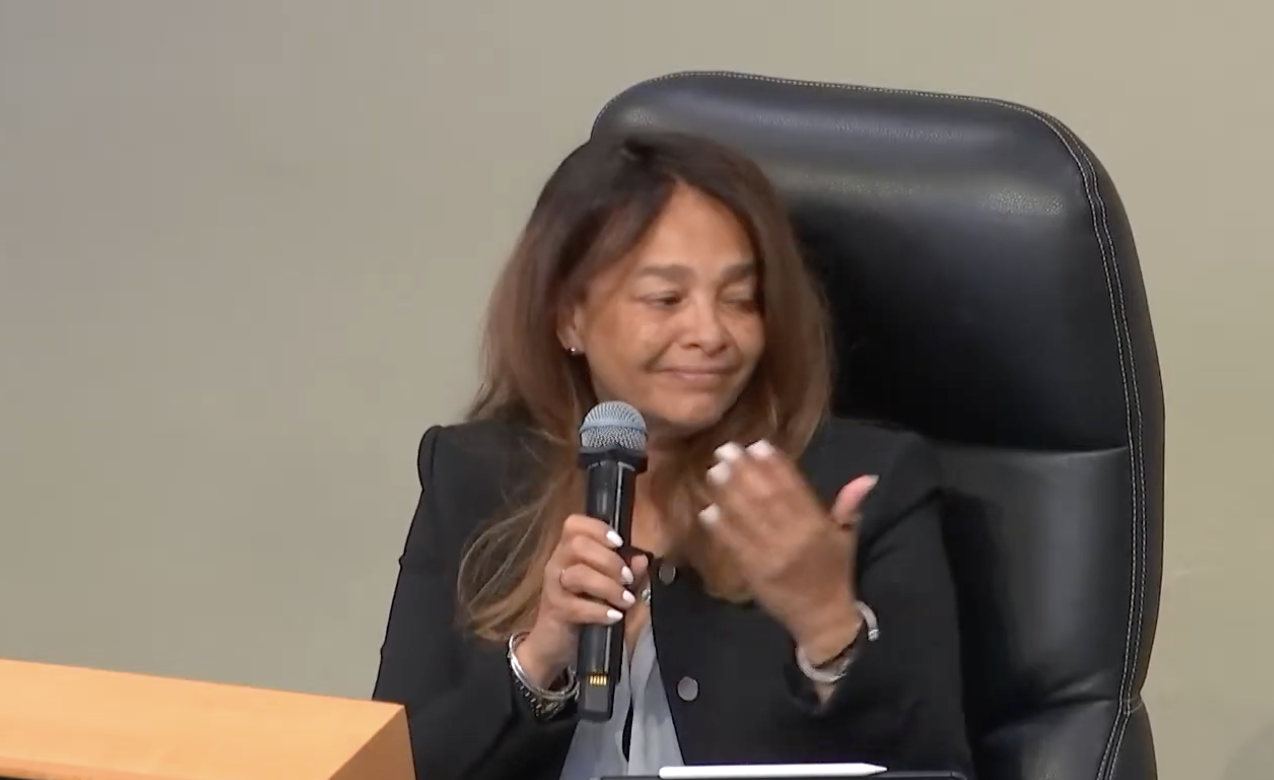 at is something everyone should understand: rules about not naming commissioners during public comment are, in practice, impossible to enforce.
“They say it. They catch me off guard,” King said. “For me, I don’t care if they say my name or not.”
That’s what pragmatism sounds like.
Then came the walk-back heard around the chamber: Pardo’s attempt at clarification — or maybe recalibration.
“For the record, I don’t care either,” he said. “But if there’s a policy, then there’s a policy.”
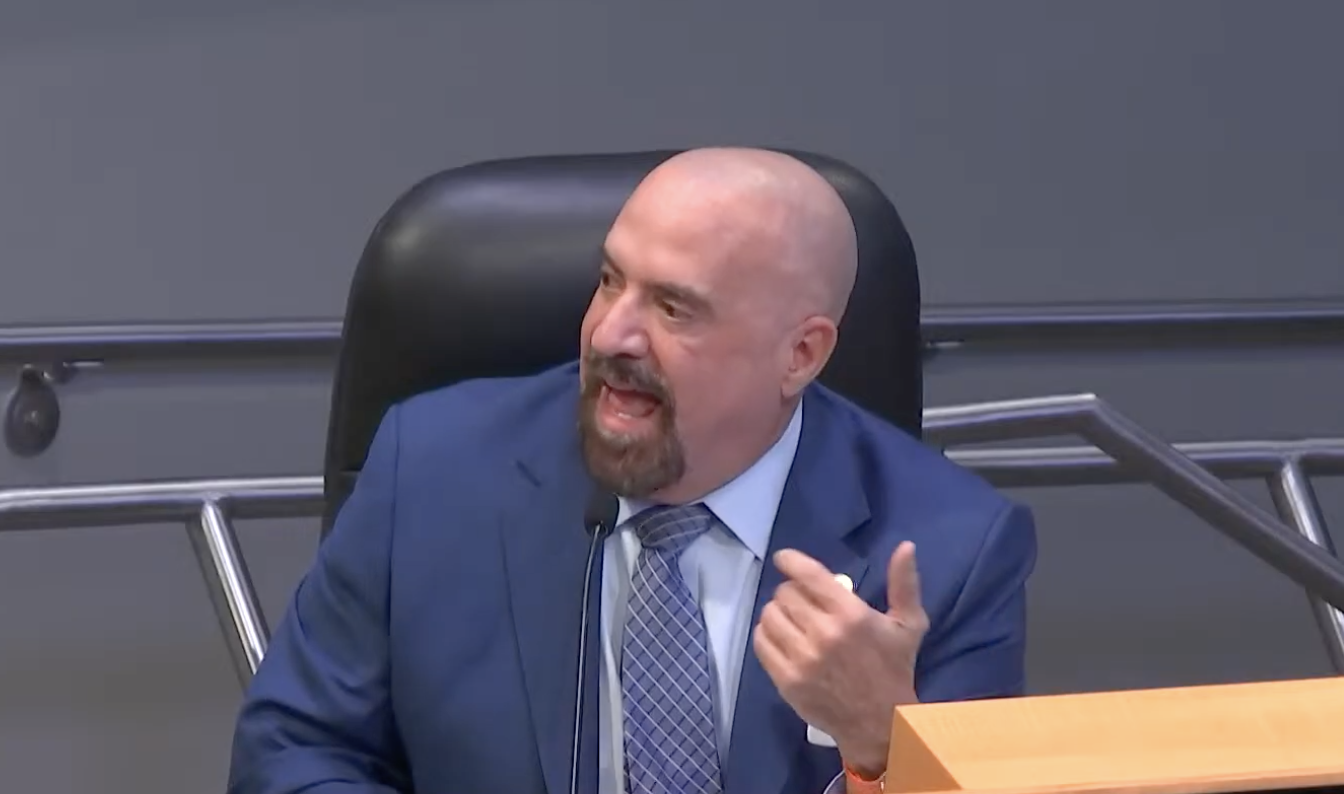 Um… he doesn’t care? Really?
Because hace dos segundos, he very much seemed to care. Like, a lot. His tone. His repeated insistence about policy. His visible discomfort after being named in Cruz’s presentation — all suggested something closer to irritation than indifference.
In politics, words matter. But body language matters too. And Thursday, the two didn’t quite match.
Read related: Miami-Dade commissioners sit silent as resident is dragged out of County Hall
Award-winning filmmaker Billy Corben, another activist and frequent speaker at public comments, thanked King for her “new moderate take on the unreasonable ban of saying the name of public officials at public meetings.
“And shame on you, sir, for trying to censor us and silence us today. You’re living proof that you don’t change the system, the system changes you,” Corben told Pardo — sharing what all of us who supported Pardo have been feeling for a while.
But there is a bigger fight here: PZ-1 — which eventually passed with an amendment carving out NCDs, or Neighborhood 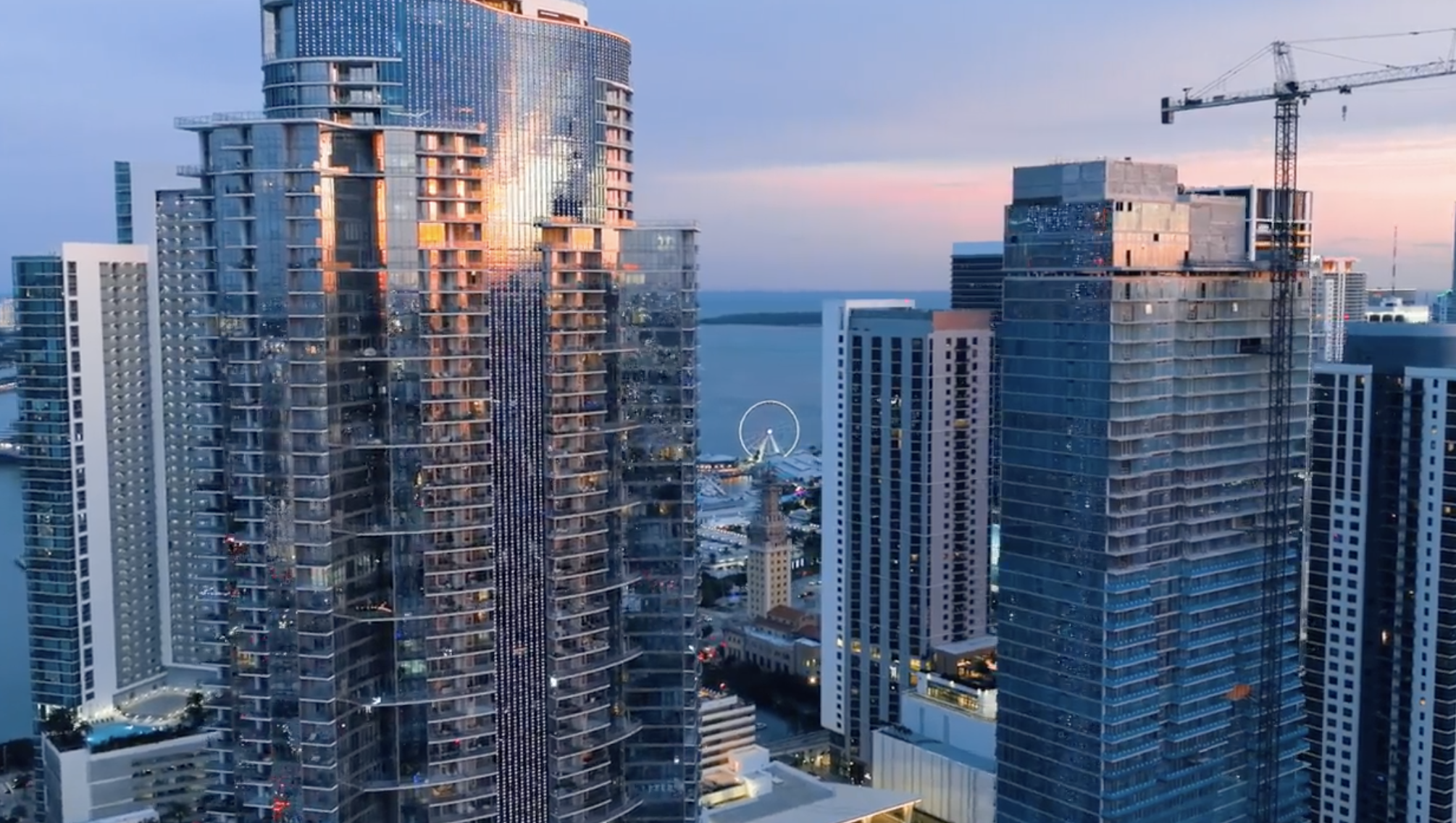 Conservation Districts — is just the latest entry in what residents describe as a long list of zoning incentives reshaping Miami one ordinance at a time.
Each one sounds modest. A density bonus here. A height allowance there. A redevelopment incentive somewhere else.
But layered together, they add up to a transformation that feels anything but incremental. For longtime residents, the fear isn’t just change. It’s acceleration.
And the item may have been heard prematurely. PZ-1 is Item 13 from that infamous Passover Planning and Zoning Appeals Board meeting that was cancelled. Ladra was told in an email by Olga Zamora, the city’s chief of hearing boards, that the item would be heard by the PZAB on April 15. Why is the city so desperate to push it through without the PZAB weighing in?
Read related: No quorum, no vote — just unanswered questions at Miami PZAB meeting
What makes Thursday’s City Hall clash especially meaningful is proximity.
Cruz isn’t a professional activist flown in for optics. He’s a neighbor and former Pardo supporter. And when neighbors start showing up with slide decks documenting votes, timelines, and development patterns, that’s usually a sign the political honeymoon is ending.
For the record, Commissioner Pardo, public comment isn’t designed to be comfortable. It’s designed to be direct. It’s designed to be addressed to you and all the other commissioners, collectively and, sometimes, individually.
And when elected officials appear rattled by being named — especially when the naming is backed by public votes and public records — it raises a bigger question about accountability.
Because public office comes with public memory. Even when it stings. Maybe especially when it stings.
Thursday’s exchange wasn’t just about zoning. It was about pressure.
Residents pushing back. Commissioners reacting in real time. And one uncomfortable moment revealing how thin the line can be between policy debate and political sensitivity.
This kind of independent, government watchdog reporting is crucial to transparency and democracy. And more so every day. Help shine a light on the darker corners of our community with a contribution to Political Cortadito. Click here. Ladra thanks you for your support.

Damian Pardo’s thin skin in Miami — and a neighbor who brought receipts added by Ladra on
View all posts by Ladra →
