
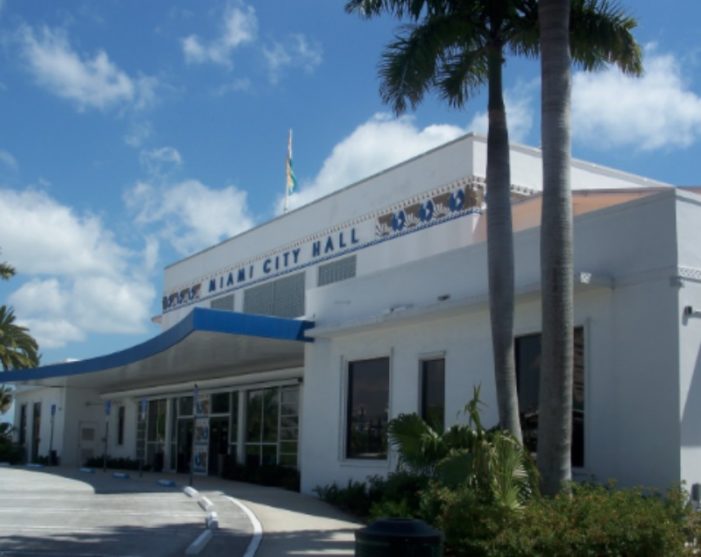
More than 65 residents showed up to Miami City Hall on Wednesday night for the city’s regularly scheduled Planning and Zoning Appeals Board meeting. They were ready to speak. Ready to push back. Ready to ask why, exactly, the city keeps finding new and creative ways to give developers more.
More height. More density. More flexibility in a city already bursting at the seams.
Read related: Damian Pardo passes double-density double-down for Miami developers
And what did they get? Another snub. In a city that has had its share recently of snubs at public Sunshine meetings and deferrals at city meetings when groups of residents show up to speak on a particular item, sometimes more than once, it seems to intend a chilling or silencing effect.
Six members were in the room. The ones who take their role seriously are Chairman Adam Gersten and board members Lynette Cardoch, Chris Collins, Maria Paula de Carolis, Paul Mann and Elon Metoyer. Seven were needed for a quorum. The six other no-show members, Vice Chair Andres Lopez, and Mario J. Bailey, Joseph Corral, Joshua Patinkin, Arthur Porosoff, and alternate Manuel Vadillo apparently all had better things to do.
But they also had already told someone at the city they wouldn’t be there. And somehow, no one thought to tell the people who took time out of their lives — during spring break, during Passover — that the meeting wasn’t going to happen, after all.
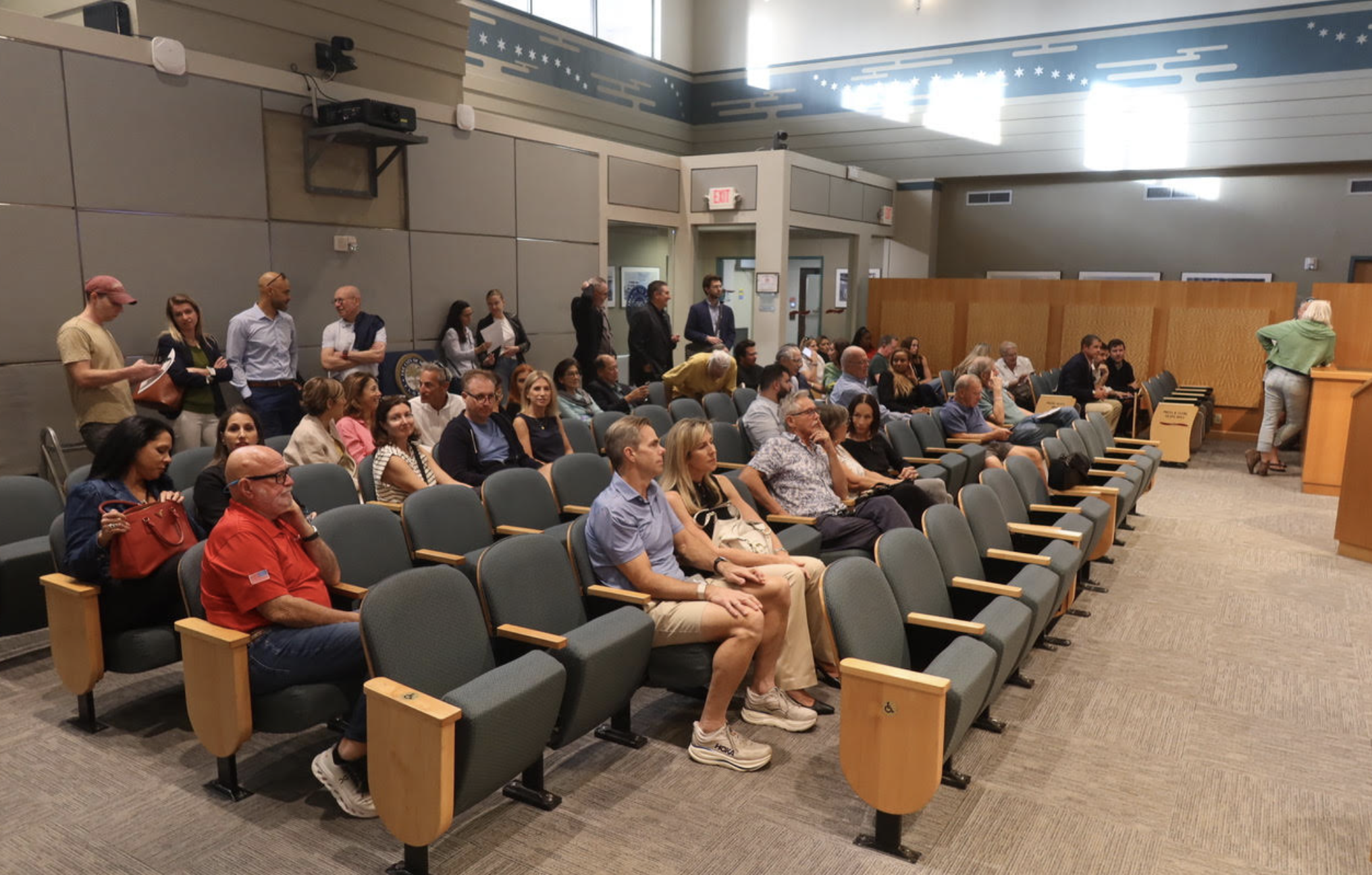 So, after 15 minutes or so of waiting around, the whole thing was canceled.
Call it an April Fool’s joke. Except nobody was laughing.
“At least 66 caring residents showed up to participate in the public process. Instead, they got a lesson in our city’s ineptness and dysfunction,” said activist Elvis Cruz, a Morningside resident, who said the city should have made an attempt to notify people they would not have quorum.
“Scheduling a meeting on Passover, during spring break? What could possibly go wrong,” he asked.
Cruz was there to speak about two items that fit neatly into a pattern some Miami residents are starting to recognize all too well:
- Item 7 would allow developers to buy more height and floor area if their project sits within a quarter mile of a “greenway.”
- Item 13 would allow the transfer of density — moving development rights around the city like Monopoly pieces.
On paper, these sound like planning tools. In practice, critics say they’re just the latest mechanisms to squeeze more development into neighborhoods that are already overbuilt, overburdened, and increasingly unlivable.
And here’s the kicker: Miami is already zoned for far more housing than actually exists, Cruz says. By some estimates, up to eight times the number of units counted in the last full census. Eight. Times.
So the question residents came to ask Wednesday night was simple: If we already have the capacity, why are we still increasing it?
They didn’t get an answer. They didn’t even get a meeting.
Read related: Access road to Miami’s Legion Park could become private garage entrance
But they did get a front-row seat to something else: a city process that somehow always finds a way to move fast when developers need approvals — and to be slow, silent, or invisible when residents want accountability.
Because ya tu sabes. This isn’t happening in a vacuum.
In recent months, the Miami City Commission has shown a growing appetite for increasing density, expanding development  incentives and rewriting the rules in ways that, coincidentally, tend to benefit the same players. Again and again, the message has been clear: Build more. Build higher. Build faster.
Just don’t expect the public process to keep up.
Or even show up.
Wednesday night wasn’t just about a missed quorum. It was about a missed opportunity — for transparency, for engagement, for trust. Because when dozens of residents show up and the board doesn’t, it sends a message.
Not about scheduling. About priorities.
Read related: Op-Ed on development: Who benefits when Miami conveys public city assets?
And for a city already struggling with traffic, infrastructure, affordability, and quality of life, that message is starting to land a little too clearly: If you’re a developer, the door is open. If you’re a resident, you might want to check if there’s even a meeting happening first.
Stay tuned. Because those agenda items? They’re not dead.
They’re just waiting for a night when fewer people are watching.
According to Olga Zamora, the city’s chief of hearing boards, item 13, to allow more density, has been put on the April 15 PZAB meeting agenda, and item 7, the one about buying buying height and floor area (also to increase density), will be heard May 6 at the PZAB meeting.
This kind of independent, government watchdog reporting is crucial to transparency and democracy. More so every day. Help shine a light on the darker corners of our community with a contribution to Political Cortadito. Click here. Ladra thanks you for your support.

No quorum, no vote — just unanswered questions at Miami PZAB meeting added by Ladra on
View all posts by Ladra →
