
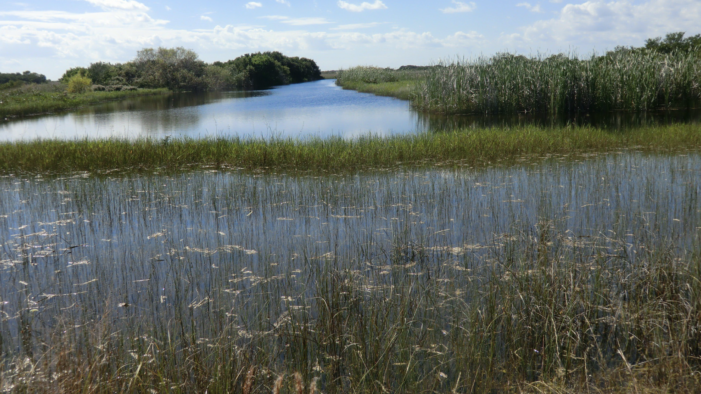
Every few years, someone in Tallahassee looks at Miami-Dade’s Urban Development Boundary — the thin, invisible line separating suburbia from swamp — and decides it would look better moved west. Or south. Or “adjusted.” Or “modernized.” Or whatever euphemism is trending in the Legislature that week.
This year’s version of that effort — which was killed in the Senate thanks to Sen. Alexis Calatayud — came with bipartisan alarm bells loud enough to rattle even the most development-friendly corners of South Florida.
At a press conference staged outside Everglades National Park last week — because when you’re talking about paving paradise, you might as well do it in front of paradise — Miami-Dade Commissioner René García assembled one of the strangest political group photos Miami-Dade has seen in a while: Republicans, Democrats, big-city officials, small-town mayors, environmentalists, farmers and water advocates all saying the same thing: Please don’t do this.
Standing with the former chairman of the Miami-Dade Republican Party were leaders including Karyn Cunningham, Homestead Mayor Steve Losner and Miami Beach Commissioner Alex Fernandez — not exactly a natural caucus, unless the topic is hurricanes, flooding, or something else that 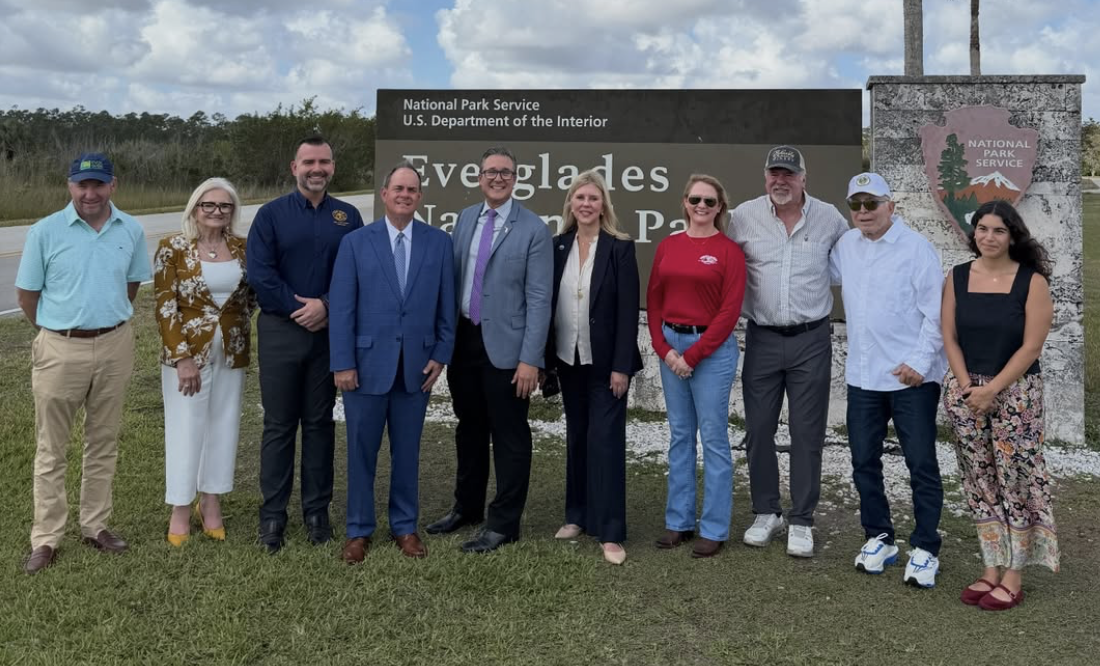 doesn’t care about party registration.
“The Everglades is not just a natural treasure — it is the lifeline of South Florida,” Cunningham wrote on her social media with a photo of the odd bedfellows. “It protects our drinking water, supports our economy, and safeguards the unique environment that makes our region home.
“Moving the UDB would push development closer to the Everglades, threatening the delicate balance that generations have worked to protect. Once that line is moved, it is incredibly difficult to move it back,” Cunningham, a Democrat, said. “This is not about politics. It is about protecting our water, our environment, and the future of our communities.
“I’m grateful to stand alongside leaders like Senator García and organizations like the Everglades Foundation who continue to champion responsible growth and the preservation of one of the most important ecosystems in the world,” she added.
It looks like Tallahassee listened, for once.
On the final day of session, Calatayud was able to get an amendment passed that removed the language in the bill that would make it dramatically easier to push development beyond the UDB, the decades-old planning tool designed to keep Miami-Dade from sprawling straight into the Everglades and the farmland that buffers it. Florida House Bill 399, sponsored by State Rep. 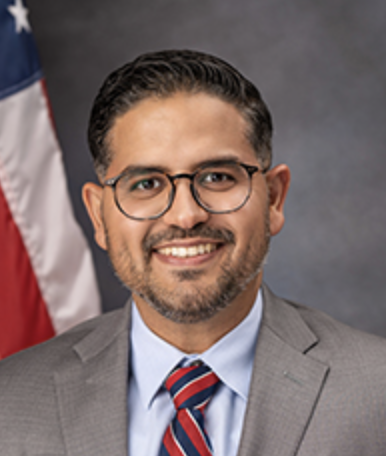 David Borrero, would have changed the requirement of a supermajority of the 13-member county commission — seven votes — to move the UDB to a simple majority present at a meeting.
Not elected. Not total membership. Present.
That means that, theoretically, four votes could have allowed a developer to cross over into the wetlands. Four people could have made a decision that affects flood risk, water supply, agriculture, traffic patterns, infrastructure costs, and the long-term geography of the county. The supermajority hurdle is there precisely because the consequences are long-term, expensive, and basically irreversible. The UDB was created to protect the Everglades, farmland and responsible growth , and Borrero was trying to erode those protections in the name of progress.
Read related: Three developers want to cross over the UDB to build more than 3K homes
“The Urban Development Boundary is not just a line on a map. It is vital for ensuring responsible growth in Miami-Dade while protecting our natural resources,” García said last week. Over the weekend, he posted a video on Facebook, thanking Calatayud and Senators Ana Maria Rodriguez, Ileana Garcia and Shevrin Jones for voting to remove the UDB provision.
This isn’t coming from a Sierra Club rally. Garcia is a Republican, a former state senator, and a member of the Everglades Restoration Task Force appointed by rabid red Gov. Ron DeSantis.
In an email blast on Monday morning, Calatayud, another Republican, said her amendment helped keep protections in place.
“One of the most important responsibilities I have as your State Senator is protecting the long-term future of our community. That includes standing firm in defense of Miami-Dade’s Urban Development Boundary,” the senator wrote.
“The UDB exists for a reason. It protects our drinking water, preserves agricultural land, reduces costly infrastructure expansion, 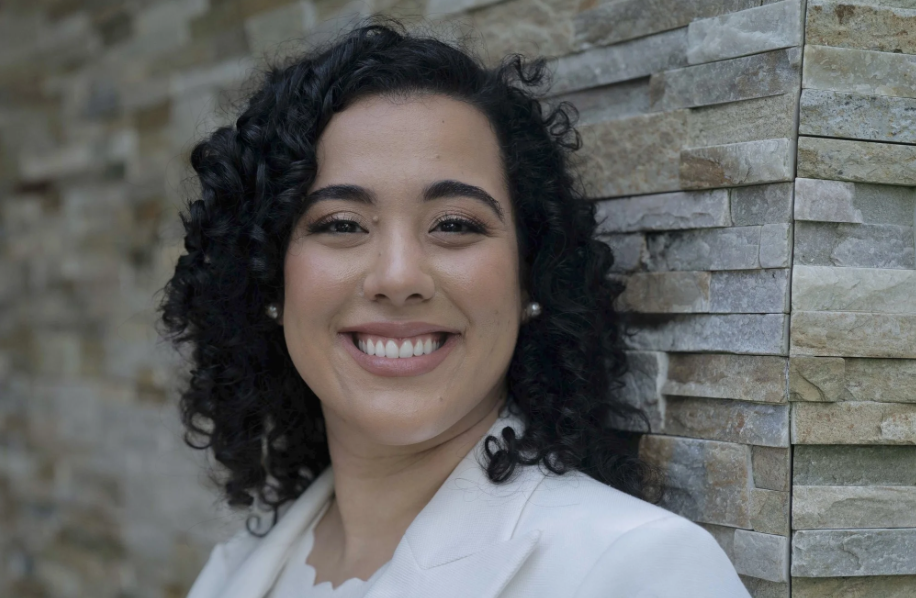 and prevents unchecked sprawl that strains taxpayers and threatens our environment. Expanding the UDB would put increased pressure on our aquifer, worsen flooding risks, and shift infrastructure costs onto residents. All while weakening the safeguards that make our region resilient,” said Calatayud, who published an op ed earlier this month with Rachel Silverstein, executive director of Miami Waterkeeper and a marine scientist with a Ph.D. from the University of Miami Rosenstiel School of Marine and Atmospheric Science who has dedicated her career to protecting South Florida’s waterways and holding polluters accountable.
“This is an important step forward in ensuring that decisions about our most environmentally sensitive lands are made responsibly and with the long-term interests of our community in mind,” Calatyud said. “Growth must be smart, sustainable, and fiscally responsible. We have room to build and revitalize within our existing urban core. Pushing outward into environmentally sensitive areas is not the solution.”
This is from the senate sponsor of the Live Local Act three years ago, and an update this year expanding where counties and cities must allow multifamily or mixed-use housing developments despite their own zoning.
Maybe the Miami-Dade Commission — which has been repeatedly approached with applications to develop beyond the UDB — will listen, too. In January, the board voted to approve the development of a Kelly Tractor equipment hub on 249 acres of wetlands just west of Sweetwater. The measure was vetoed by Mayor Daniella Levine Cava and the override was sidestepped after the board chose delay rather than force a supermajority vote.
Kelly Tractor now says it will rework the proposal to address Levine Cava’s environmental concerns. That could mean preserving more wetlands on-site or offering additional mitigation elsewhere. Company president Chris Kelly says they’re “going to work on the wetlands issue.”
Read related: Kelly Tractor showdown delayed as Miami-Dade commission sidesteps veto
Last year, Lennar pitched 7,800 homes on 960 acres in a $2 billion development they call “City Park” — a “pedestrian-centered” 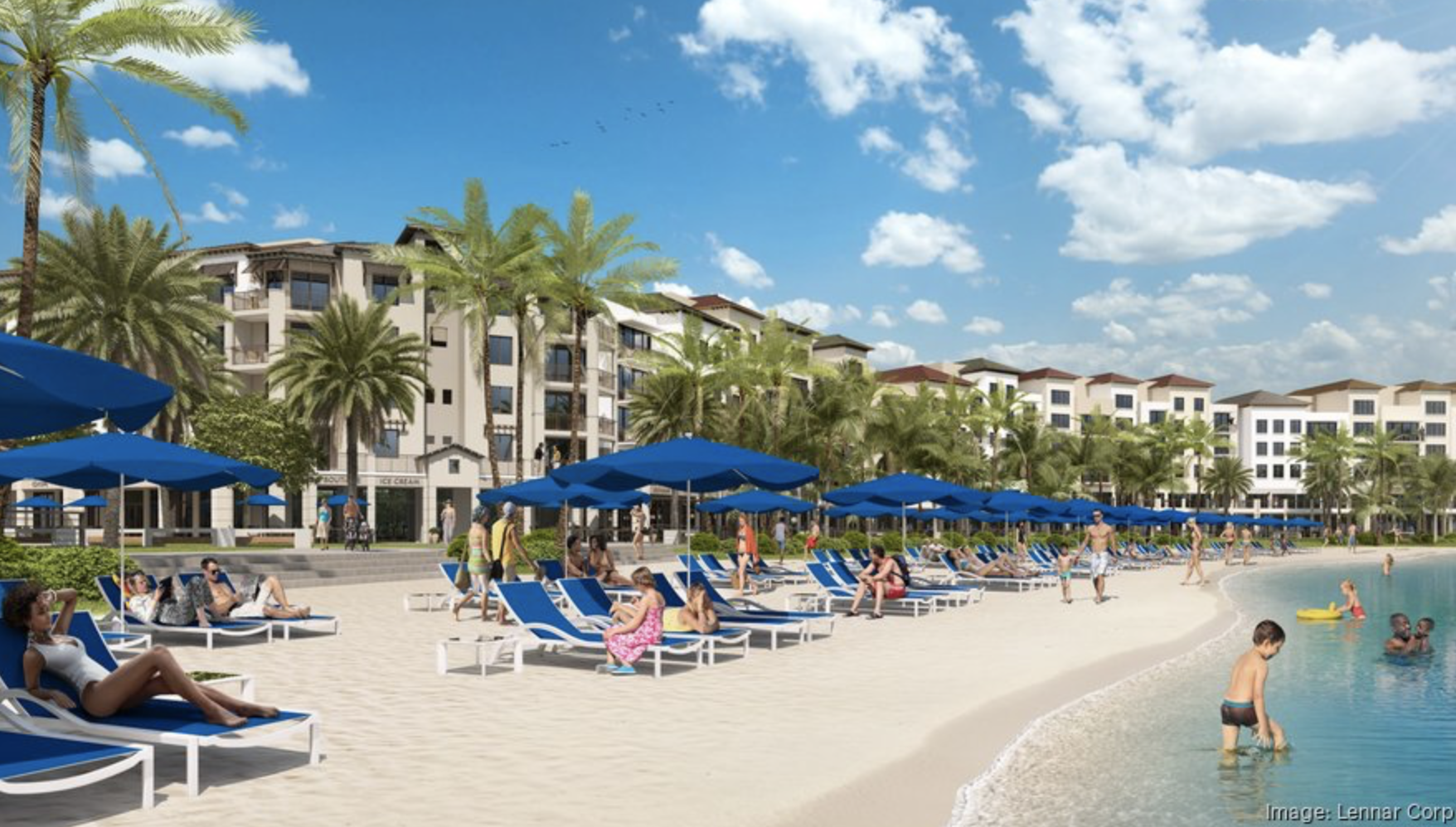 community of homes, offices, retail, restaurants, schools and whatever else you find in a whole new neighborhood — also across the UDB, which is probably as far from any city as you can get.
The UDB is not just a planning safeguard. It is a buffer protecting the Everglades. It is a shield for the Biscayne Aquifer — that’s our drinking water, boys and girls. It is a brake on flood-prone sprawl, a protection for one of the county’s largest agricultural economies and a cost-saving tool for taxpayers who would otherwise have t fund roads, sewers and schools in far-flung developments west of our infrastructure.
Remove or weaken it, and growth doesn’t just expand — it metastasizes.
And once land converts from farms or wetlands to subdivisions and warehouses, it almost never goes back. Not economically. Not politically. Not practically.
But where everyone else sees risk, developers see opportunity. Supporters like Borrero argue that loosening the rules will allow more housing and lower costs.
Critics say that logic, however, ignores infrastructure reality: cheaper land at the edge often becomes expensive sprawl paid for by public dollars — longer commutes, bigger road projects, new schools, expanded utilities, flood mitigation and emergency services stretched thin. Only weeks ago, we were looking at a severe water shortage.
In other words, the sticker price may be low. The lifetime cost is not.
Perhaps the most explosive part of the proposal is that it would have just obliterated Miami-Dade’s own planning rules. This is 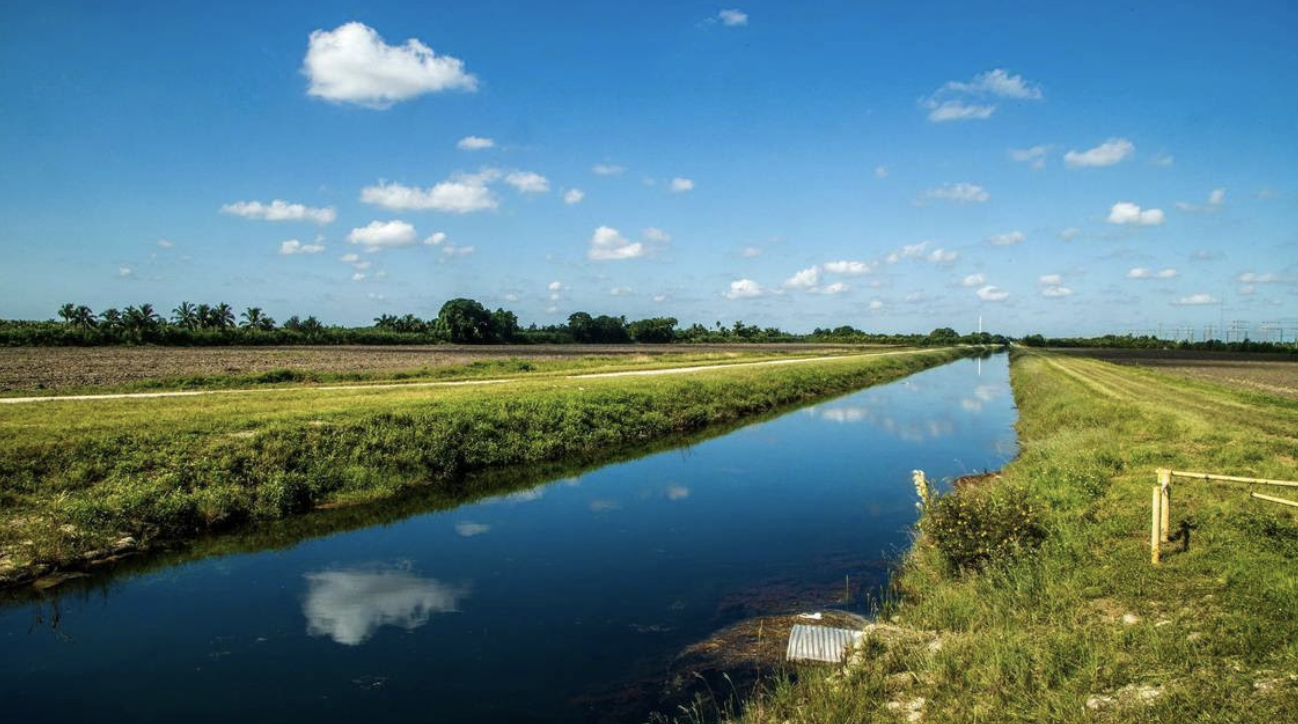 probably why got the Republicans involved. County leaders — even conservative ones — are not thrilled about the state deciding how and where they should grow. This is not a theoretical concern. Once the state sets the rules, local voters have far less ability to influence outcomes. Take a look at the Live Local Act and all its fallout.
Read related: Lennar pitches 7,800 homes on 960 acres; monster ‘City Park’ project crosses UDB
But just because the effort is shelved for now, it will be back at the state capitol again. That is because the incentives never change.
Land outside the UDB is cheaper. If the line moves, its value skyrockets overnight. That creates relentless pressure to try again… and again… and again.
Developers wait for favorable political winds. New commissioners get elected. A bill appears in Tallahassee. And suddenly the “line in the sand” looks more like a dotted suggestion.
This is not just another planning skirmish. It’s a question about what Miami-Dade will look like — and function like — decades from now. Will growth be concentrated where infrastructure already exists? Or will the county continue stretching outward into land that was never meant to be urbanized?
The coalition that gathered last week seems to believe the stakes are nothing less than existential: water security, flood resilience, environmental survival and the future shape of South Florida itself. This time, our legislature agreed.
But stay tuned. Especially if you live west of the Turnpike.
This kind of independent, government watchdog reporting is crucial to transparency and democracy. And more so every day. Help shine a light on the darker corners of our community with a contribution to Political Cortadito. Click here. Ladra thanks you for your support.

Unlikely allies rally to save Miami-Dade UDB from Tallahassee’s talons added by Ladra on
View all posts by Ladra →
