

The Miami City Commission voted unanimously Thursday to begin exploring legal action against Florida’s controversial Live Local Act, the state law that has allowed developers to bypass local zoning restrictions in exchange for providing a percentage of what passes for workforce housing.
The resolution, sponsored by Commissioner Damian Pardo, directs the city attorney’s office to examine every possible avenue for challenging the law, including constitutional claims, home rule arguments, due process concerns, improper preemption, unfunded mandates, and potentially joining existing litigation already underway elsewhere in Florida.
In other words: Miami is officially looking for a way to fight back.
And the irony is so thick you could build a 40-story Live Local tower on it.
Read related: Damian Pardo passes double-density double-down for Miami developers
For those unfamiliar with the law, Live Local has become the most controversial piece of development legislation in Florida in years. Supporters call it a housing solution. Critics call it a developer giveaway.
The law allows qualifying projects to exceed local zoning restrictions, density limits, and in many cases height restrictions if a portion of the units are designated as “workforce housing,” a term that practically means nothing in the Miami real estate market.
The result?
Cities spend years crafting comprehensive land-use plans, conducting public workshops, holding community meetings, negotiating compromises,  and adopting zoning codes. Then Tallahassee shows up and says, “That’s adorable.”
Pardo brought up Miami 21.
For those who have forgotten, the city spent roughly five years developing its form-based zoning code, which took effect in 2010 and has since won multiple prestigious national and regional awards for its innovative approach to urban planning. The effort in creating it involved countless public meetings, consultants, planners, neighborhood groups, developers, architects, business owners, and residents. The city essentially rewrote its entire zoning framework to create a predictable roadmap for future growth.
People fought over it. Argued over it. Spent years refining it and amending it.
Then the Legislature passed Live Local and effectively handed developers a mechanism to sidestep large portions of it altogether.
Read related: Miami approves TSND zones to bring ‘affordable’ housing to transit hubs
Pardo made exactly that point Thursday, arguing that Live Local is undermining years of planning and public input.
And city staff backed up the concern by saying that the Live Local will hurt the city’s design plans and neighborhoods and doesn’t really address affordable housing housing in Miami because the average medium income is so high. He said the city has $28 million from development impact fees that could be used for affordable housing.
Then, he uttered a statistic that made several commissioners sit up straight.
According to Planning Director David Snow, there are already two Live Local projects under construction in Miami. And approximately 80 more have been permitted. Eighty.
 Among those is the Bazbaz Development of the tallest building in Wynwood, at 48 stories (rendering to the right). Snow said there are three other proposed developments in Wynwood that are over 40 stories.
“It does have somewhat of a disruption to that fabric,” Snow said.
Another 55-story building was proposed for Overtown in District 5, “And I couldn’t say anything about it because it was Live Local,” said Chairwoman Christine King, who also expressed concern about historic neighborhoods and co-sponsored the item.
“Live Local is not good for our communities and we should not abdicate our authority to the state,” King said. “It is just not good policy.”
She and Pardo both mentioned how developers are using it to threaten the city into giving them variances by saying they’ll just “go Live Local” if the city does not acquiesce.
Commissioner Ralph Rosado first reminded everyone that he was in commission chambers as a public speaker two years ago when the Sears property on Coral Way was being pitched for a major redevelopment project using Live Local provisions — and bypassing local zoning caps Located at 3655 SW 22nd Street, developers got approval last year to build three 8-story buildings with 1,050 residential units and 50,000 square feet of retail space.
Instead of breaking ground themselves, however, the current owners, RK Centers (led by Raanan Katz), capitalized on the newly approved layout and listed the 8.12-acre “shovel ready” property for sale, seeking an asking price between $100 million and $120 million. The property is assessed at $38.5 million, according to the Miami-Dade Property Appraiser’s Office — but that’s just as a Sears.
Rosado also briefly voiced concern about what a legal challenge might mean for those 80 projects already moving through the system. A reasonable 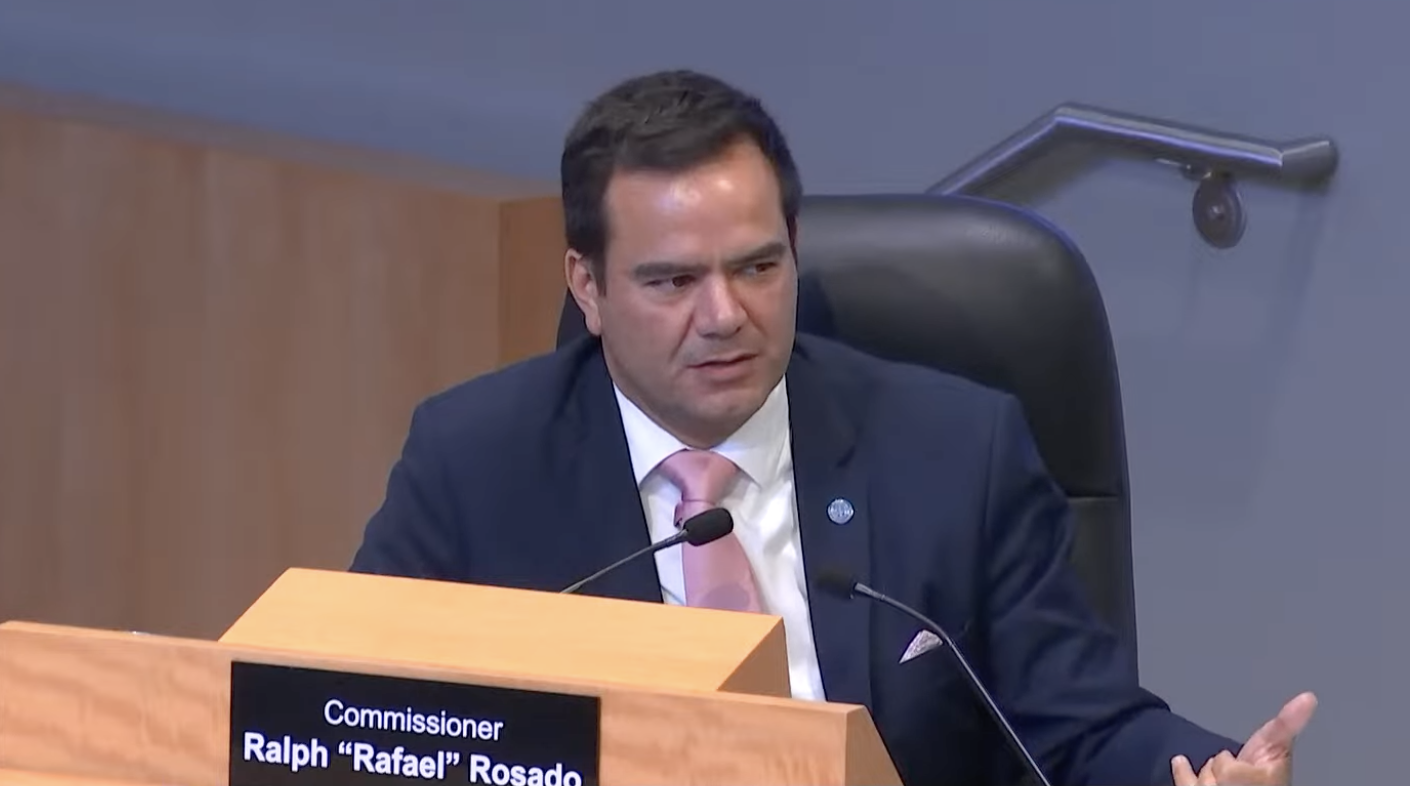 question, considering developers have invested significant time and money relying on a state law that currently exists.
The commissioner also said that it was important to encourage the development of workforce and affordable housing. “I’m not ready to throw the baby out with the bathwater just yet on this,” Rosado said.
But Pardo reassured him that Thursday’s vote wasn’t a lawsuit. Not yet. It merely instructs City Attorney George Wysong to come back with options.
Translation: We’re not pulling the trigger today. We’re loading the weapon and seeing where to aim.
Read related: Fontainebleau water park slides past local opposition — through Tallahassee
And Miami won’t be alone if it decides to move forward.
Several municipalities and local governments across Florida are already battling Live Local or exploring legal challenges to the law’s preemption of local planning authority. The city of Miami Beach has been grappling with it and State Rep. Fabián Basabe has vowed to introduce amendments to the law that would protect local zoning control (if he is re-elected, of course).
Earlier this year, Hillsborough County sued the State of Florida, arguing that the Live Local Act violates constitutional home-rule protections by stripping local governments of planning authority. The county contends the law overrides local decision-making and public participation in land-use matters.
This case is being watched statewide because if Hillsborough succeeds, it could reshape how Live Local is implemented across Florida.
One option available to Miami could be joining those efforts rather than starting from scratch.
Which brings Ladra back to the delicious irony of the day.
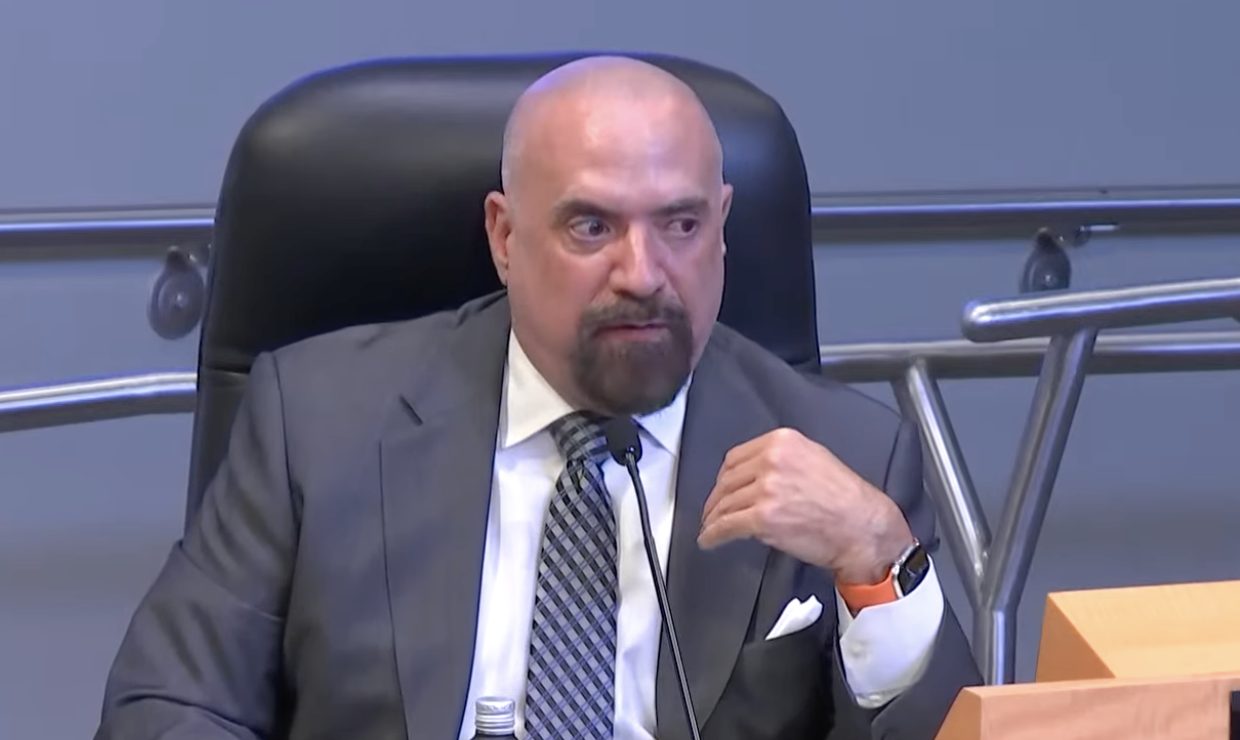 Because Pardo’s fingerprints are all over development policies that critics argue have increased density and accelerated growth within Miami. Not long ago, neighborhood activists were accusing him of helping open the door to bigger projects and more intense development, including an ordinance that allows developers to double their density in Edgewater and Dodge Island.
Now, he’s warning that Tallahassee has opened the door too wide.
Read related: Miami: Damian Pardo has a developers’ dream in density-for-dollars deal
Perhaps this is evolution. Perhaps it’s enlightenment. Perhaps it’s early campaigning.
Or perhaps it’s what happens when someone discovers there is always a developer somewhere who wants even more density than you were willing to give them.
Whatever the reason, the political reality is becoming impossible to ignore.
For years, Miami commissioners argued over how much growth the city should allow. Live Local removed much of that argument from local control altogether.
Now, the city is preparing to ask a question that governments across Florida are increasingly asking: If local zoning doesn’t belong to local governments anymore, then what exactly is home rule worth?
The city attorney’s office will now begin searching for answers.
And somewhere in Tallahassee, developers are probably checking the status of those 80 applications.
This kind of independent, government watchdog reporting is crucial to transparency and democracy. And more so every day. Help shine a light on the darker corners of our community with a contribution to Political Cortadito. Click here. Ladra thanks you for your support.

Miami decides to fight Live Local Act — and Damian Pardo leads the charge added by Ladra on
View all posts by Ladra →
