
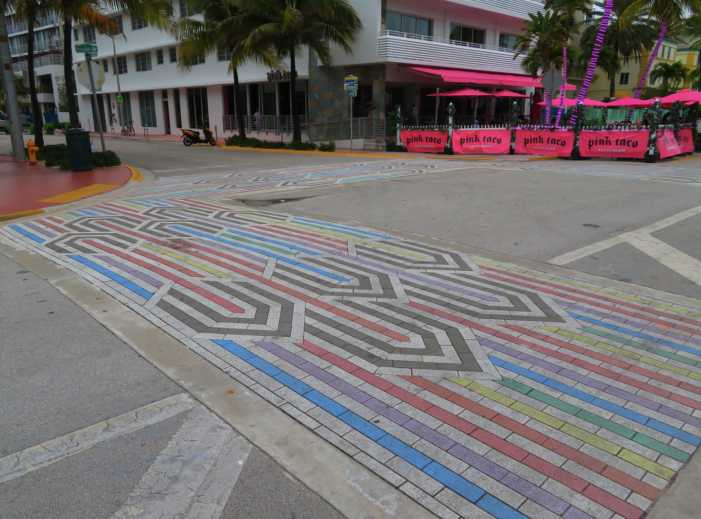
Remember when Florida Gov. Ron DeSantis decided rainbow crosswalks were suddenly a public safety menace?
Not potholes. Not flooding. Not insurance rates.
Rainbows.
Back in 2023, the state flexed its muscle and forced the removal of rainbow crosswalks across Florida, including Miami Beach’s iconic Pride crosswalk on Ocean Drive — the one that had quietly functioned for years without chaos, collisions, or spontaneous outbreaks of glitter-related traffic accidents.
The official explanation? Safety standards. The unofficial read? Culture war theater.
And this Saturday, Miami Beach is answering Tallahassee the only way it knows how: with color, symbolism, and just enough 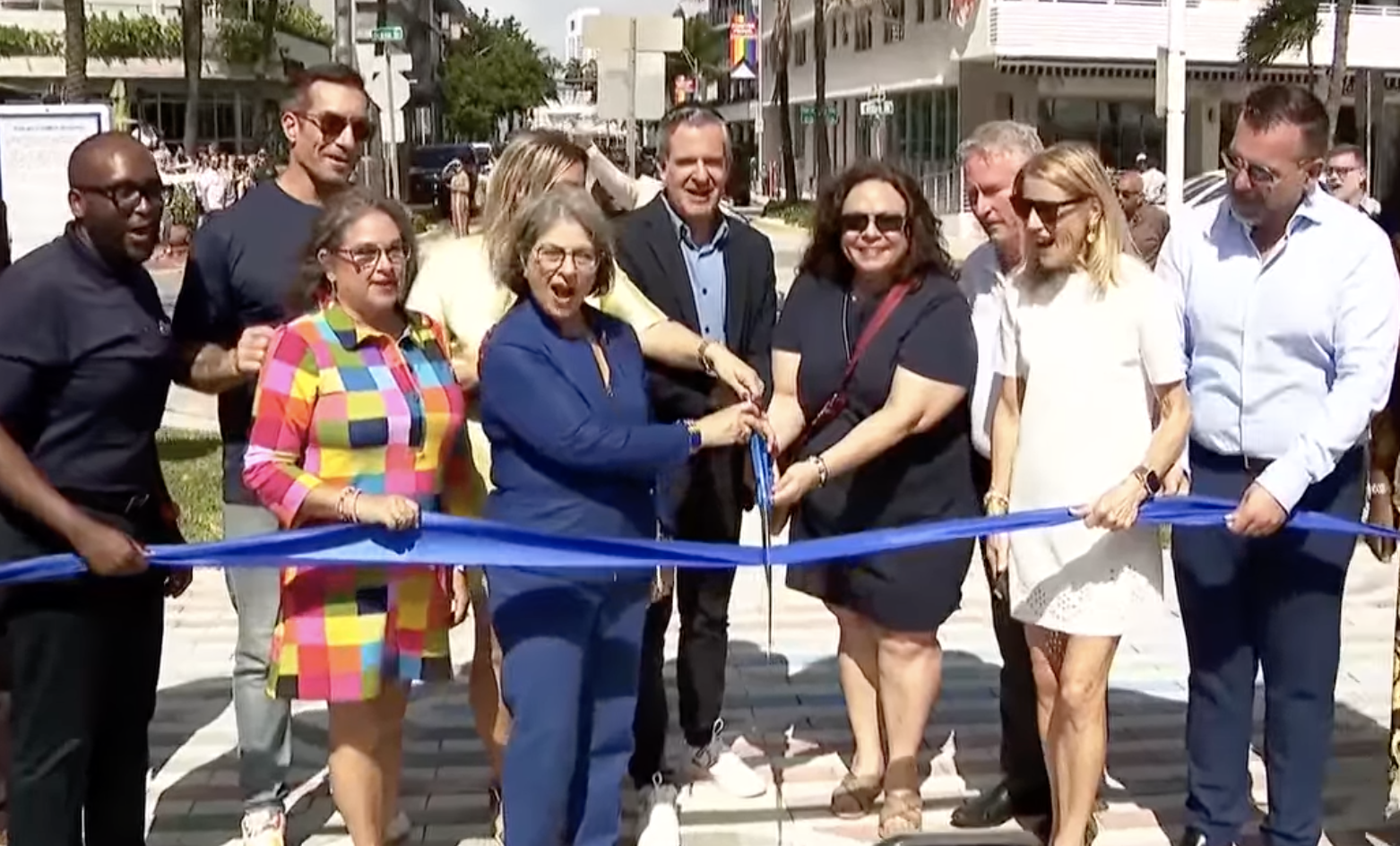 defiance to make a point.
On the eve of Miami Beach Pride, Miami-Dade Mayor Daniella Levine Cava joined the city Friday to unveil what amounts to a political workaround disguised as public art.
The old rainbow crosswalk — the one dismantled under state pressure — has been rebuilt brick by brick as a rainbow sidewalk installation inside Lummus Park, just steps from its original home.
Read related: Miami-Dade commissioners vote to urge Ron DeSantis to veto anti-DEI bill
Not on the roadway. Not technically a crosswalk. But unmistakably a statement.
And yes — every inch of it carries history. The installation uses 3,606 rainbow pavers salvaged from the original crosswalk, carefully relocated to bypass state restrictions on roadway markings.
Translation: If Tallahassee doesn’t want rainbows in the street, Miami Beach will put them somewhere the state can’t bulldoze.
Miami Beach Commissioner Tanya Katzoff Bhatt — who in February sponsored the measure that was unanimously approved — didn’t mince words about the removal of the crosswalk by Department of Transportation workers in October and the symbolism of replacing it.
“To take what was considered an assault to some people, a tragedy to others — and definitely an affront to most of us — and turn  it into a moment of strength and pride — what’s better than that?” Katzoff Bhatt said to Local 10 News. “We have Tallahassee spending its time manufacturing culture wars.” She called the removal “a real slap in the face” to residents and visitors and said the intersection “was empirically the safest intersection on Ocean Drive.”
Which raises the obvious question: If it wasn’t dangerous, why did it have to go?
Because sometimes the point isn’t engineering. It’s messaging.
On Friday, as the new Lummus Park sidewalk was unveiled, Katzoff Bhatt said it was “like a Phoenix rising from the ashes.”
Read related: School Board rejects LGBTQ+ History Month as casualty of ‘Don’t Say Gay’
Commissioner Alex Fernandez, one of the city’s openly gay elected officials, credited allies on the commission and in the community for refusing to let the crosswalk quietly fade into history. To him, the crosswalk was never just decoration. It symbolized decades of struggle — through the HIV/AIDS crisis, workplace discrimination, military exclusion, and the long road to marriage equality.
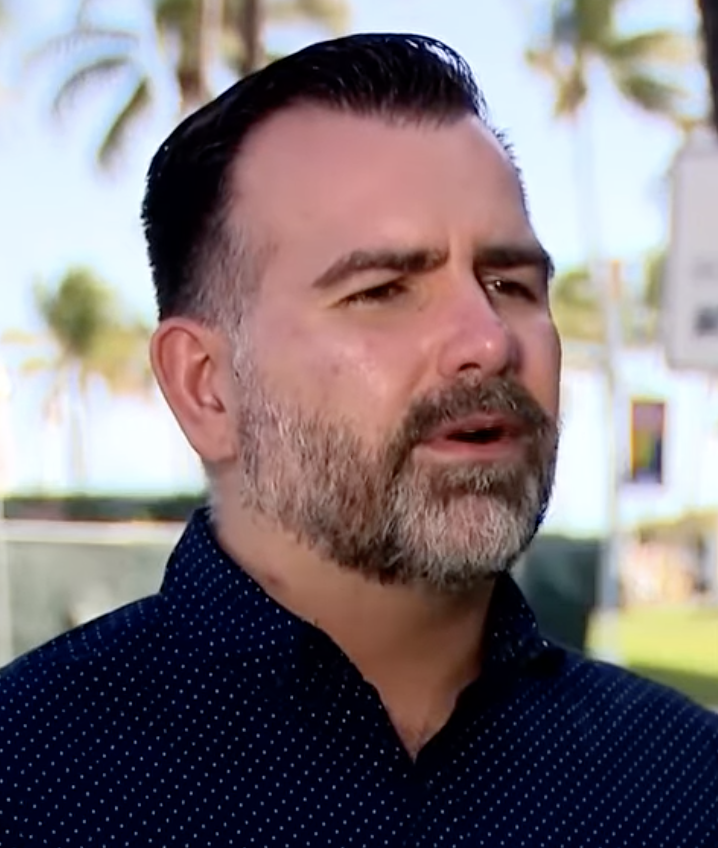 “It was a symbol of the progress made, and they came and stripped it away,” Fernandez said. “It’s a very clear message.”
When the state ordered these rainbow crosswalks gone, many saw it not as a safety correction — but as a signal. And, perhaps, an attempt to hide an entire demographic’s identity. And this new installation — technically a sidewalk, spiritually a monument — is Miami Beach’s way of saying that identity can’t be legislated into invisibility.
Even if the pavement gets ripped up.
But everybody understands the subtext here. This isn’t just about a bunch of colored bricks. It’s about control.
Who decides what symbols belong in public spaces? Who gets to define safety? Who wins when state authority collides with local identity?
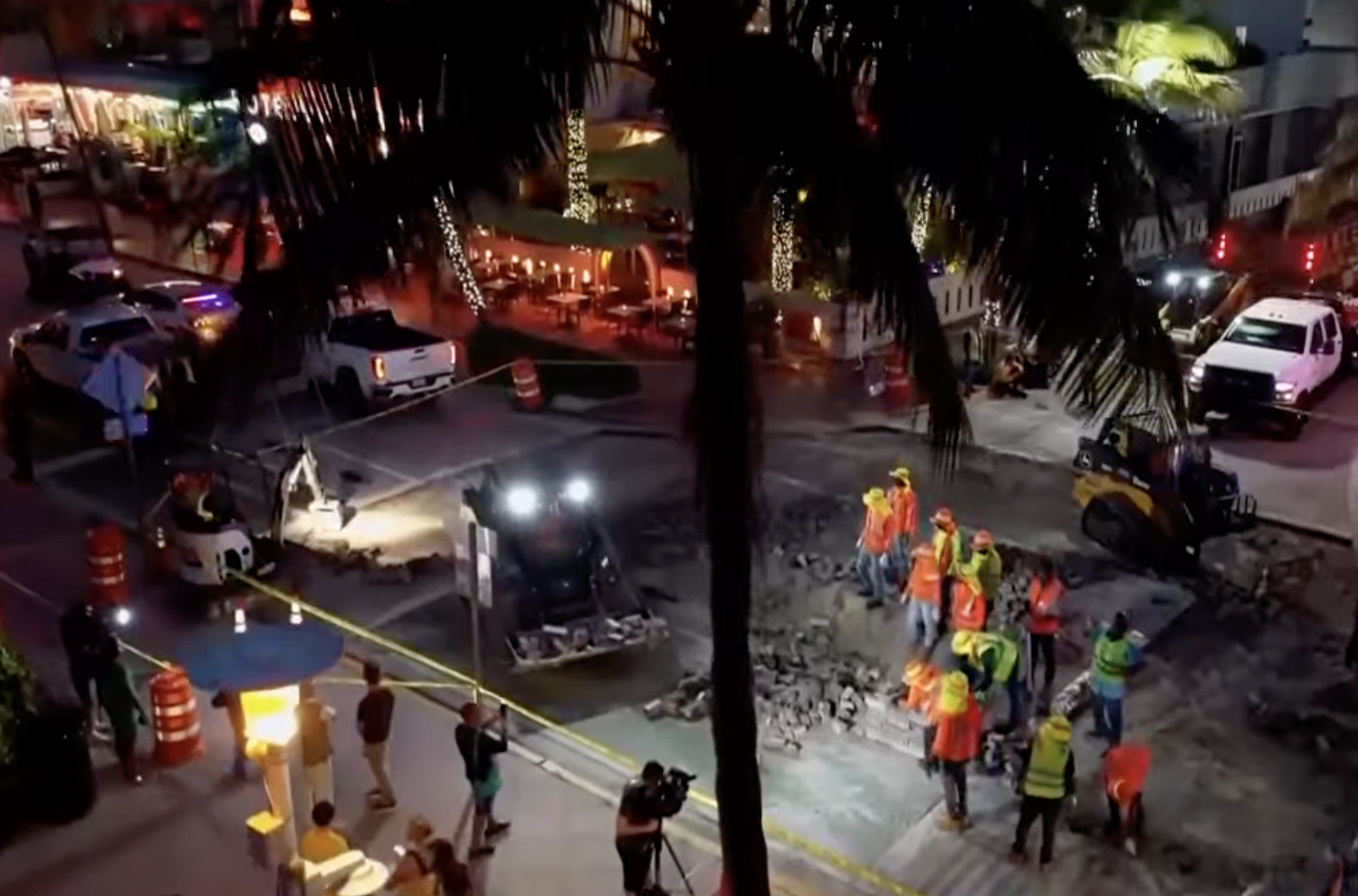
Because when Florida Department of Transportation started enforcing uniform crosswalk standards, cities didn’t just lose decorative paint. They lost a piece of civic expression.
And in a state increasingly defined by ideological skirmishes, even sidewalks have become battlegrounds.
Here’s the irony baked into every rainbow paver: The state tried to erase a symbol. Instead, it created a stronger one. Before, it was a crosswalk. Now, it’s a monument.
Before, people walked across it. Now, people will gather around it.
Read related: LGBTQ History Month debate back at Miami-Dade School Board with vitriol
And this Saturday morning, as Pride flags ripple along Ocean Drive and crowds gather near Lummus Park, Miami Beach will 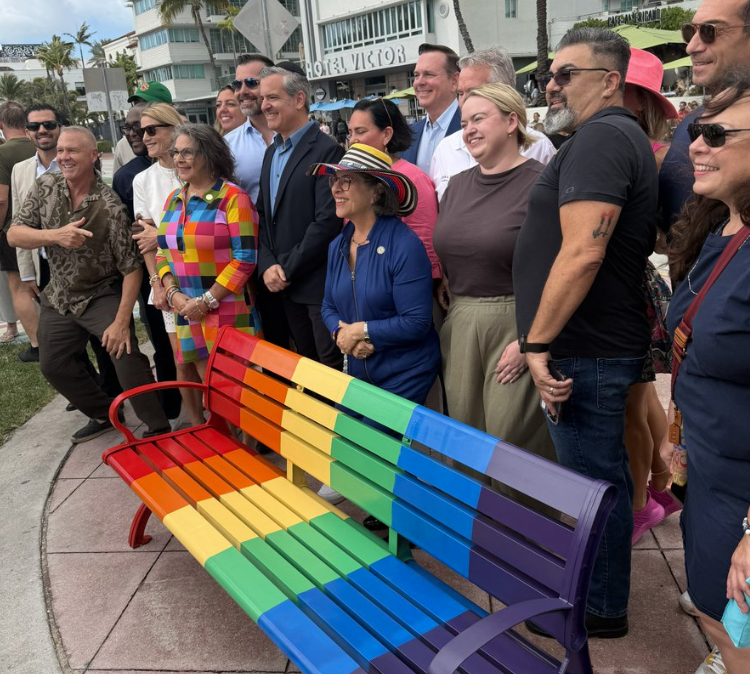 unveil more than a sidewalk. It will unveil a workaround.
A workaround born from policy, politics, and a stubborn refusal to fade quietly into grayscale.
The city even added a rainbow bench for good measure.
Because if Tallahassee thought removing a crosswalk would dim the colors, it misread the city.
Miami Beach doesn’t erase easily.
Maybe the people in Key West, Delray Beach, Tampa and Orlando — where a memorial crosswalk to the victims of the Pulse nightclub massacre was obliterated — can also invent a workaround.
This kind of independent, government watchdog reporting is crucial to transparency and democracy. And more so every day. Help shine a light on the darker corners of our community with a contribution to Political Cortadito. Click here. Ladra thanks you for your support.

Miami Beach 1, Tallahassee 0, as city rebuilds rainbow crosswalk in sidewalk added by Ladra on
View all posts by Ladra →
