
As everyone knows, Raquel Regalado can count
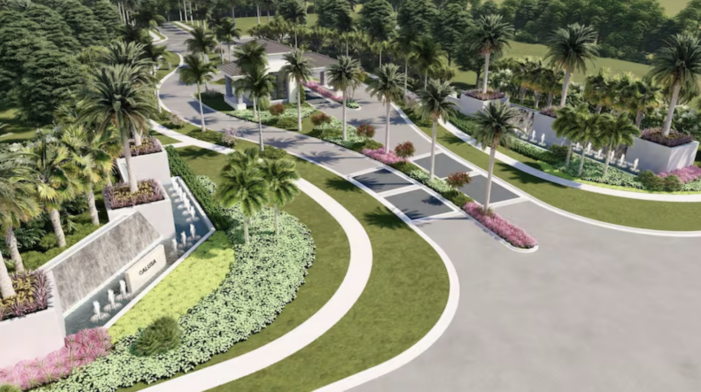
Residents of Calusa — fighting the development of the long-abandoned golf course with an organic, urban rookery into a mega gated complex of 500+ homes — got a mulligan Thursday when county leaders, again, put off a decision for another month.
Ladra has been writing about Calusa since the covenant was still intact — back when the adjacent ring-property owners wanted that old golf course to stay green forever. Until another green got their attention. Developers paid them off with up to $300,000 so at least 75% would vote to lift the 99-year covenant, which still had 49 years left on it (back in 2017).
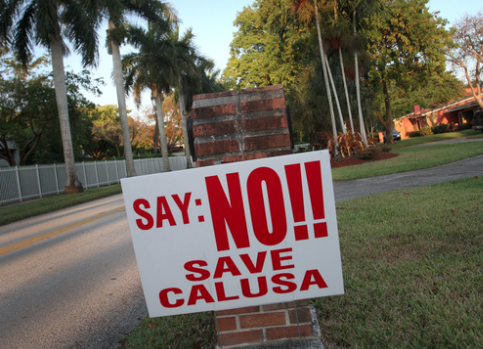 Fast forward almost a decade and the covenant is gone, the course is still closed, the birds have moved and settled in, the lawyers have gotten rich, and the Miami-Dade County Commission is once again kicking the can down the fairway.
At Thursday’s Community Development Master Plan meeting, Commissioner Raquel Regalado — whose district includes Calusa — looked around the dais and saw what every seasoned politician recognizes in an instant: She didn’t have the votes.
So instead of losing, she deferred. Again.
The 540-home GL Homes project on the former 168-acre Calusa golf course — a plan which would drain a fourth of the lake where the rookery sits — is now pushed to March 19. Officially, it’s to give the developer more time to “work with neighbors.” Unofficially? Nobody wants to be the deciding vote in an environmental-vs-development showdown when 50-plus residents are lined up in matching green shirts.
And that crowd matters. Because next time, they may not be allowed to speak. Commission Chairman Anthony Rodriguez made it clear: unless the project comes back with “significant changes,” there will be no reopening of public comment.
But, of course, it’s going to have to have significant changes. That was made clear by the commissioners who voiced concerns. And it puts enormous pressure on what happens behind the scenes over the next month. The non-negotiable demand from the opposition? A 330-foot buffer around the organic bird rookery that has taken root on a tree island in the middle of the lake.
Not 100 feet. Not “we’ll landscape it nicely.” Three hundred and thirty feet. To the inch.
That’s what the Tropical Audubon Society has pushed for (Save Calusa wants more, like a five-acre park). And that’s where the standoff lives.
GL Homes has agreed to 100 feet. The difference between 100 and 330 feet is the difference between a decorative water feature and an actual preserve.
Speakers — neighbors in “Save Calusa” shirts, real estate executives in sharp suits or heels, bird advocates, traffic worriers — gave 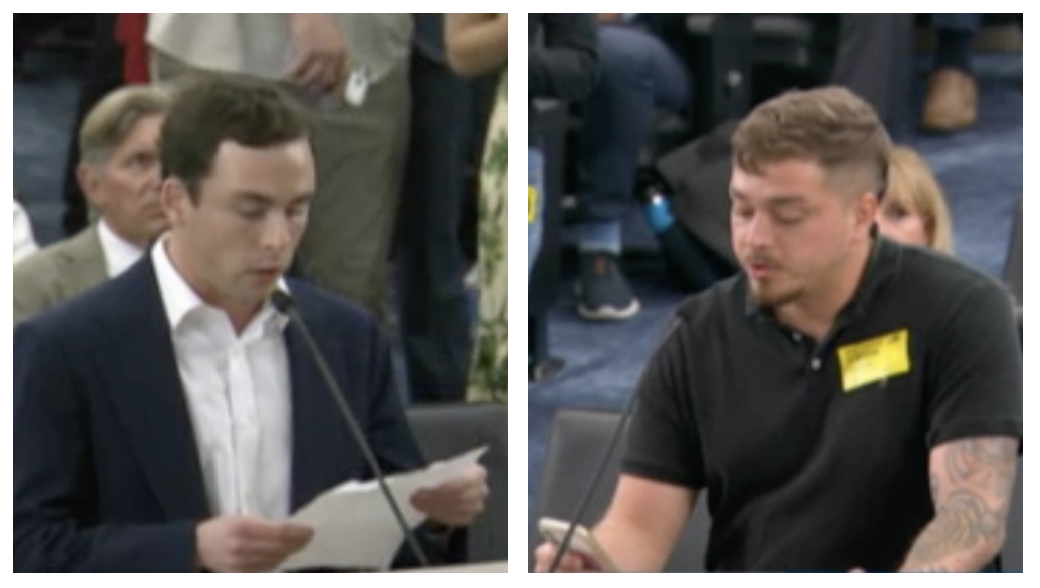 the pros and cons of the development. Many of the supporters were ring property owners, some of whom still haven’t gotten 100% of their settlement price. Las malas lenguas say it is tied to permitting. Many real estate agents and other fans of GL Homes read statements that seemed almost foreign to them. Like it wasn’t from the heart. It sounded like edited content.
Read related: Miami-Dade: Lennar wants to build 138 homes on 20 acres of rural South Dade
On the other side, Daniel Arguelles, a Calusa resident and board member of the Kendall Federation of Homeowners Associations, also read from a piece of paper — but his was one of the strongest testimonies of the day.
Knock, knock, knock. He rapped three times at the podium. “That’s been the sound of developers that tried to break the Calusa covenant that protected the golf course from development,” Arguelles said. Knock, knock — he rapped again. “For decades the developers tried to convince Calusa homeowners to break that covenant with no success until GL Homes came knocking.”
Knock, knock, he rapped the podium again. “This time the offer to each home owner was too tempting, too powerful…The homeowners took the money, hundreds of thousands of dollars per home were too much to resist,” Arguelles said, arguing that 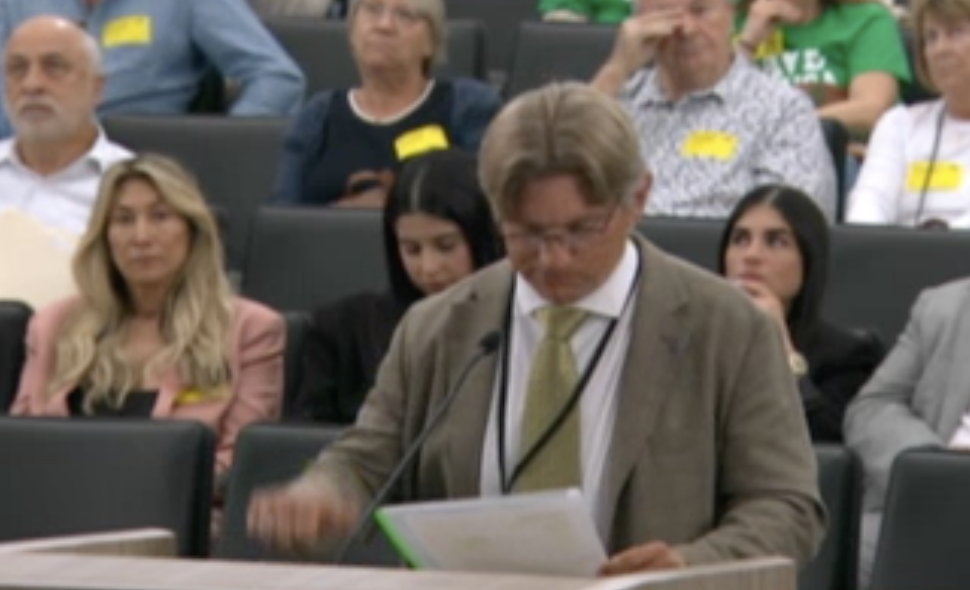 many of those “took the money and ran” and moved, and suggesting the commission take the pulse of current ring homeowners.
He also said that approval of the project would send an unmistakeable message: “Future developers take note, pay the immediate neighbors surrounding your project an insane amount of money to get their support and that will ensure success at the BCC.”
After more than two hours of testimony, several commissioners, including Rene Garcia, Roberto Gonzalez, Vicki Lopez and Danielle Cohen Higgins raised concerns about traffic and scale.
“They’re not saying ‘don’t build anything,'” Cohen Higgins told the developers. “They’re saying ‘give us a 330 foot buffer.’
“I don’t think that’s an unreasonable request,” she said, openly questioning if there have been true good faith efforts on their part if “after so many years… you still have so many people in opposition to this project.”
Read related: Calusa rookery shows active nesting where they want to build 550 homes
Said Garcia: “This is not going to solve the problem affordable housing.”
And that’s when Regalado pivoted. First she described the golf course green space as an abandoned field full of illegal dumping when she was elected in 2020. Then she said it was full of invasive plants that the developer will remove. Then she said that a 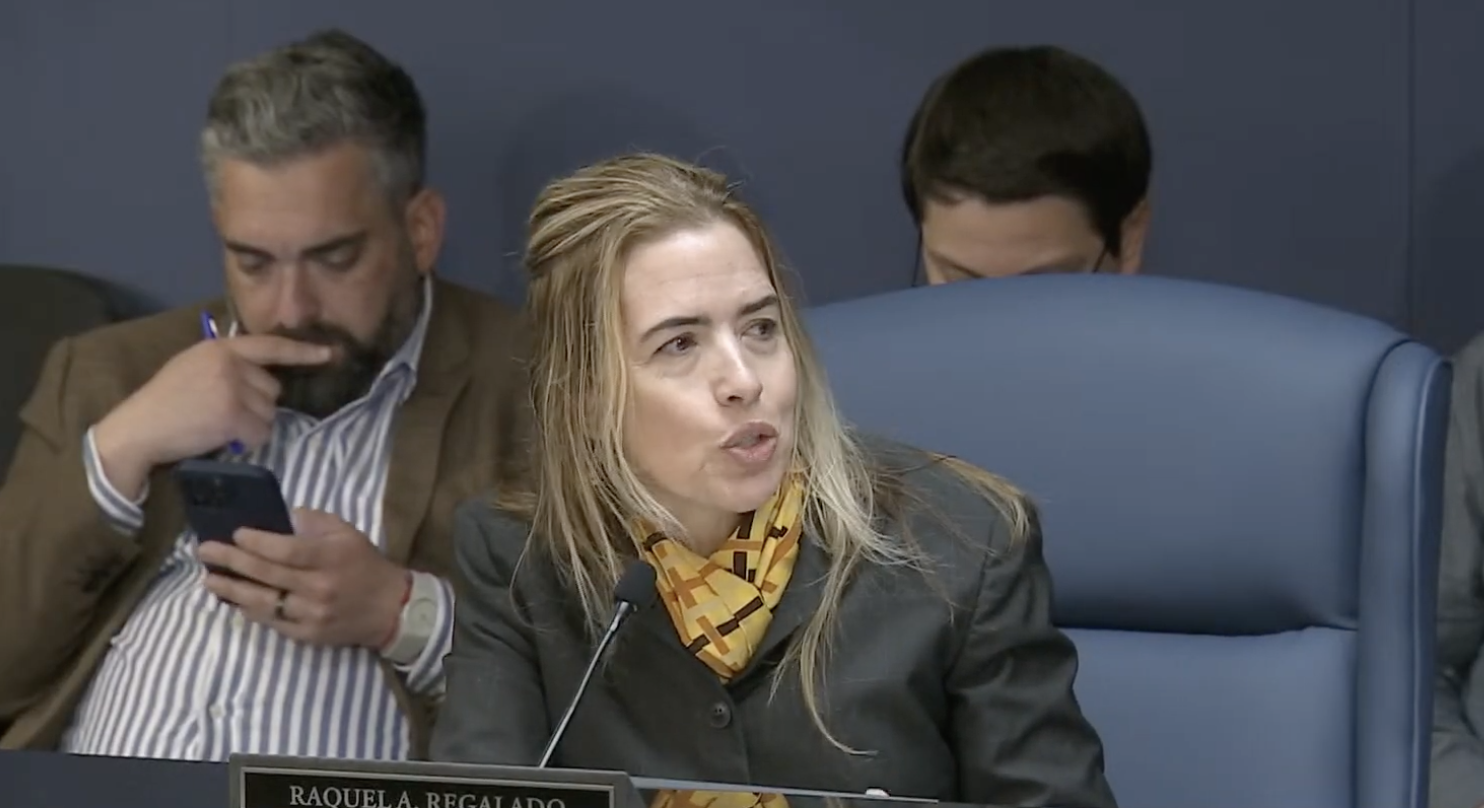 park next to the rookery would be worse — when nobody said it should be an active park. It could be a passive park. Can you say “grasping at straws?”
“I do not believe that we will get more concessions,” Regalado told her colleagues (while her staffers were continuously on ther phones), adding that oh-so-generous developers had already included a $1.8-million bike path (say what?) and “mobility” improvements. “I was ready to vote. Time has made this a better project,” she told colleagues.
Translation: Time has made this a closer vote. So have two brand new commissioners, Gonzalez and Lopez, who never voted on this before.
Amanda Prieto, founder of Save Calusa, told Political Cortadito after the meeting that it was the first time she felt the commission had truly listened to their constituents. At the podium, she had reminded the commission that she had stood right there four years ago and begged them not to move the project forward because the environmental studies were still not done and the developers, at one point, denied there was any kind of nesting of endangered birds at the rookery.
“I was right,” Prieto told them. “And I’m here today to say this is still not good enough.”
She said that she tried to negotiate with the developer but was told they didn’t have to negotiate with her because they had the ring property votes. And, they thought — judging by the confidence beaming from more than a dozen lawyers and lobbyists there to represent them — that they had the commission votes, too.
“I’m not unreasonable. I know something will be built there,” Prieto told them, almost speaking directly to Regalado. But the 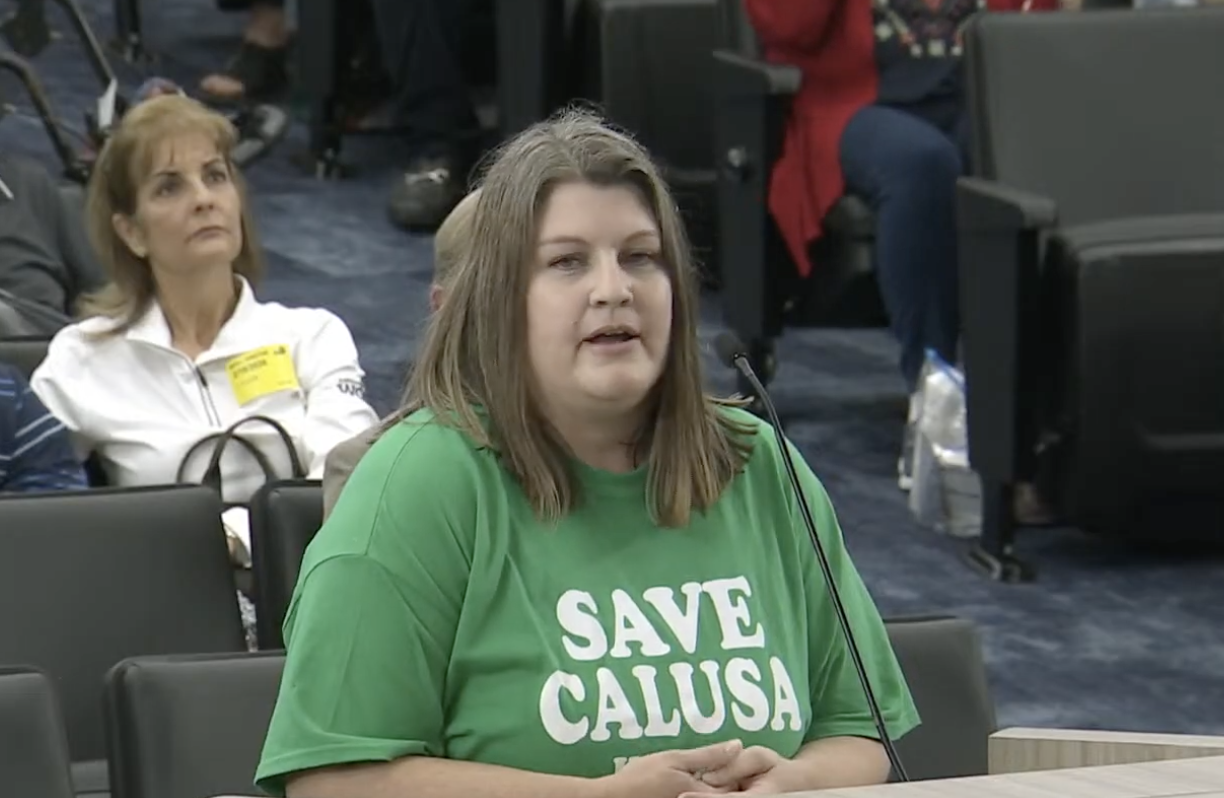 traffic studies are old and the permit they got from the FWC was based on erroneous — or intentionally wrong — information. The developer indicated there would only be 16 houses about 100 feet from the rookery. It’s at least 29, Prieto said. That doubles the potential for noise and light exposure.
“I wouldn’t call them out for lying, but it’s inaccurate,” Prieto told Political Cortadito later Thursday.
The neighborhood’s pro bono attorney, David Winker, was more blunt. “This is just greed,” he said, emphasizing that there is no need to fill the lake except to make more money.
Because this isn’t just a zoning dispute. This is a political ecosystem.
Read related: Calusa project is back at Miami-Dade County — so is developer’s checkbook
According to campaign finance reform activist Dani Rivera, who combs through finance reports like a forensic detective — and does it for free, so let’s support her — GL Homes has, since 2012, funneled more than half a million dollars to the different mayors and commissioners through their campaign accounts and various political action committees, and from at least 58 different related entities.
Fifty-eight!
Why 58 different names if you can give an unlimited amount to a PAC? That’s not participation. That’s strategic evasion of dot-connecting.
“Quite frankly, it looks like they are trying to buy your vote,” Rivera told commoners, careful not to name anybody by name. “They did something very cruel to y’all. Because, right now, if y’all honestly believe this is a good idea, it looks like they bought your vote. They put you in this spot.”
She made a suggestion: “This looks bad. I ask everyone that received a contribution from GL homes not vote due to a conflict of interest. Send a message that this is not acceptable. Send a message that you work for us. not for whatever giant developer can give half a million dollars.”
GL’s executive vice president, Richard Norwalk, forced to speed talk because he was not given extra time, insists the project 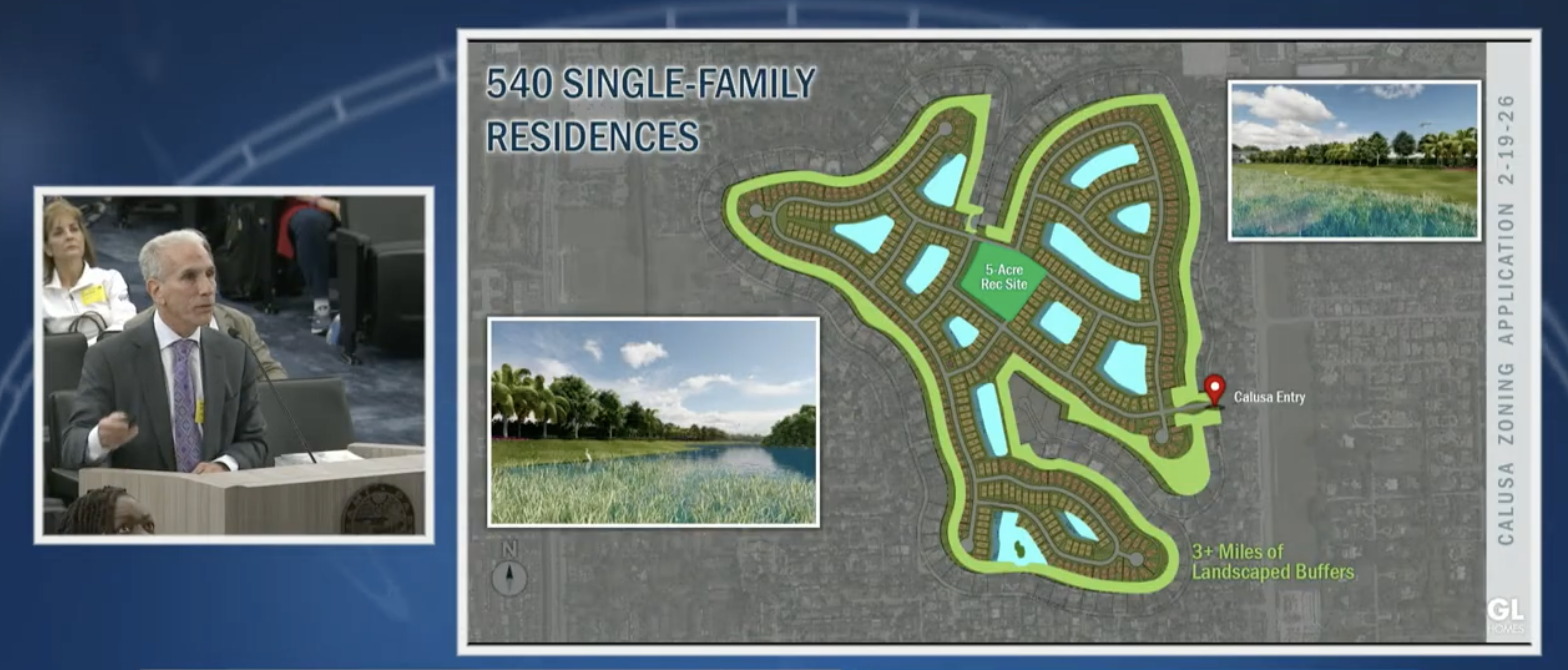 answers a “critical housing shortage” and will bring jobs and traffic improvements to Kendall and more tax dollars to the county. He diminished the importance of the native rookery and spoke about three miles of landscaped buffer.
“Over two thirds of the community are going to be either green space or blue space,” he said defensively. But Ladra can’t help but wonder if that includes the 540 front and back yards and the swimming pools.
There were supporters in the chamber too, including a ONE Sotheby’s executive arguing Miami needs housing and real estate professionals are fleeing the county.
But let’s be honest. You could practically see the dollar signs in their eyes.
This is not workforce housing. This is not affordable housing. This is not attainable housing. This is not even middle-market housing. This is million-dollar gated housing wrapped around a bird island.
For those who haven’t followed this saga from the beginning: when the golf course was built, a covenant restricted development. In 2020, a group of ring-property owners — organized under the Save Calusa Trust (not to be confused with Save Calusa Inc.) — voted to lift those protections.
That decision cracked the door. GL Homes, which bought the non-covenant property from the Bacardi family five years ago for $32 million, 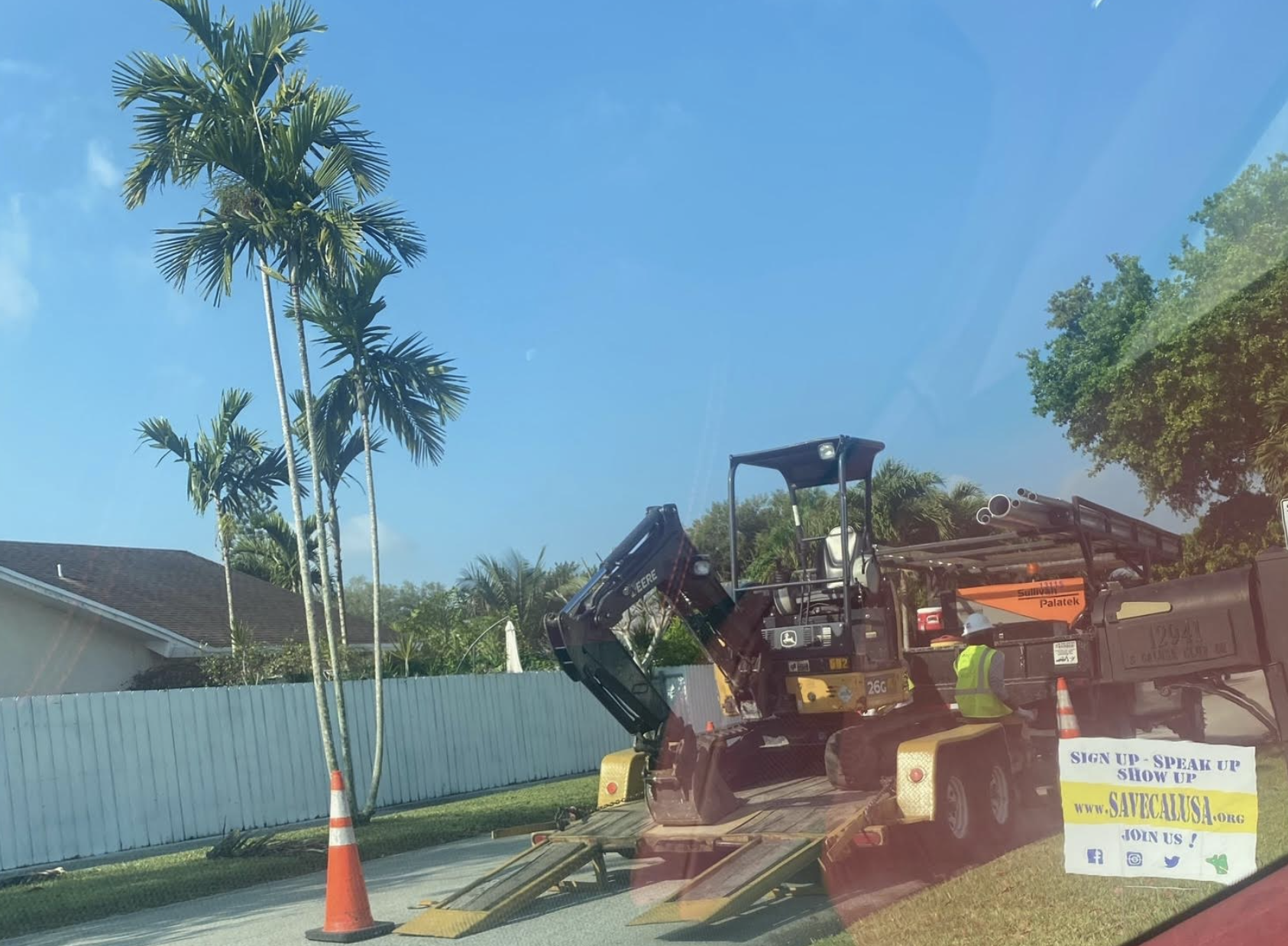 kicked it open. And things moved fast.
Later that same year, the Commission approved the project. Save Calusa Inc. (not to be confused with the Trust) sued. While developers did what they could to scare the wildlife away with tractors and spraying and clearing, the case climbed all the way to the Florida Supreme Court, which ruled that the county had failed to provide proper public notice. The approval was voided.
Read related: Calusa development on hold as appeals court upholds overturn of zoning vote
Then, in a remarkable bit of déjà vu, a do-over zoning hearing last month had to be postponed because — wait for it — proper notice again wasn’t given. You can’t make this up.
Now, the project returns March 19. And Prieto is cautiously optimistic. “This is the first time I feel heard,” she told Political Cortadito about Thursday’s meeting. “At the last discussion, nobody spoke,” Prieto said about the commissioners. “This time, they seemed to have listened.”
That’s why she believes the developers will make more concessions. “If they come back with the same thing, what’s the point?” 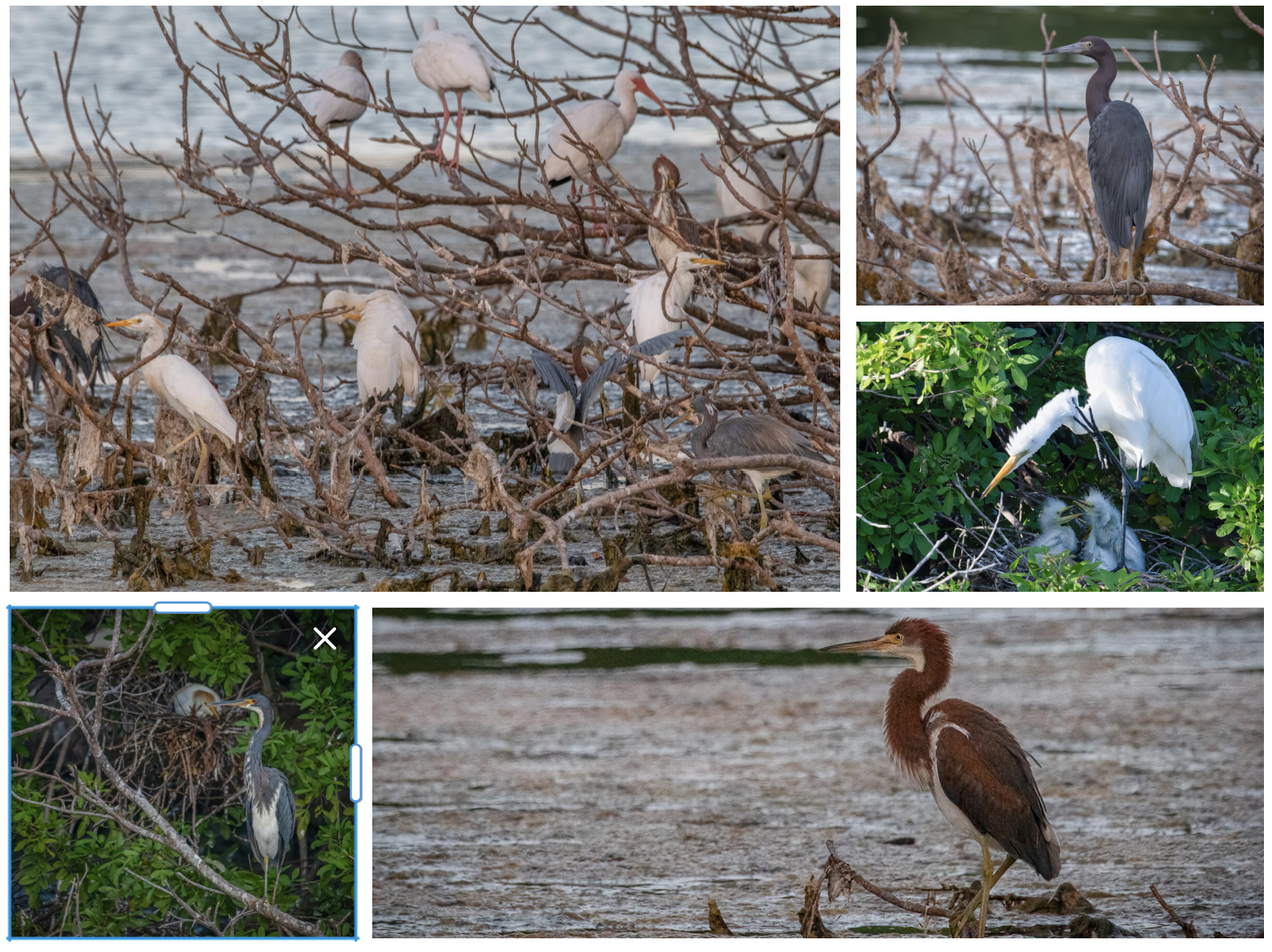 Ladra agrees. Commissioners told them to come back with a different project.
If it comes back materially changed — say, with that 330-foot buffer — perhaps the public gets another chance to speak. If not, the dais votes.
Regalado will still support it. Norwalk has a month to make more campaign contributions. Commissioners who wavered now have a month to decide whether a ring of homes 100 feet from a threatened-species rookery is “enhancement” or encroachment.
Prieto is going to join with the KFHA to have a community meeting. Norwalk came up to her after the commission meeting and said “I guess we’re going to be setting up a meeting.”
Yeah, that’s a good guess, Dick. You’re also going to have to give up a tiny percentage of your profit margin.
The birds, meanwhile, are still nesting. Unaware they’ve become the most politically protected residents in Kendall.
For now.
If you like what you read on Political Cortadito, please consider making a contribution to support the independent, government watchdog journalism on this website. Thank you!

No votes, no vote: GL Homes’ Calusa development kicked down the fairway added by Ladra on
View all posts by Ladra →
