
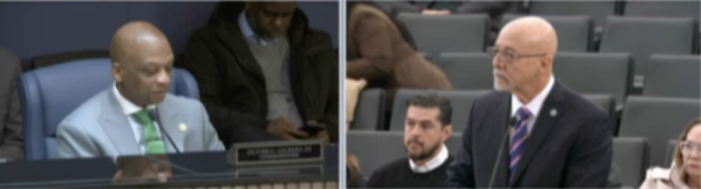
In a discussion thick with irony, Miami-Dade commissioners on Monday advanced legislation that would reshape the hiring rules for their own watchdog — while investigations touching the dais continue in the background.
Commissioner Oliver Gilbert’s proposal to rewrite the hiring rules for the county’s inspector general — the very office tasked with probing corruption and misconduct — cleared its committee hurdle this week, setting it up for a future vote before the full 13-member commission.
But not before commissioners aired a debate that felt less like routine policy and more like a seminar in institutional self-awareness. Or lack thereof.
Read related: Miami-Dade’s Oliver Gilbert would rewrite rules, role for Inspector General
The tension was baked in from the start. After all, the Inspector General’s Office launched the investigation that led to former Commissioner Joe Martinez facing criminal charges and, now, jail time for unlawful compensation. It is currently investigating 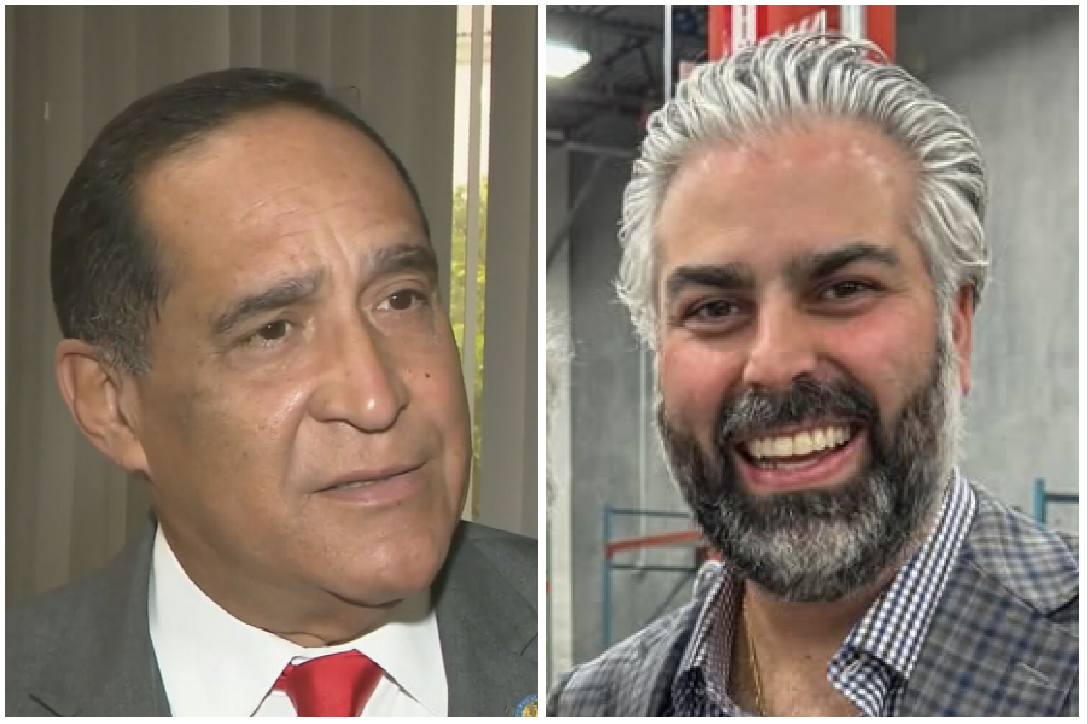 monies granted to the A3 Foundation, the shady nonprofit tied to Commission Chair Anthony Rodriguez, who just happens to chair t he Policy Council where this all played out. And there are 93 other investigations, audits, or contract reviews, according to the IG, Felix Jimenez.
Who knows who will fall next?
Perhaps that is precisely why Gilbert wants to change the rules in the middle of the game.
Former Inspector General Mary Cagle, who served the county from 2014 to 2020, came out of retirement to attend the meeting to urge the council to reject the changes. She said the commission body had made “slight changes” to the office two or three times. “Every time the commission body made a change to the inspector general ordinance, it was to strengthen the independence, 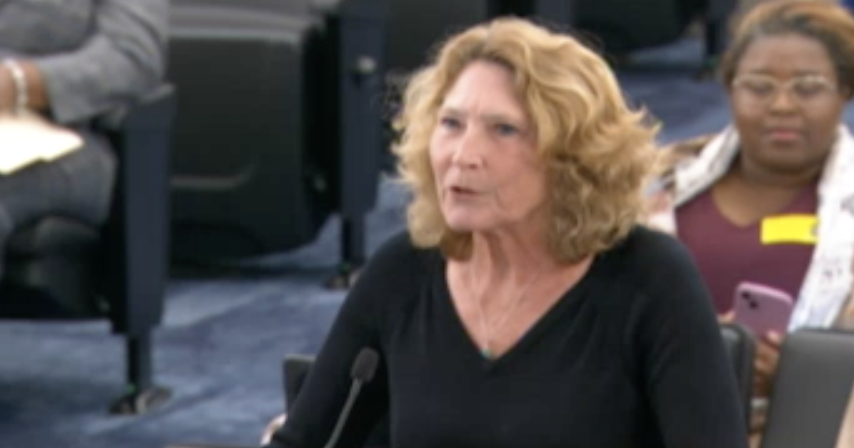 which is critical to the office, and to strengthen its integrity.”
“The selection panel brings one name and gives you the entire body the authority to vote that name down. So you definitely have a say of who your IG is,” Cagle said. “But it was such a deliberate effort to make sure the five people who select your IG are independent. They are people who are respected in this community and they are people who do not fall under the jurisdiction of the OIG and that is so important. That creates a level of integrity and independence for the IG that is critical.”
Terry Murphy, a longtime former senior advisor to the county commission (1988-2011), said that the structure of the selection committee had been specifically chosen not by chance but “by virtue of the office they hold.” As it stands, the five members are the Miami-Dade State Attorney, the Miami-Dade Public Defender, the chairperson of the county’s Commission on Ethics & Public Trust, the president of the Miami-Dade Police Chief’s Association, and a FDLE Special Agent in Charge. Among the changes that Gilbert proposes are expanding that to seven members and, originally, including a sitting commissioner and an appointment by the League of Cities, which could also be a former or sitting commissioner.
It flies in the face of reason so hard that Gilbert agreed to nix the commissioner idea.
Read related: Judge sends ex Commissioner Joe Martinez to prison — but not just yet
Gilbert’s plan would also drop the elected public defender and put someone from the Florida Association of Criminal Defense Lawyers on the committee instead. Chief Assistant Public Defender Teresa Enriquez read a letter from Public Defender Carlos Martinez objecting to the change, on which, he said, he was not consulted.
“I bring a depth of experience to this process, having served on this committee twice before and recently participated in the city of 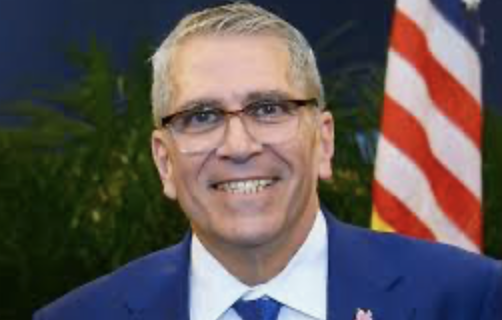 Miami Inspector General selection committee,” Martinez wrote. “Throughout my tenure, I have not been made aware of any complaints or concerns regarding my participation.
“The inclusion of the elected public defender has historically ensured a balanced, fair and transparent selection process,” he wrote, adding that he had communicated with the Florida Association of Criminal Defense Lawyers who “had not asked nor were they seeking appointment to the committee.”
But nobody spoke more strongly against the changes than Commissioner Raquel Regalado, who is not a member of the council but went to the meeting anyway to express her concerns. As a school board member, she brought an inspector general to that body.
“Currently the OIG and the sheriff’s office are the only place a whistleblower can go,” Regalado said.
“We all talk about how we’re anti-corruption and we’re anti-fraud,” Regalado said. “This is an opportunity to vote that way. Translation: If you mean it, prove it.
She tried to bring up the history about how the IG office was created in 1997 after Carmen Lunetta, the former long-time director of the Port of Miami, resigned amid a scandal that led to federal charges for allegedly masterminding a corruption scheme involving stolen port revenues, illegal campaign contributions, and cronyism. A
“Miami-Dade County was fraught with fraud and with corruption. We were touted as the corruption 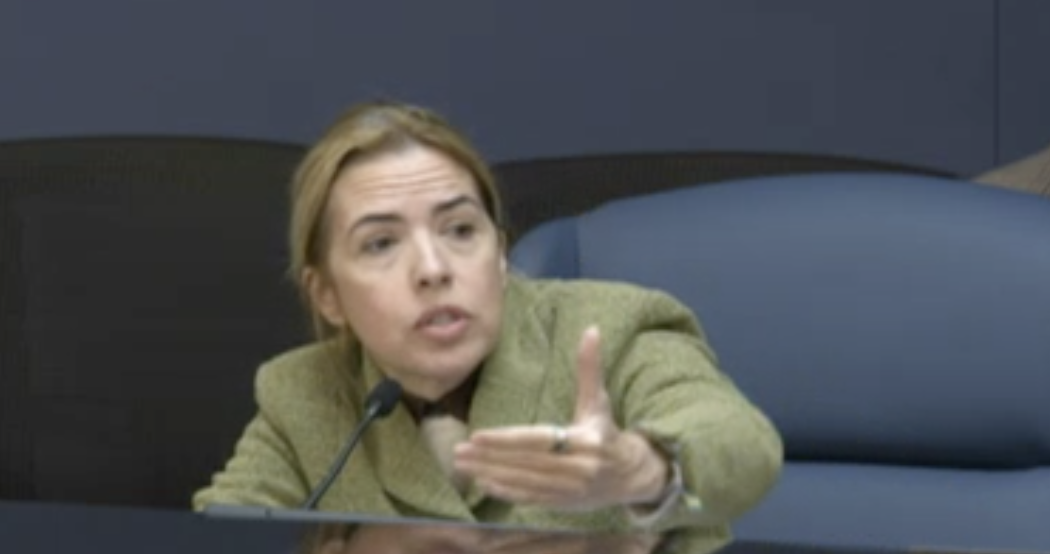 capital of the United States,” Regalado said.
Regalado never got to finish the story, however, because Gilbert very rudely interrupted her. He has a habit of doing that. “Point of order. If we could get to the ordinance, it would be great,” he said.
Regalado was undeterred.
“Now more than ever, we need transparency,” she said, reminding the council members that the city of Miami passed a charter amendment in 2024 for an inspector general of their own — with almost 80% of the vote.
Read related: Miami voters win on inspector general, lose on ‘outdoor gym’ referendum
Like Jimenez, Regalado supported the changes that create term limits — eight years, not four — and restrict the IG from running for office for a few years. “I never met an IG that wanted to run for office.”
But she was “completely against” changing the selection committee or the qualifications of the OIG. “I think that we need someone with a law enforcement background, and we need to ensure that person has a track record in law enforcement because that is what will give people the credibility to do this work.”
Supporters insisted critics were tilting at ghosts. They say the proposal would simply expand eligibility for the inspector general job to include government administrators, accountants, and auditors — provided they have experience supervising investigations — instead of limiting the pool to candidates with legal or law enforcement backgrounds. Much of the IG’s work involves money and math and they think a CPA should be considered.
“I do not understand the pushback,” Commissioner Danielle Cohen Higgins said. “I don’t see how there is a narrative regarding lowering the standards… I see it as the opposite.”
What she and Gilbert must not realize is that there is already an Office of Commission Auditor with a whole staff whose sole job is to look at budgets and contracts. Meet Yinka Majekodunmi, the commission auditor, who is a CPA. What are he and his staff doing? Because it looks like nothing.
Cohen Higgins even praised current IG Jimenez, calling his work “phenomenal” and expressing hope he continues.
Which raises a question: If the job is being done so phenomenally, why rewrite the rules now?
Jimenez has been in the post since 2020. His four-year contract expired in 2024, yet a reappointment 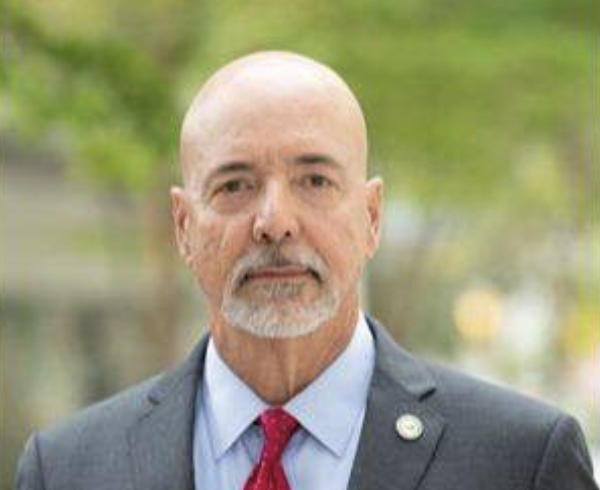 vote remains stalled — thanks to a legislative hold controlled by none other than Gilbert, the architect of the proposed overhaul. Gilbert has said he wants consensus on hiring criteria before deciding Jimenez’s fate.
But timing, in politics, is rarely accidental.
The meeting’s most revealing moment came when Gilbert summoned Jimenez to the microphone to defend a statement criticizing the proposal — particularly the now-abandoned idea of placing a county commissioner on the selection panel for the watchdog who might someday investigate them.
Jimenez warned it posed a conflict.
Gilbert fired back. So, you’re saying one person saying ‘I think this person is better than this person’ as a member of a body that recommends someone is actually a greater level of interference and control than all of us being able to say ‘No, we don’t want you?'”
It was less a question than a reminder of who holds the power. It sounded a little like a threat. Because Gilbert mentioned the fact that he could fire Jimenez at least three times.
He also said that he didn’t have a candidate in mind. But las malas lenguas say he wants the job to go to 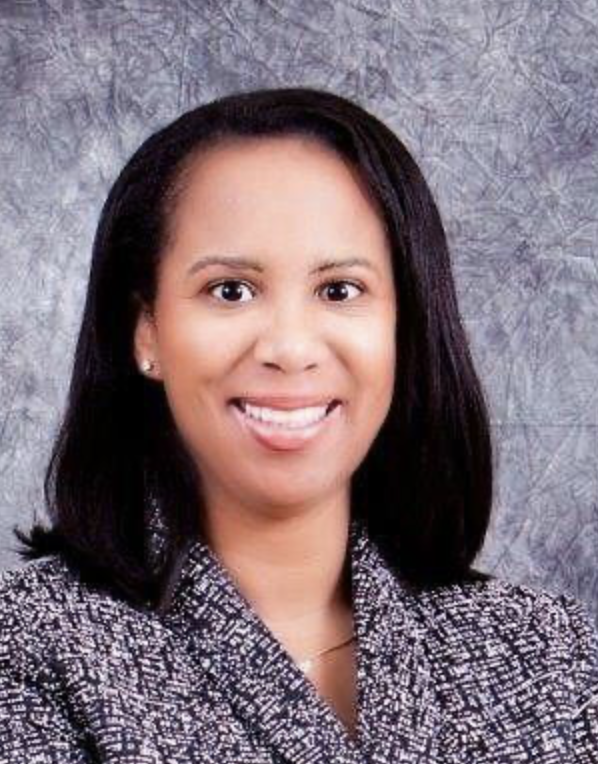 North Miami City Manager Theresa Therilus, who worked under him in 2023 when he was commission chair in a made-up job as board of commissioners executive director — a chief of staff, basically, but making $320K a year.
Gilbert ultimately agreed to drop the commissioner-seat proposal — a retreat that suggests even some colleagues found that step a little too on-the-nose. But he refused to budge on expanding the hiring criteria, arguing Miami-Dade’s requirements are narrower than those used elsewhere in Florida.
Pssst, Ollie, Miami-Dade’s corruption is wider than elswhere in Florida.
“It’s not that I don’t want law enforcement experience,” Gilbert said. “I don’t think it should outweigh everything else.”
Fair enough — in theory. Inspector general offices do review contracts, spending, and procurement. But they also chase corruption. And corruption cases tend not to announce themselves with neatly tabbed spreadsheets. They also have to know how to make a case and not screw up evidence, as Regalado reminded the council.
Read related: Missing Miami COVID relief gift cards to be audited by city’s inspector general
Jimenez never really got to make that argument Monday. He did say that he tried to meet with Gilbert to offer ideas. When he tried to elaborate on his concerns, Gilbert cut him off. It’s a habit.
“That’s actually not how this works,” Gilbert said, acting like he’s still the chairman of the commission.
But here’s the uncomfortable reality hovering over this entire debate: voters approved an independent inspector general precisely to keep political influence at arm’s length. Every time commissioners start adjusting the qualifications, restructuring the selection process, or delaying a sitting IG’s contract while  investigations swirl nearby, independence begins to look less structural and more, well, negotiable.
None of this proves sinister intent. Expanding candidate pools can be good governance. If it doesn’t include clear conflicts of interests. But rewriting the job description and selection process while the watchdog is actively sniffing around commission-adjacent matters? Let’s just say it doesn’t scream “hands off.”
And it further erodes the trust that the public have in our government.
The legislation is now headed for the full commission, where the real test awaits. Expect more speeches about transparency. Expect reassurances about integrity.
But Ladra expects it to die there. Not only because Regalado and Commissioner J.C. Bermudez have already expressed opposition to the changes, but because there are seven other commissioners up for re-election. They don’t want to see mailers and text messages or TV ads about how they watered down the IG’s office.
Because when politicians start fine-tuning the rules for the person investigating politicians, who exactly is guarding whom?
If you like what you read on Political Cortadito, please consider making a contribution to support the independent, government watchdog journalism on this website. Thank you!

Watchdog Wars: Oliver Gilbert’s IG rewrite survives first test — barely added by Ladra on
View all posts by Ladra →
