
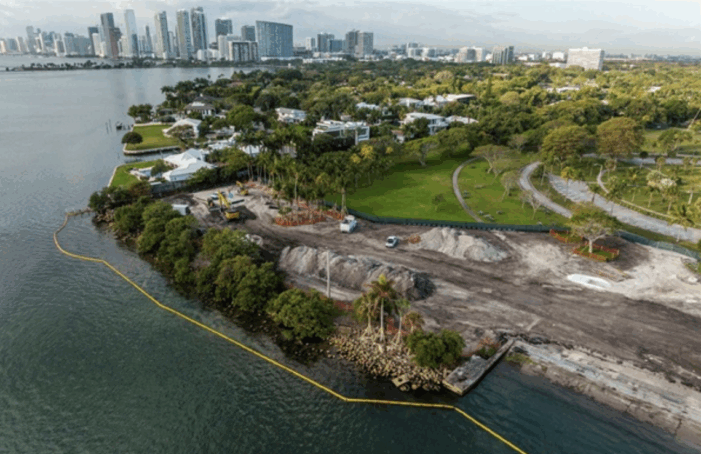
Commissioner Damian Pardo visits residents at home
On a Sunday evening in Morningside —a quiet, tree-lined neighborhood of old Miami where decades-old live oaks and gumbo-limbo trees cast dappled shade and the hum of Biscayne Bay lingers on the breeze — a flyer showed up in mailboxes and on front doors, featuring what one letter from residents’ counsel describes as a “sigil” that “bears a striking resemblance to the City of Miami’s official seal and conveys a sense of finality and executive authority under District 2.”
That flyer was handed out by City Commissioner Damian Pardo, himself, who, according to a formal letter from an attorney representing a group of homeowners, went door-to-door on the evening of Nov. 9 distributing materials to his own neighbors that “promote the sidewalk construction as a fait accompli.”
In other words: the decision has already been made.
“We wanted you to have an official thing about the sidewalk project that’s coming through in January, probably,” Pardo tells one of the homeowners, as seen on one of those front door cameras. “We wanted to meet with the director of public works and the 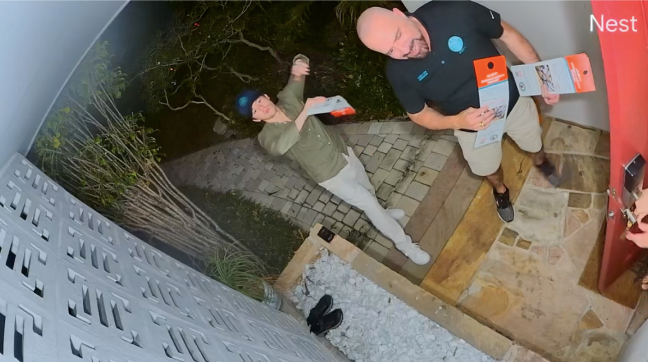 people running the project so that you can give your concerns.”
First, “an official thing,” is what exactly? A flyer with the name of district liaison Bradley Mills and an office number that nobody ever answers. Secondly, notice that he says the project is coming through. That’s it. It’s done.
Political Cortadito tried to reach Mills, Pardo and the commissioner’s chief of staff, Anthony Balzebre, several times. Ladra left voice mail message and sent text messages over the course of several days last week. Nobody returned a call. A call to Public Works Director Juvenal Santana was returned by a staffer to make an appointment for next week. Ladra will follow up then.
According to the letter addressed to City Attorney George Wysong by counsel for affected residents, the door-to-door flyer campaign “occurred outside of business hours and without any city staff present.” It was described as “wholly improper, unauthorized, and legally meaningless as a form of public notice,” wrote attorney Mark Leśniak.
“Any suggestion that Sunday-night door-knocking by an elected official constitutes ‘notice’ under City law is factually inaccurate, procedurally defective, and constitutionally suspect,” Leśniak said.
That’s a mouthful. But the essence: the neighborhood is saying there was no real public process. The commissioner has tried to pretend that he got neighborhood approval through the Morningside Civic Association, a voluntary club with no legal authority that has acted less like a neighborhood association and more like an unofficial annex of Pardo’s office. Its board — dominated by people with real-estate, development, and City Hall–adjacent interests (more on that later) — spent the last year cheerleading the sidewalk plan, downplaying flooding and tree removal, and giving City Hall the false appearance of “community backing” that never actually existed. While residents were kept in the dark, MCA leadership helped sell a project the city never properly noticed, turning a neighborhood group into a political prop.
Read related: Damian Pardo’s Morningside sidewalks in Miami — a $93 million mistake?
Instead of real process, there was a flyer and an evening knock-knock by the commissioner and his aide. “Several residents have 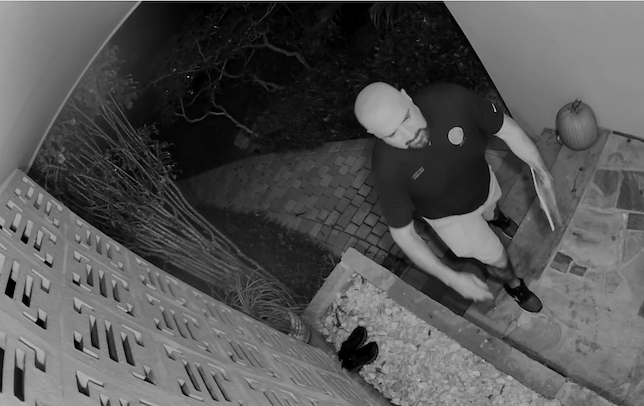 reported feeling coerced and intimidated by this late-night contact,” the lawsuit states. It kinda reminded Ladra of the 1997 late-night knock on the door that former Miami Mayor Xavier Suarez made to a constituent who wrote a letter of complaint to him.
But it’s not just creepy. It’s also downright wrong. A sidestep of the process, the attorney said.
The legal letter breaks it down: under City Code § 54-27(a)–(b), capital improvement and right-of-way projects must be noticed and administered by the City’s Dept. of Public Works (or equivalent) — not by a single elected official on his own. The letter argues that because the flyer doesn’t bear a city seal, project number, City Clerk reference or Public Works link, but instead uses the Commissioner’s personal insignia and a QR code linking to a political communication page, it “blurs political advocacy and official business… and undermines the due-process rights of affected property owners.”
For residents whose hedges, trees and lawns line the proposed sidewalk route, this is not a technicality — it’s life, yard and value.
But it doesn’t stop at process. It takes aim at substance. It says that the same residents already endure flooding issues tied to prior shoreline and seawall work in Morningside Park, and that the sidewalk project threatens to compound those harms. Among the claims:
- Mature canopy trees and hedges will be removed or altered without appropriate mitigation.
- On-site parking or driveway functions may be impaired.
- Flooding patterns may worsen due to added impervious surface and altered drainage.
- Independent appraisals show a 10 %-15 % diminution in market value for the homes directly affected (40–50 homes), and another 3 %-7 % for 100–150 homes in the broader impact area — aggregate loss estimated at $17 million to $43 million.
“The City’s assertion that ‘anything in the right-of-way may be removed without permit’ misreads the Code and ignores decades of municipal acquiescence,” the letter states. “What the City characterizes as ‘infrastructure improvement’ has, in practice, functioned as a transfer of risk and cost from government to homeowners.”
Toward the end of the Leśniak’s letter comes the flourish: the reference to the “sigil” — the city seal-like image on the flyers distributed. As 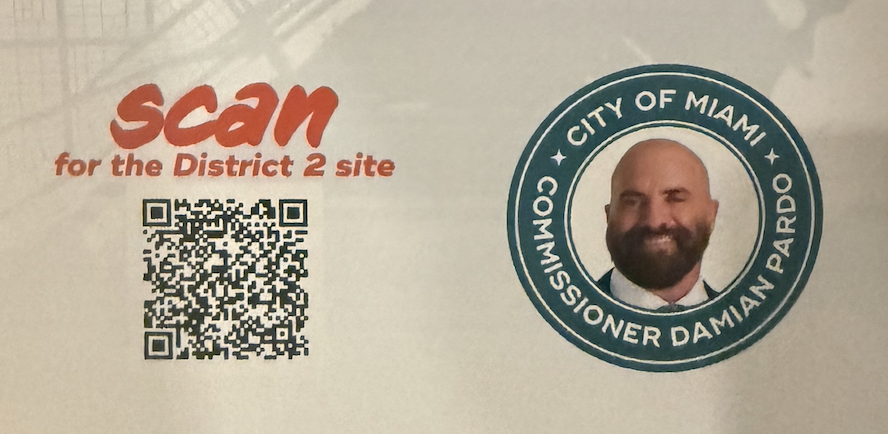 the letter puts it: “The flyer distributed by Commissioner Pardo also bears an unauthorized derivative of the City of Miami seal. … By distributing materials bearing such imagery and implying official notice of a capital project, the Commissioner has misused the indicia of municipal authority…”
In the mind of the residents, the sigil represents something deeper than branding: it symbolizes the commissioner stepping into an administrative role. The letter frames it as a separation-of-powers concern. The commissioner is a legislator; the city manager and Public Works Department are the administrative and executive arms.
“A legislative office cannot cloak an administrative act in political discretion and expect immunity from review,” the letter states. “When process is replaced by proclamation, the courts become the only remaining check.”
Read related: Miami Commissioner Damian Pardo loses support, inspires recall threats
That Sunday flyer drop is emblematic of what many in Morningside see as the bigger issue: the project was marketed, not debated; delivered, not deliberated. While Pardo has said he has been working on since December of last year, many residents did not find out about it until some trees came down to make way for the sidewalks this summer. “It seems sneaky to me,” one resident told WSVN7’s Patrick Frasier.
In other words, when the neighborhood is being asked to accept sidewalks that may uproot trees, ditch lawns, narrow swales and alter drainage, leaving them with less shade, less privacy and possibly more flooding — they expect a full process. They did not expect a flyer, a QR code and a Sunday-evening paint-by-number boardwalk announcement.
What they expect now is:
- An immediate moratorium on all surface and right-of-way work in Morningside (including sidewalks, curbs, drainage) until an independent environmental & drainage audit is completed.
- Full production of permits, contracts, any DERM correspondence, vendor qualifications.
- Communication to be only through the residents’ counsel (not direct outreach) going forward.
- A written legal opinion from the city attorney on whether the project complies with the city code and charter.
It implies that if the City fails to comply, the residents may pursue injunctive relief, inverse-condemnation, nuisance or other statutory claims.
This is not just about concrete slabs and new sidewalks. It’s about the character of a historic neighborhood. It’s about trees grown for generations, front swales maintained by homeowners, drainage patterns set by nature and decades of shared investment. It’s 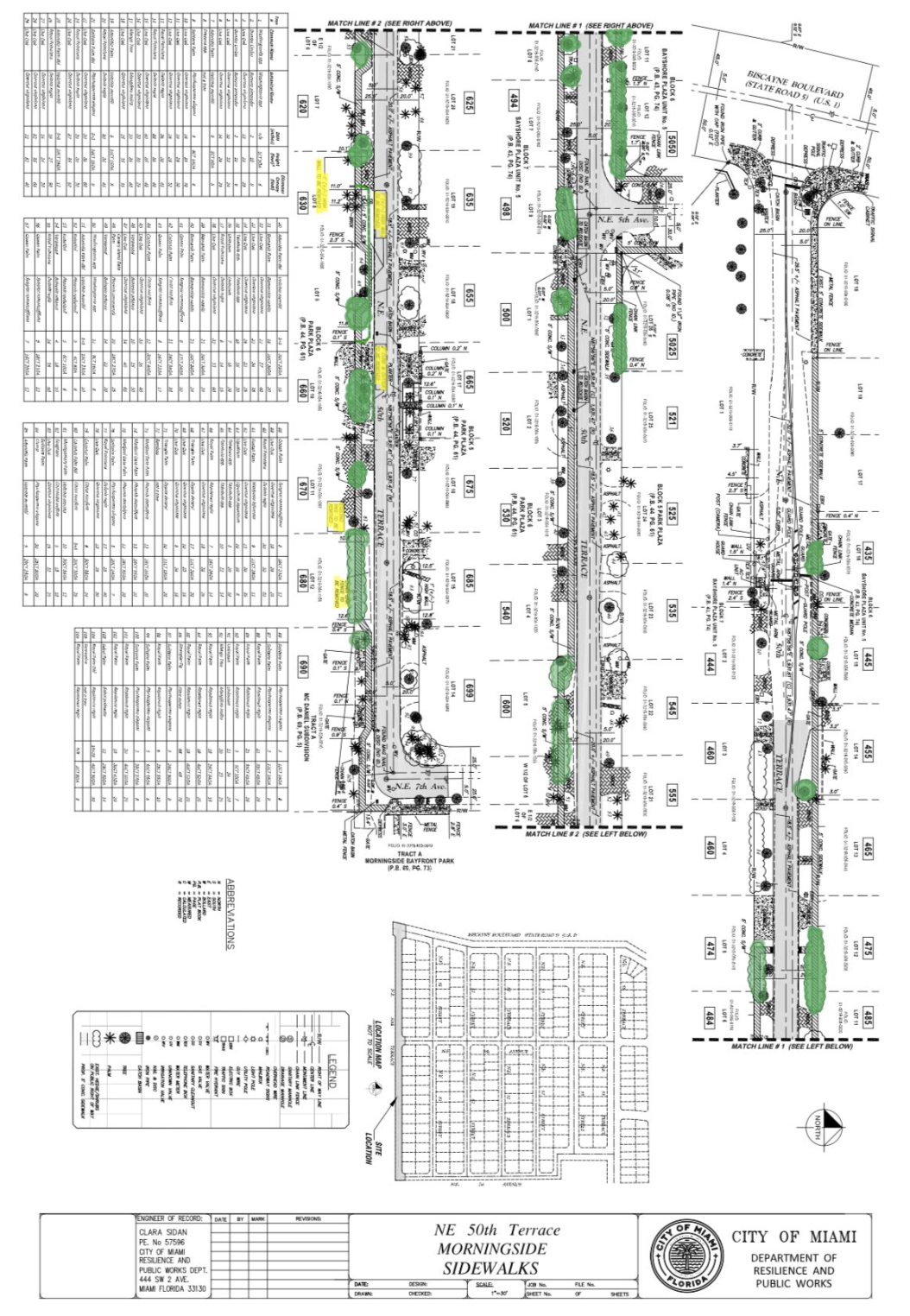 about whether the City of Miami respects the process or treats neighborhoods as zones to pilot infrastructure on an expedited basis.
It’s about the sigil on the flyer, yes — but what that sigil stands for: authority delivered without debate, administrative action bypassing legislative input, and residents left with less green, more concrete, and questions unanswered. Residents say the choice of imagery in Pardo’s communications also spoke volumes. One of the photos that has been circulating — and was used in connection with the sidewalk push — is a glamour shot of freshly poured wet concrete, gleaming under the sun like a trophy.
For a commissioner who talks endlessly about “keeping neighborhoods green,” it struck many in Morningside as tone-deaf at best — and, frankly, intimidating at worst. One resident joked, “What’s next, a horse head on the lawn?” But behind the humor was unease. Showing a slab of concrete as the hero image feels less like “community engagement” and more like a quiet message from Miami’s concrete-industrial complex.
And in Miami, where construction companies like MCM have outsized influence — and where Pardo has championed massive, hardscape-heavy projects like a 15-foot Baywalk — the symbolism wasn’t lost on anyone. Concrete is power. Concrete is money. Concrete is patronage.
So when the neighborhood says they felt “coerced,” that concrete-pour photo didn’t help. It reads like someone trying to say: This is happening. Get used to it.
In a neighborhood that has spent a year begging the City to stop replacing green with gray, the concrete-glam shot landed like a threat disguised as a newsletter.
In Morningside, the sidewalks may be pitched as a safety “improvement.” But to many residents, what’s at stake is much more: process, voice, tree canopy, property value, and drainage resilience. If the City moves ahead without full transparency and meaningful input, the handwritten addresses, late-evening flyers and “sigils” may end up being minor details compared to a courtroom fight over whether those sidewalks ever should be built.
You can help bring your community more independent, watchdog government reporting of our local government and political campaigns with a contribution to Political Cortadito. Click here. Ladra thanks you for your support.

The sigil, the sidewalks and the strain: A Miami Morningside cautionary tale added by Ladra on
View all posts by Ladra →
… [Trackback]
[…] Read More here: politicalcortadito.com/2025/11/15/damian-pardo-sigil-sidewalks-miami-morningside/ […]
The worst commissioner costume ever. Halloween ended and he is still playing his make believe role as public servant
Who will run against Pardo? District 2 needs someone who cares about residents. Pardo has been a disaster.
Hi Will, thanks for reading. By the name on your email address, I believe you could be the CEO and owner of a capital (real estate interests?) company in Miami Beach and a consulting firm as well. Which could be relevant.
Either way, I have actually spoken to two people who are in favor of the sidewalks and this is not about that. In fact, I bet there are dozens of people in favor of the sidewalks. Members of the MCA, for sure, and others. But that doesn’t mean that the project has gone through the proper process, does it?
Still, I would love to talk to you or anybody else who wants to discuss the sidewalk project. My number is 786-853-8724. Dare you to call me.
Love, Ladra
Pardo gets paid $110,000 year by Miami taxpayers BUT he never gave up his day job selling stocks. And his neighbors hate him.
Did the author attempt to speak with any of the hundreds of Morningside residents who are in favor of the sidewalk project and have genuine safety concerns? This is one sided PR, not journalism.
Morningside has become Pardo’s own Mafia project. A majority of the homes on the sidewalk streets will need street parking after their driveways are cut down the middle. Oddly enough, the city has a plan in the works to start charging for parking.
The above is clearly an opinion piece, which is fine since we still have 1st amendment rights (for now). Good to hear all points of view.
I hope this passes, from a safety standpoint it is long overdue. Fundamentally the city can do what it wants to land that it owns, so to go to this length to engage the affected property owners is probably more than any other city would have done IMHO.
Pardo continue to show how slimy a person is really is.
Damian Pardo is controlled by developers and by contractors. Pardo hates grass and trees. He always votes for concrete. Hopefully no one votes for him when he runs for re-election.
How’s this bearded clown still in office? What a disgrace.