
The South Florida AFL-CIO officially kicked off its “Labor 2026” political campaign Saturday morning with a giant union breakfast in Opa-locka that doubled as both a warning flare about Miami’s affordability crisis and a reminder that organized labor still intends to flex political muscle in South Florida — even in a county where developers often seem to hold more power than voters.
Held at the UA Pipefitters Local 725 hall, the event brought together an unusually eclectic Miami political mix: Democrats, Republicans, union leaders, county commissioners, candidates, community activists — and the occasional politician trying very hard to look comfortable near actual working people before campaign season fully kicks into gear.
The official theme was affordability. The unofficial theme was everybody suddenly rediscovering the working class now that 2026 campaigns are starting to hatch.
Read related: José Javier Rodríguez, Lucía Báez-Geller among SAVE’s early 2026 endorsements
South Florida AFL-CIO President Jeffery Mitchell delivered the core message bluntly: Miami is becoming economically unlivable for the very people who keep the place functioning. Teachers. Healthcare workers. Transit employees. Construction workers. Hospitality staff. Public employees. Service workers.
The people who actually make Miami operate increasingly cannot afford to live here unless they inherited property in 1987 or rent out a room through Airbnb.
“Working people are being priced out of South Florida while the people who keep this community running are struggling just to 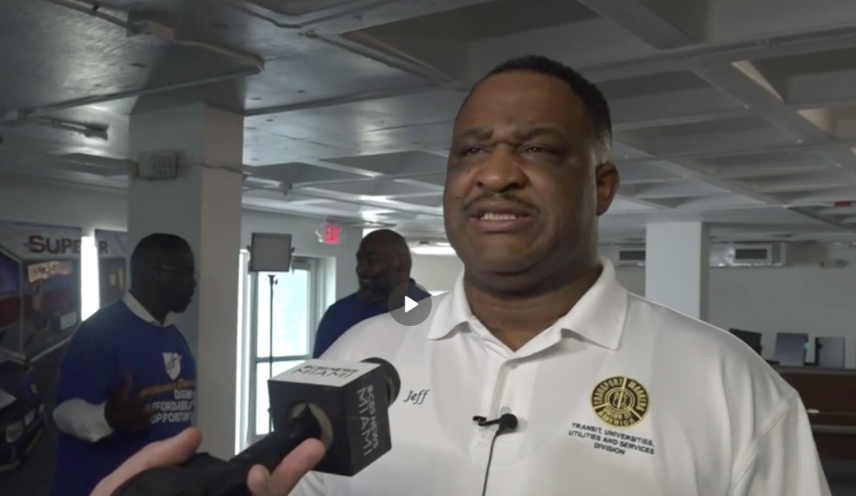 stay here,” Mitchell said in a statement. “The Labor 2026 campaign is about making sure working people have a stronger voice at every level of government so we can fight for affordable housing, better wages, stronger unions, safer workplaces, and an economy that works for everybody — not just wealthy developers and corporations. That is why electoral participation matters.”
According to labor leaders, rents averaging north of $3,100 a month have pushed the region into full-blown affordability absurdity, with many workers now spending more than 30% of their income just trying to remain housed somewhere within commuting distance of their jobs.
Which, in Miami terms, practically counts as a luxury experience now. So Big Labor is preparing to remind politicians that people who pour concrete, drive buses, clean hotels and staff hospitals also vote.
Or at least they do when somebody organizes them.
Read related: Miami’s new mayor, Eileen Higgins, takes housing agenda to Washington
The event also served as a political networking buffet line for elected officials from both parties — something increasingly rare in modern politics but still oddly common in Miami, where ideological consistency often ranks somewhere below ribbon cuttings and cafecito diplomacy.
Among those recognized during the breakfast were Florida State Rep. Dotie Joseph, State Sen. Ileana Garcia, Miami-Dade Mayor Daniella Levine Cava, and the entire Miami-Dade Board of County Commissioners. Yes, the same county commission regularly accused by housing activists of approving developments only for the hedge fund managers migrating from Manhattan.
Miami politics is like an onion. Layered. And it makes you cry.
Democrat congressional candidate Phil Ehr, who hopes to run against Carlos Gimenez in November, took a bunch of selfies for his social media. “At a time when working families are being squeezed from every direction — rising costs, attacks on unions, and threats to public education and healthcare — standing shoulder to shoulder with the people who keep this country running matters more than ever,” Ehr posted, thanking Mitchell, voting rights activist Desmond Meade and the Communication 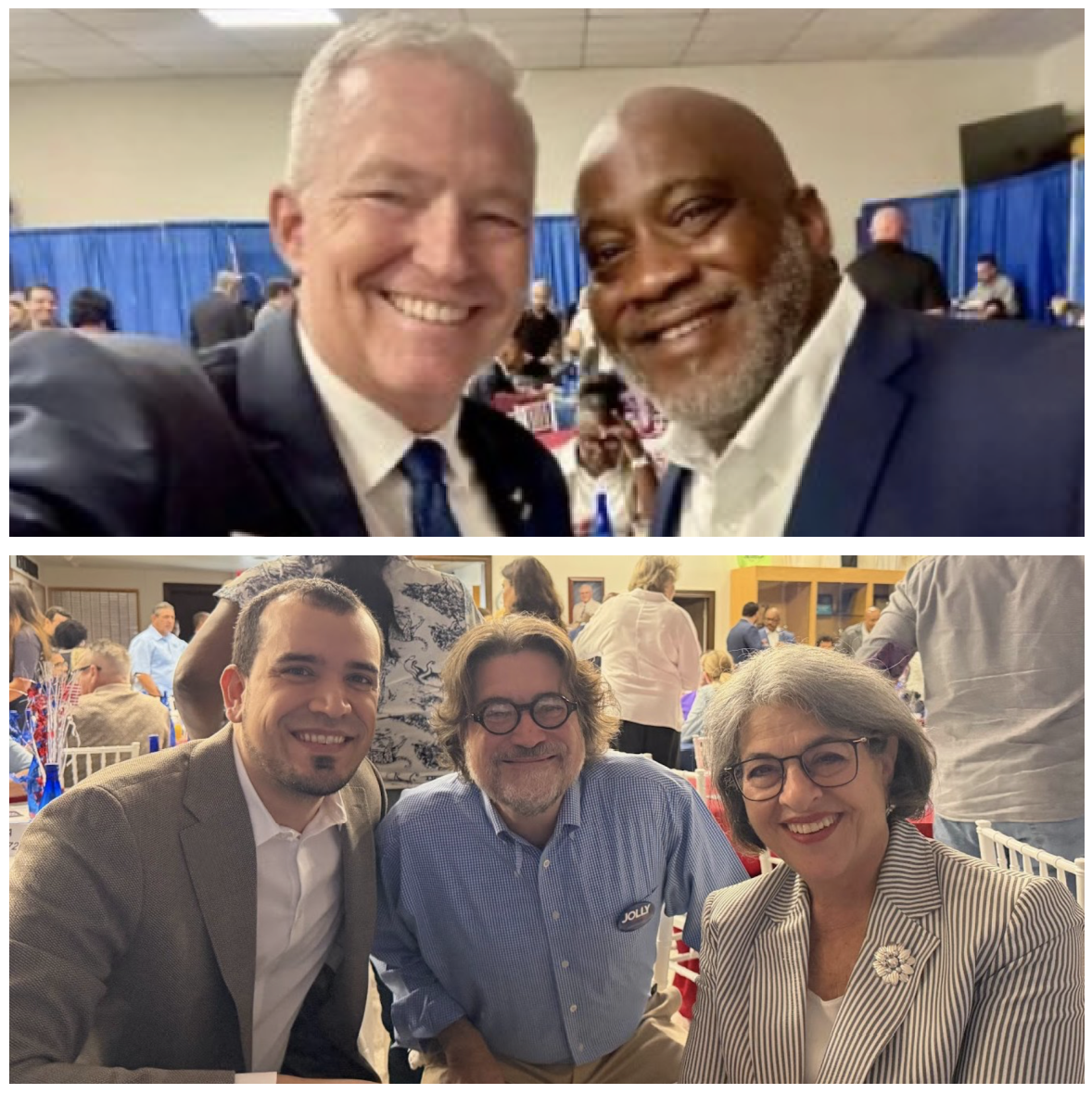 Workers Union for their “continued fight for working people.”
The other Democrat in that primary, Hector Mujica, was also there rubbing elbows. “We talked about what too many politicians ignore: people are working harder than ever and still can’t afford housing, healthcare, insurance, or basic stability,” Mujica posted on X, along with a photo with Miami-Dade Mayor Levine Cava and former State Rep. J.C. Planas.
“If you work hard, you should be able to support your family, retire with dignity, and build a future where you live,” Mujica said.
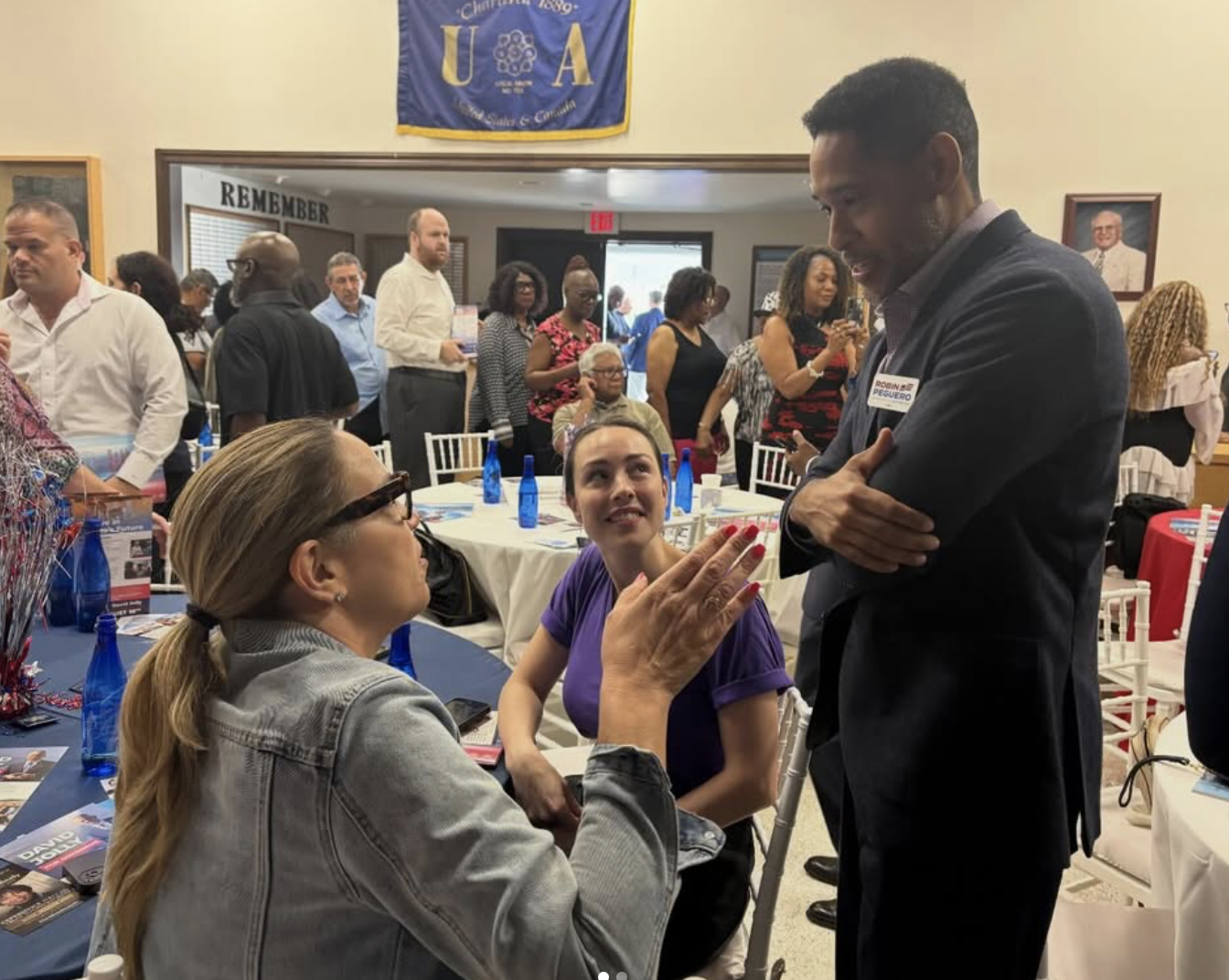
Two of the Democrat candidates in the congressional district 27 race were also there. Former federal prosecutor and Jan. 6 investigator Robin Peguero and former TV journalist Eliott Rodriguez, who has a name-rec advantage going into the primary. Peguero — who has been campaigning for a year — is a fixture in the labor scene, however, while Rodriguez might be scared that he’ll be seen as “too communist” if he rubs elbows with union workers.
That might be why he didn’t post any photos on his Instagram account.
Read related: The CD27 Democratic primary may not be as done as some people think
To be honest, it was more Democrats than Republicans even though both parties are increasingly confronting the same uncomfortable reality: The affordability crisis is no longer theoretical.
People are leaving. Workers are commuting farther. Young professionals are fleeing. Teachers can’t afford rent. County employees are getting crushed by housing costs. And entire neighborhoods are slowly transforming into investment portfolios with valet parking.
Even activist group WeCount! joined the event to highlight its Planting Justice campaign, underscoring how labor, housing and immigration advocacy are increasingly overlapping in South Florida’s political ecosystem.
Of course, Ladra also couldn’t help noticing the delicious political irony floating through the room: Many of the same elected officials now passionately discussing affordability have spent years approving the development boom that helped create the affordability crisis in the first place.
Nothing says Miami quite like politicians applauding speeches about workforce displacement while luxury tower cranes rotate majestically outside.
Still, labor leaders clearly believe they’ve found an issue with genuine cross-party traction. Because unlike some culture-war battles manufactured for cable news clicks, housing costs are hitting everybody — blue, red and purple alike. Even some junior political consultants could soon be looking for roommates.
And if organized labor can successfully turn economic frustration into voter turnout, Labor 2026 could become far more than just another breakfast with speeches and rubber chicken eggs. At minimum, it signals that unions intend to make affordability — not just ideology — one of the defining political weapons of the next election cycle.
Which may explain why so many politicians suddenly showed up hungry.
This kind of independent, government watchdog reporting is crucial to transparency and democracy. And more so every day. Help shine a light on the darker corners of our community with a contribution to Political Cortadito. Click here. Ladra thanks you for your support.

Labor pains: Miami pols rediscover working people at AFL-CIO breakfast added by Ladra on
View all posts by Ladra →