
Transparency for thee, but not for me?
Remember the thunder? The livestreams? The dramatic promises to boot Daniella Levine-Cava out of office?
Well, the recall caravan led by failed mayoral candidate and YouTube flamethrower Alexander Otaola — which was sidelined by typos after the petition was first submitted — just hit another snag. And not a small one.
It’s called failing to file your campaign finance report — the most basic homework assignment in Florida politics.
Five days after the legally required deadline, Otaola’s “Recall Cava” political action committee still hadn’t filed its first-quarter 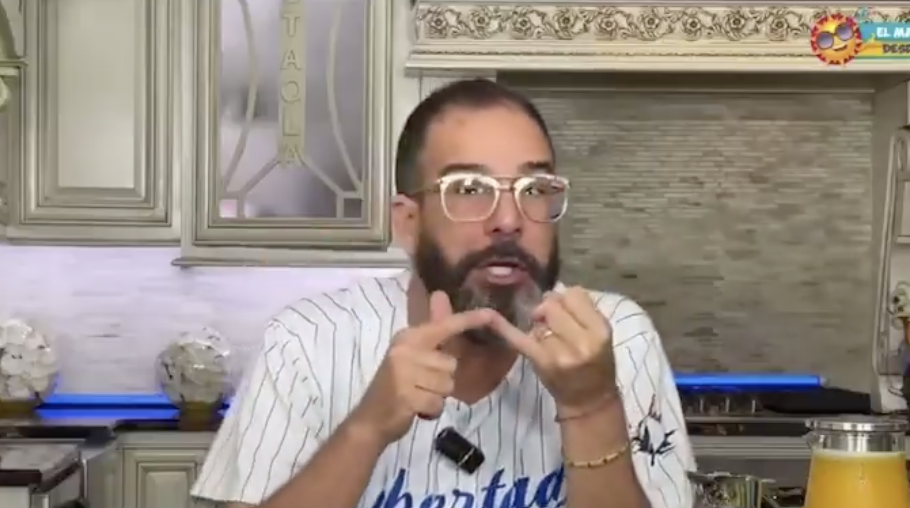 finance report.
Not late. Not incomplete. Missing. Gone like campaign promises after Election Day.
Read related: Recall vs Daniella Levine Cava hits another roadblock — typos and errors
That means voters still have no idea who is funding the recall effort or how the money is being spent — which, if you’re launching a crusade about accountability, is an awkward look.
Florida campaign finance law isn’t optional reading. Political committees are required to file regular reports detailing every dollar raised and every dollar spent.
No exceptions. No influencer loopholes. No “I was busy on livestream” clause.
The mayor’s political team didn’t waste time pointing out the irony.
Christian Ulvert, speaking on behalf of the mayor’s camp, said what a lot of political observers were already thinking: you don’t get to preach accountability while ignoring the law yourself. Especially when the law in question is the one that forces campaigns to show their receipts.
“Alex Otaola has spent weeks demanding accountability from others while flagrantly ignoring the law himself,” Ulvert said in a statement, calling it “a deliberate choice to hide from voters who is funding this effort and how that money is being spent.”
Florida law is clear. Both candidates and political committees are required to file regular reports each quarter disclosing every contribution received and every expenditure made. “There are no exceptions. There is no carve-out for YouTube influencers who was rejected by 89% of voters and decided to turn their grudge into a political stunt,” Ulvert said.
Ouch. But he’s not wrong. Levine Cava won her re-election with nearly 58% in 2024 in the first round. And Otaola finished a 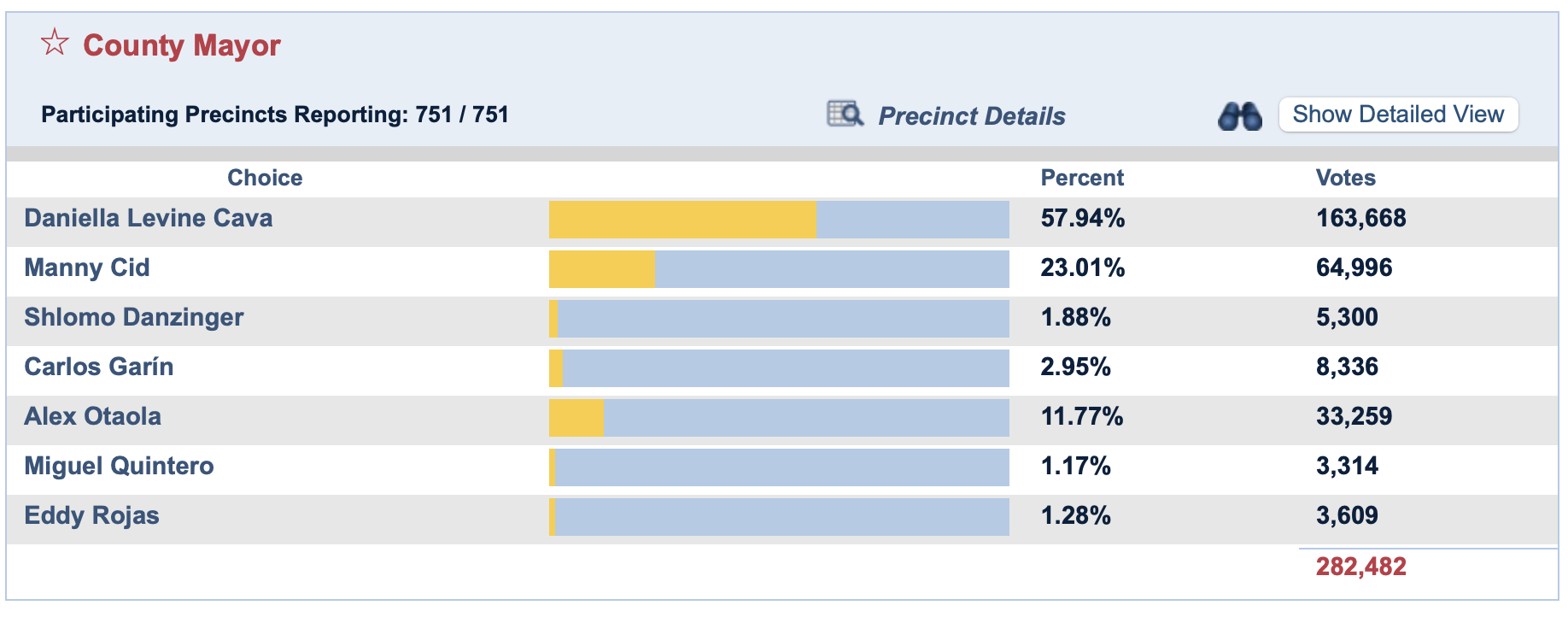 distant third with less than 12% of the voters.
“The voters of Miami-Dade deserve to know who is bankrolling this recall — and Otaola is making sure they can’t find out. That is not transparency. That is not accountability and those who have stood by him are now condoning his efforts to deceive and deny voters of the information that is required by law,” Ulvert said, calling on Otaola to come into compliance.
“No more games, no more hiding.”
Because the real story here is not just about a missed filing. It’s about the mystery behind the money.
Who’s paying for this recall? Who’s funding the ads, the messaging, the organizing — if any organizing is actually happening?
Right now, nobody knows. And that’s exactly the problem.
Read related: Recall vs Miami-Dade Mayor Daniella Levine Cava sounds its starter pistol
Recall efforts aren’t supposed to be just political theater. They’re legal processes with strict rules — including financial transparency. When a political committee fails to file required reports, it doesn’t just break a rule. It raises suspicion.
Because when voters can’t see who’s funding an effort, they start asking uncomfortable questions.
Is this grassroots? Or is this bankrolled? Is it outrage? Or is it strategy?
The whole point of campaign finance disclosure is to answer those questions before voters have to guess.
Miami-Dade has seen recall theatrics before. Big announcements. Big promises. Big personalities.
Then the paperwork shows up — and suddenly the revolution starts looking like an accounting problem. And here’s the reality  check: recall campaigns don’t fail because of speeches. They fail because of math.
And paperwork. And deadlines.
Miss enough of those, and the movement collapses under its own weight.
A recall effort built on demands for accountability just missed its first real test of accountability. Which is not a speech. Not a rally. Not a caravan of flag-waving vehicles down Calle Ocho.
A filing deadline.
And until Otaola produces the required financial disclosures, the loudest question hanging over this recall isn’t whether it will succeed. It’s who’s paying for it — and why voters aren’t allowed to see the receipts.
Transparency isn’t optional.
And when someone shouting the loudest about accountability forgets to file their paperwork, people tend to notice.
This kind of independent, government watchdog reporting is crucial to transparency and democracy. And more so every day. Help shine a light on the darker corners of our community with a contribution to Political Cortadito. Click here. Ladra thanks you for your support.

Recall PAC vs Daniella Levine Cava misses deadline for campaign report added by Ladra on
View all posts by Ladra →
