
Freshman Commissioner Rolando Escalona did what elected officials are supposed to do: he called a Sunshine meeting to ask basic questions about how the Downtown Development Authority spends taxpayer money — specifically, how much of it actually makes its way to Brickell, the district he represents and one of the biggest revenue engines in the city.
But then, he was snubbed.
Only Commissioner Miguel Gabela showed up to hear a series of questions about the DDA’s operations, mission and spending. Not a single representative from the DDA bothered to attend. Not its executive director, Cristina Crespi, who was on vacation. Not the chair, Ralph Rosado. Neither one even a staffer to take notes and pretend to care.
Even Miami-Dade Commissioner Vicki Lopez — who sits as vice chair of the DDA board — said “it is disrespectful” that at least the DDA didn’t send a representative.
Read related: Rolando Escalona to be snubbed at Sunshine meeting about Miami DDA
Rosado later tried to clean it up by having the city clerk send an email blaming a “scheduling conflict,” essentially tossing his own Todd Hannon under the Metromover. Ladra calls BS. You don’t accidentally miss a Sunshine meeting where a commissioner is publicly questioning how you spend millions in public money. You dodge it.
And dodge it he did. So did Commissioner Damian Pardo, who covers the downtown side of the DDA, and Chairwoman Christine King, whose District 5 is adjacent.
Which is a curious strategy when Escalona came armed — not with a speech, but with a spreadsheet mentality. Forty questions deep. Boundaries. Revenue by subdistrict. Who pays. Who benefits. Whether 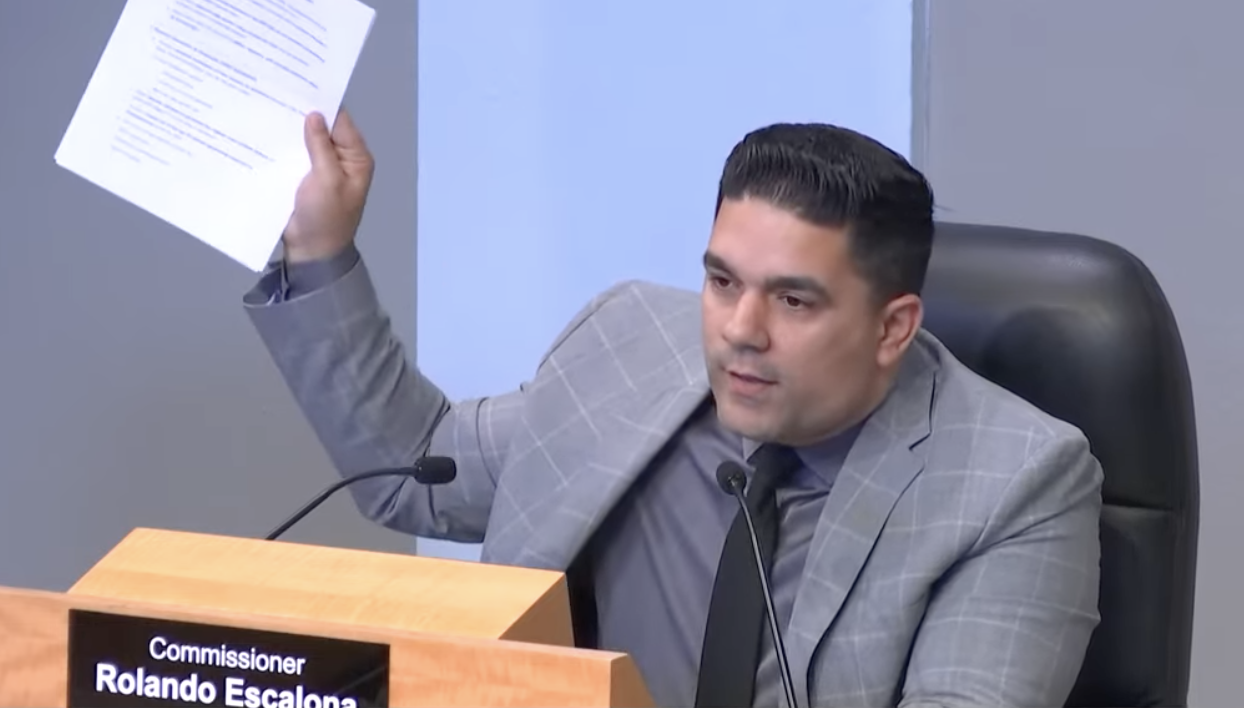 Brickell is subsidizing the rest of downtown. The kind of granular, uncomfortable math that tends to make legacy agencies sweat.
Instead of answers, Escalona decided to open it up to the public and a handful of residents — some of whom are already sharpening knives over the DDA’s long history of giveaways, grants and selective generosity funded by an extra layer of taxation downtown property owners can’t escape.
A woman who lives at 50 Biscayne Boulevard said the DDA original mission was to eliminate urban blight. “And I do not think they have succeeded. And part of the reason they have not succeeded is the spending.” She said downtown residents pay 58% of the DDA budget and she objects to their fancy new offices in a luxury high-rise building. They should have a storefront office on Flagler Street, she sid.
She added that $3.5 million in executive salaries and $750,000 in giveaways to billionaire brands does not eliminate blight. “It’s a very economically inefficient system to deliver services to the downtown.”
Read related: Downtown, Brickell residents still question Miami DDA benefits, future
James Torres, president of the Downtown Neighbors Alliance, said that the director, Crespi makes upwards of $265,000 a year. “That’s more than the governor of Florida. More than the governor of Califonia,” he said.
“And yet, when someone asks simple questions on where the money is going, they just get deflection,” Torres said, adding that his group was retaliated against when they asked the DNA to help support an 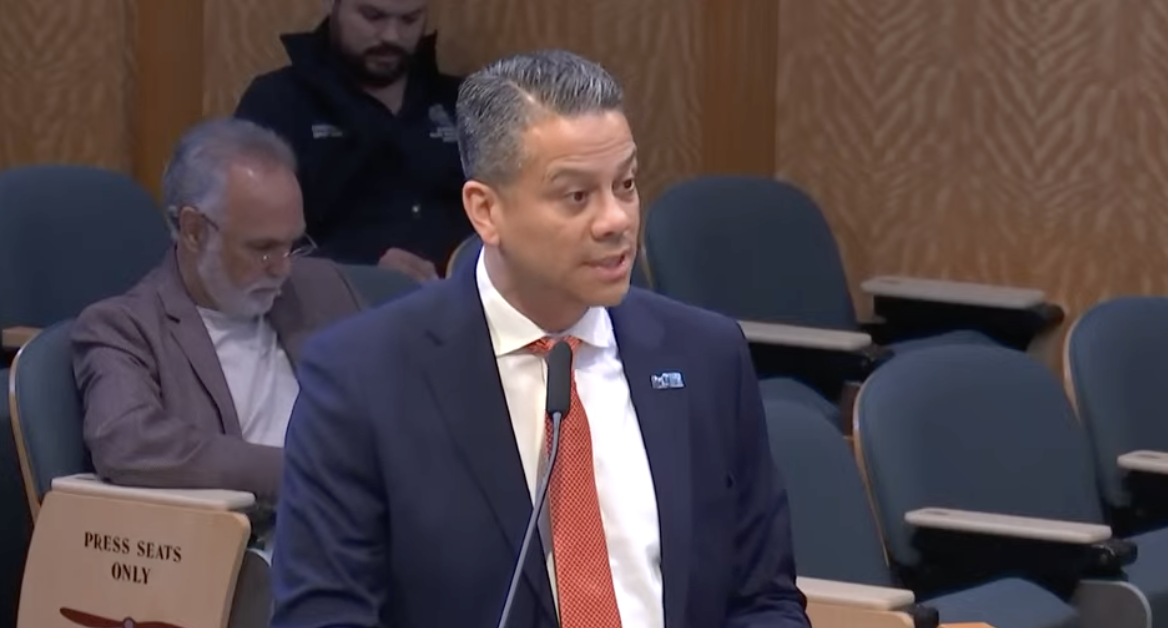 Easter event for downtown residents. “Because we don’t fall in line,” Torres said.
“You don’t punish residents for asking questions. You don’t shut them out for disagreeing. And, certainly, you don’t weaponize a public agency against the public.”
He and others say it is time to end the “hostage tax” and let the DDA operate more like a business improvement district.
Two DDA board members, Gary Ressler and Jose Bermudez, said they understood the frustration and asked for more time to address the issues now that the DDA has three new appointed members. Ressler in particular said that the DDA had been effective and said that Torres was spreading misinformation. He also mentioned that the board was working on a 2050 master plan.
2050?!?!?
So, in light of the public cry to have them dissolved, the DDA plans to stick around for another quarter century? Lopez said that all the other DDAs in the state of Florida had sunset dates when they would end.
Lopez said she’s had a bunch of calls to her office from frustrated Brickell reisdent who are “curious about services.” In other words: What are we getting in return?
“There’s also been a lot of discussion around whether the DDA is subsidizing the city of Miami’s responsibility to provide both police and solid waste services,” Lopez said.
Crespi has told Ladra in the past that the DDA is trying to redefine itself and refocus its mission on  reevelopment and recruitment, not so much city services. Which is wild considering that the city services — homeless assistant, street cleanup, additional police patrol and graffiti eradication — would simply be lost without the DDA. Now Crespi is suggesting the DDA doesn’t do it?
Read related: Effort to dissolve Miami DDA cites ‘bloated’ salaries, redundancy, UFC gift
Thursday’s snub did not come at a great time for the agency that is fighting for its life. Sure, Crespi was on a spring break with her fam in Montana. But she definitely should have assigned a proxy.
Because when a new commissioner asks how the money flows and nobody shows up to explain it, it doesn’t read like confidence. It reads like fear. Or worse — entitlement.
And Escalona? He’s not the type to let that go.
If anything, this no-show may have just fast-tracked the very conversation the DDA has been trying to avoid for years: whether it still deserves to exist at all.
Escalona said Thursday that he would bring the DDA up as a discussion item at the very next commission meeting. And to prove that he’s done his homework and, maybe, give them a chance to do theirs, he has made his 40 questions public.
DDA Boundaries, Revenue Generation & Service Allocation Oversight
Boundaries & District Definition (FOUNDATIONAL)
1. Provide the official legal boundary map of the DDA, including all subdistricts (Brickell, CBD, Park West, Arts & Entertainment District, etc.).
2. When were these boundaries last modified, and what was the policy rationale for those changes?
3. Are there areas currently included in the DDA that do not receive a proportional level of services? Identify them.
4. Are there adjacent high-growth areas outside the DDA that are benefiting indirectly without contributing revenue?
5. What criteria does the DDA use to define, segment, and prioritize subareas within its jurisdiction?
Revenue Generation by Geography (CORE OVERSIGHT)
6. Provide a detailed breakdown of total revenue by subdistrict (Brickell, CBD, Park West, Arts & Entertainment, etc.) for the past 5 years.
7. For each subdistrict, specify:
- Total taxable value
- Annual tax increment generated
- Year-over-year growth rate
8. Which specific subdistrict generates the highest share of DDA revenue, and what percentage of the total does it represent?
9. Provide a ranked list of the top 10 revenue-generating properties or developments within the DDA.
10. How much of total revenue is driven by:
- Office properties
- Residential (condo/apartment)
- Retail/hospitality11. Do you have or can you provide me a block-by-block or parcel-level heat map showing where revenue is most concentrated.
12. What percentage of revenue growth is coming from new construction versus appreciation of existing assets?
Service & Investment Allocation by Area (EQUITY TEST)
13. Provide a side-by-side comparison for each subdistrict showing:
- Revenue generated
- Total dollars invested
- Types of services delivered
14. Which areas receive more investment than they generate, and what is the policy justification?
15. Which areas generate significantly more revenue than they receive in services?
16. What is the per-acre or per-capita investment level by subdistrict?
17. Can you provide me with a breakdown of service categories by area, including:
- Public safety/security
- Cleaning and maintenance
- Marketing and events
- Capital improvements
18. How are decisions made when high-revenue areas request increased services — are they prioritized?
19. Are there baseline service standards applied uniformly, or does service intensity vary based on revenue contribution?
20. Provide examples where funding was intentionally shifted from one area to another, and explain why.4. Resource Allocation Methodology (ACCOUNTABILITY)
21. What formal formula or framework does the DDA use to allocate funds geographically?
22. Is there a minimum service guarantee for all areas regardless of revenue contribution?
23. How often is the allocation model reviewed, and who approves adjustments?
24. Does the board receive regular geographic performance reports, and can you provide recent examples?
25. What safeguards exist to prevent over-concentration of resources in high- visibility areas at the expense of others?
Transparency & Reporting (PRESSURE POINT)
26. Why does the DDA not publish a public-facing geographic breakdown of revenue vs. investment?
27. Will you commit to producing an annual “revenue vs. services by district” report for the Commission?
28. Can you provide a clear, visual map overlay showing where money is generated versus where it is spent?
29. How can taxpayers in a specific subdistrict determine whether they are receiving fair value for their contribution?
30. What steps will you take to improve real-time transparency of geographic spending?
Strategic Equity & Policy Questions (HIGH PRESSURE)
31. Is the DDA operating under a philosophy of reinvestment where revenue is generated, or redistribution across the district?
32. If redistribution is the goal, what is the policy justification and limit of that approach?
33. How do you respond to stakeholders in high-contributing areas who may feel they are subsidizing other parts of downtown?
34. Conversely, how do you justify continued investment in lower-performing areas without clear ROI?
35. What is the long-term strategy to ensure all subdistricts become net contributors rather than dependent areas?
Forward-Looking Planning & Risk
36. If a major revenue-generating area (e.g., Brickell) experiences a downturn, how will service levels across the entire DDA be impacted?
37. Are there contingency plans to rebalance services if revenue concentration becomes too skewed?
38. How does the DDA plan to diversify its revenue base geographically?
39. What capital investments are being made today to increase future tax generation in underperforming areas?
40. Should the Commission consider revisiting or redrawing DDA boundaries to better align revenue and service delivery?
This kind of independent, government watchdog reporting is crucial to transparency and democracy. And more so every day. Help shine a light on the darker corners of our community with a contribution to Political Cortadito. Click here. Ladra thanks everyone for their support.

Where’s the DDA? Miami’s Rolando Escalona calls Sunshine, gets ghosted added by Ladra on
View all posts by Ladra →
