
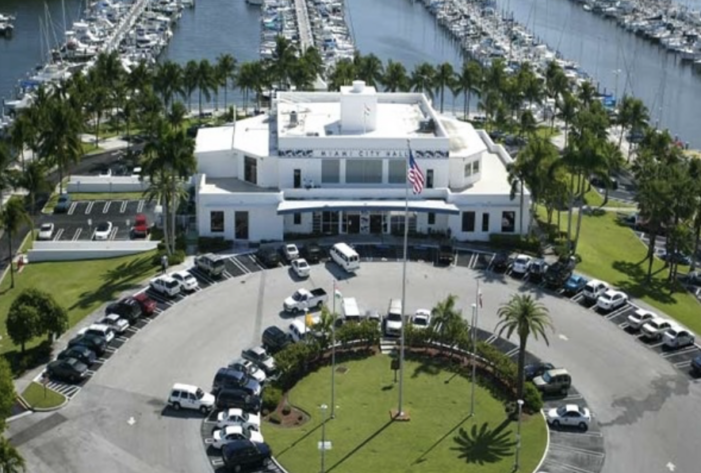
Mayor Eileen Higgins has been in office just long enough to learn where the bathrooms are at City Hall — and already she’s making one thing clear: This administration would very much like to be taken seriously.
Last week, Higgins rolled out her senior leadership team, a ritual that in most cities barely registers as news. But this is Miami, where staffing decisions often double as early warning signs. Because around here, who you hire tells residents whether you plan to govern, or merely preside.
And after years of investigations, ethical turbulence, administrative musical chairs, and a City Hall culture that too often blurred the line between improvisation and incompetence, Miami voters did not elect Higgins for vibes. They elected her for order.
Read related: Higgins rolls out her first team — and Miami, this is not City Hall as usual
Because if there is one thing Miami residents agree on right now, it’s this: competence is no longer an option. After years of headlines about investigations, ethics questions, administrative churn, and a City Hall that too often seemed powered by improvisation, voters didn’t just elect a new mayor — they elected the promise of stability.
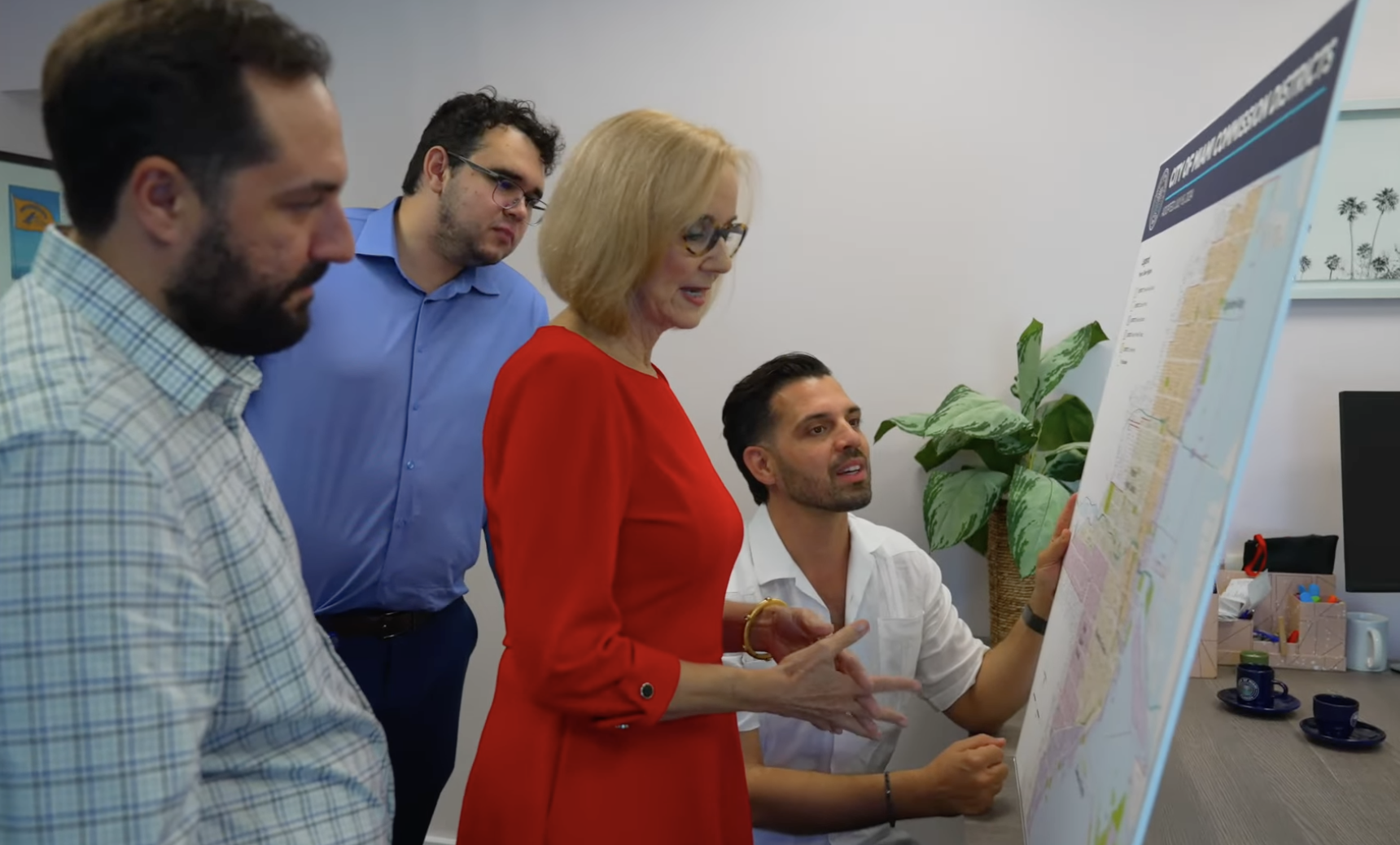 “Miami residents deserve a City Hall that respects their time, communicates clearly, and delivers results that make your life better,” Higgins said in a statement. “That starts with faster response times, transparent updates, and strong ethics. And it means staying focused on what matters most to families, affordability, safety, and opportunity.
“I am proud to bring together a team of experienced, mission-driven professionals who will do the work, follow through, and earn the public’s trust.”
They are also the first real clue about whether Miami is getting a course correction, or just a calmer version of the same chaos. Which is precisely why this staffing announcement matters — and why it deserves a closer look beyond the polished press release language about transparency, results, and measurable progress. (All phrases Miami politicians deploy with great enthusiasm right up until reality intervenes.)
While her mentor, Miami-Dade Mayor Daniella Levine Cava, surrounds herself with “chiefs” of this and that, Higgins is running with “advisors.” But she also appears to be assembling a government of grown-ups. It’s encouraging.
Also — if we’re being honest — the bar might not subterranean, but it’s very close. So there was nowhere to go but up.
Let’s start with Marta Viciedo, a mainstream civic and philanthropic figure in Miami — an urban policy advocate turned foundation executive— with a public profile shaped mostly by transportation policy debates, now directing Strategic Initiatives 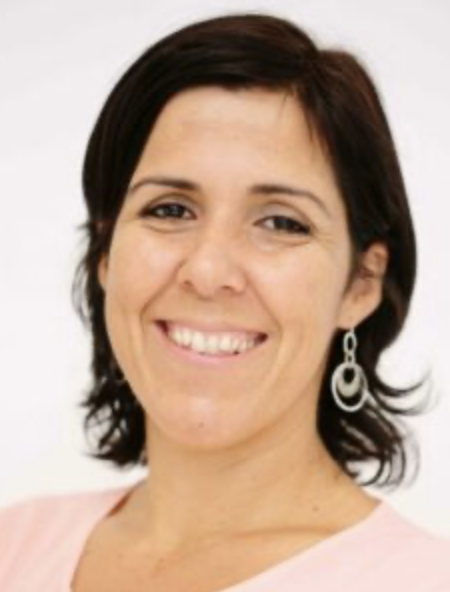 and Economic Growth at the city. Coming from the Knight Foundation ecosystem, Viciedo speaks fluent civic innovation — a dialect far removed from the developer-driven growth model that has long shaped Miami’s skyline while quietly squeezing its workforce.
She has not exactly followed the traditional developer-first playbook Miami has often leaned on, and offers a nice counterbalance to the mayor’s own coziness with the construction industry.
If Higgins truly intends to tackle affordability — the issue haunting nearly every conversation about Miami’s future — then economic development has to start benefiting residents more than speculative investors. That’s a heavy lift in a city where cranes often move faster than policy and growth often means another luxury tower marketed overseas.
Read related: Damian Pardo passes double-density double-down for Miami developers
Viciedo — who advocated against the extension of 836 in 2018 — might be able to strike the needed balance.
A one-time English as a second language teacher at Miami Dade College, Viciedo is also the founder and a board member of Transit Alliance Miami, and everybody knew one of theirs was going to get into Higgins’ office.
But it’s more than one. Transit Alliance Vice Chair Ron Bilbao was tapped for Policy and Legislative Affairs. Bilbao is a well-connected civic and political strategist, a seasoned government navigator (read: lobbyist) whose work spans lobbying, public affairs, nonprofit leadership, and corporate policy — often focused on transportation, sustainability, and social-justice issues. His hire suggests Higgins understands that passively reacting to Tallahassee is less a strategy and more a tradition Miami can no 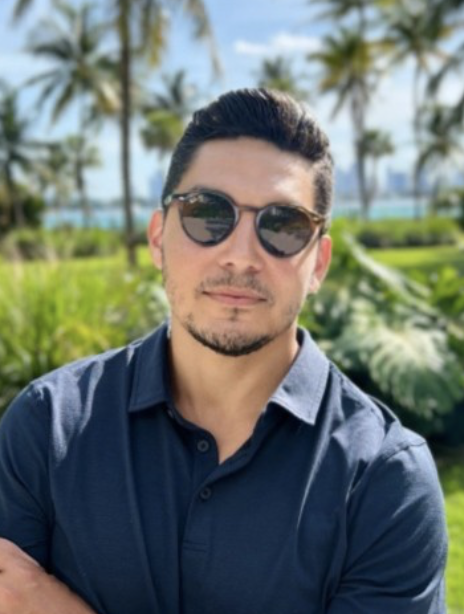 longer afford.
Whether even the best policy team can outmaneuver state preemption is another question entirely. But at least someone appears to be reading the chessboard.
Born to Colombian and Venezuelan parents, he led a student lobbying program for juvenile-justice reform and anti-bullying legislation and has served at SAVE and the Florida Immigrant Coalition. Bilbao has also worked with major advocacy groups such as the ACLU, SEIU, and the National Education Association, building expertise in civil rights, labor, healthcare, education, and elections policy. Oh, and he once served as legislative liaison for the Miami-Dade Democratic Executive Committee.
Then there is Edward Martí Kring, elevated from Higgins’ county office, where he dealt directly with constituent headaches — the potholes, the stalled permits, the phone calls residents make right before giving up. Now he is Director of Community 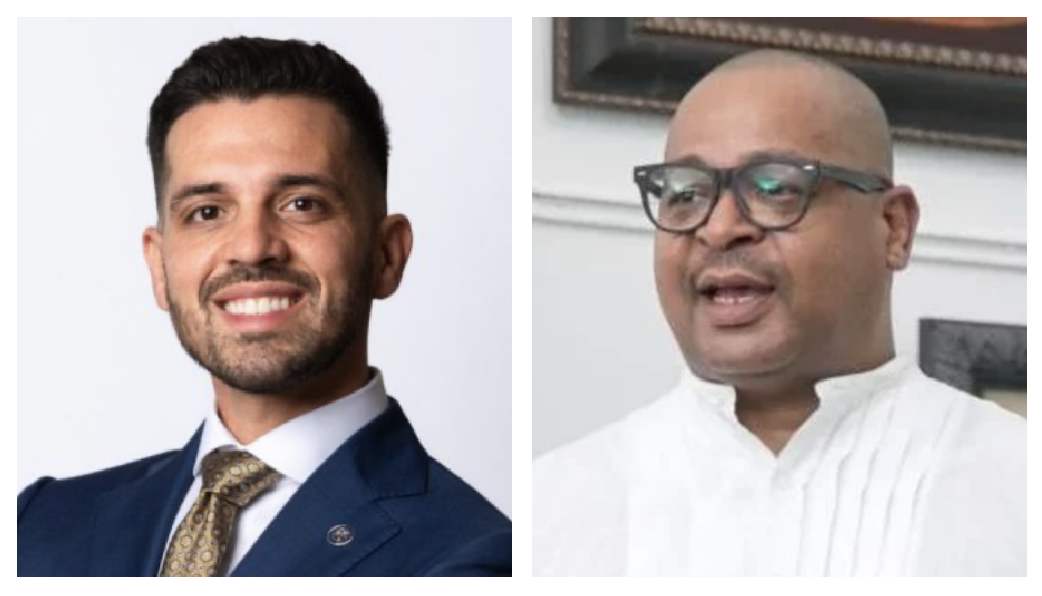 Enhancement & Project Delivery — which sorta sounds like a fancy way to say constituent affairs.
If he succeeds, Miamians may experience something unfamiliar: responsiveness.
Christopher Norwood, a community-focused public affairs consultant and arts organizer with influence in Miami education circles and Black cultural initiatives, will be “special advisor on community prosperity,” a title broad enough to either be transformative or dangerously buzzword-adjacent. It sounds promising — provided “community prosperity” doesn’t become one of those wonderfully flexible government phrases that means everything and therefore nothing.
Miami has never lacked for vision statements. Execution has been the recurring plot twist.
But Norwoods deep ties to civic and cultural institutions suggest Higgins is betting that economic development works better when neighborhoods are partners rather than afterthoughts. In this city, where “revitalization” has sometimes been code for “brace for displacement,” that nuance matters.
The Knight Foundation named Norwood one of its 2022 “Arts Champions,” and he is respected by both Democrats and Republicans alike. In 2007, he was appointed by then-Florida House Speaker Marco Rubio to the Council on the Social Status of Black Men and Boys.
Read related: Democrat leaders waste no time calling Eileen Higgins victory a Miami ‘reset’
The communications director role may be the most quietly revealing hire. Maca Casado — whose full name is María Carolina Casado — is a Venezuelan-born Democratic political communications strategist who has worked on major U.S. campaigns and 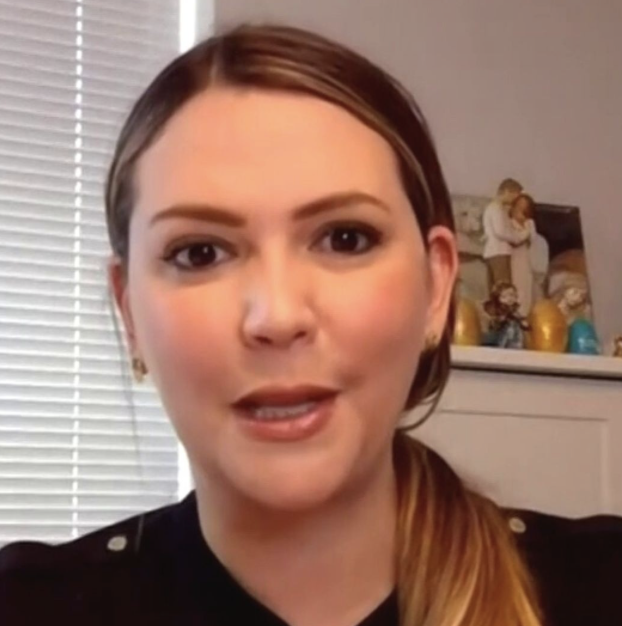 party operations, including President Joe Biden in 2020 and his eventually-abandoned reelection bid, where was a key Hispanic media strategist for Biden-Harris, tasked with shaping outreach to Latino voters. She also worked with the Harris-Walz campaign.
Casado began her political career as a campaign intern for Hillary Clinton in 2016. She also served as director of Hispanic media and spokesperson at the Democratic National Committee (DNC) for about two years, leading a seven-figure bilingual advertising effort.
The national campaign veteran, now carries the unenviable task of making City Hall sound coherent — preferably before the rumor mill does it first. Because transparency is less about what you announce and more about what you can’t hide.
But also, it makes a political observer think that Higgins is going to be campaigning on the job every day. Casado is is her very 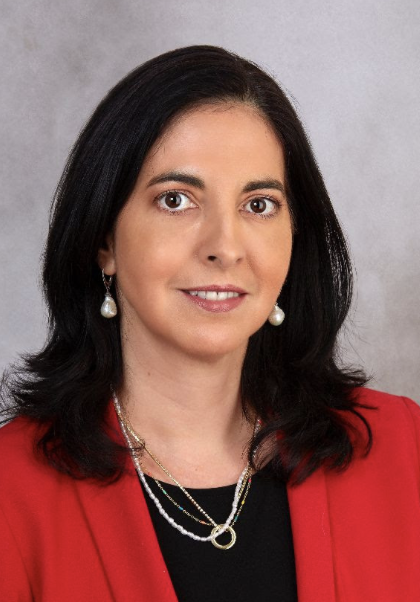 own, personal, committed communications director. There is also a new director of communications for the city and that is Helena Poleo, who also worked on her campaign. Ladra knew she was getting the job before she did, she says. Poleo, who worked at the Miami Herald, told Political Cortadito that she will be making $215,000 a year in salary. This is a return to the city for her. She also worked as director of communications for then Mayor Manny Diaz for a year and three months and then went to be the public information officer in the city of Doral, at the same time opening her business, Influence Communications, Inc.
Overseeing this mayoral team is Chief of Staff Maggie Fernandez, Higgins’ longtime consigliere and someone widely viewed as knowing exactly how local government functions — including the parts that famously do not.
Taken together, this is not a flashy lineup built for political theater. It’s a management structure.
And structure doesn’t come cheap. Not included in the press release, but released after Ladra asked, are their salaries. Viciedo, Bilbao and Kring will each be making $180,000 a year. Maca Casado makes $170,000. Fernandez has a $250,000 annual salary. Norwood has not been hired as of Wednesday, which indicates he may work as an outside consultant (more on that later).
But there are also a bunch of junior staffers in the new mayor’s office, including two leftovers from the Francis Suarez days:
- Allison Adams Acevedo (hired in 2023) is a special aide making $60,000 a year (currently on maternity leave).
- Yaimar Aguilar is an executive assistant at $65,000 (hired Dec. 10).
- Luis Basualdo is an assistant to the mayor for $80,250 (hired Jan. 5).
- Jonathan Fernandez is an assistant to the mayor for $100,000 (hired Jan. 20).
- Mateo Jolivert is a mayoral aide making $60,000 a year (hired Jan. 5).
- Ana Montes Monto is an assistant to the mayor making $115,000 annually (hired Jan. 5)
- Brian Olmo is a communications coordinator making $55,000 (hired Jan. 5).
- Melissa Ortiz Santana is an assistant to the mayor, making $95,000 (hired Jan. 5).
- Daniel Reyes is also an assistant to the mayor, but he makes $100,000 a year (hired Jan. 5).
- Gail Seay, (hired in 2021) the deputy director of constituent affairs, makes $117,819.18 a year.
Competence is exactly what Higgins promised. Now she’s saying it’s going to cost at least $1.8 million in the mayor’s office.
There is also the small matter of timing. Higgins inherits a city where public trust has been dented, patience is thin, and residents increasingly expect government to operate with something approaching professionalism.
No pressure.
But while this team looks great on paper, the real test is what happens when bureaucracy pushes back, the commission pulls sideways, the state leans in, and the first real crisis hits — because it always does.
For now, at least, Higgins is signaling that City Hall is under new management.
Miami residents have heard that one before. What they’re waiting to see is whether this administration produces something rarer than ambition, rarer than vision, rarer even than reform rhetoric: A city government that simply works.
And if that sounds like a low bar — it is.
Which tells you everything you need to know about the one Higgins is trying to clear.
You can help get more independent, watchdog government reporting of our local government — its responsiveness, spending, special interests — with a contribution to Political Cortadito. Click here. Ladra thanks you for your support.

Miami Mayor Eileen Higgins starts to assemble her City Hall senior team added by Ladra on
View all posts by Ladra →
