
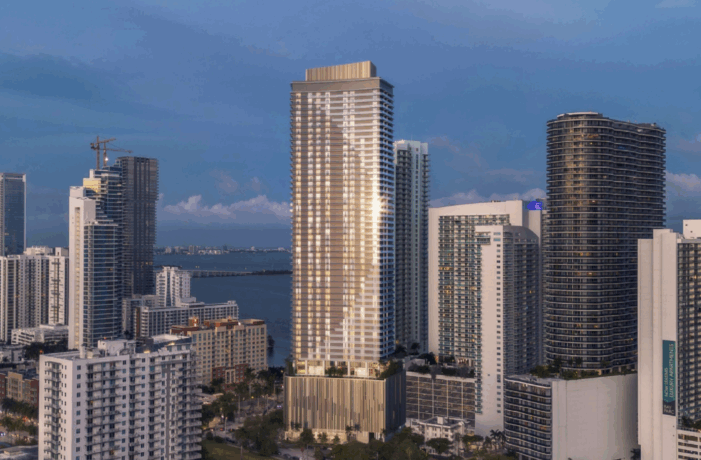
Miami’s first official Build-and-Flood™ pilot program is on.
Last week, the Miami City Commission gave final approval to an ordinance that will establish a “resiliency infrastructure” slush fund and allow for double allowable density in Edgewater — from 150 to 300 units per acre. Same deal, same sponsor, same developer perfume lingering in the air.
Commissioner Damian Pardo, never one to let a zoning loophole go unexplored, sold the idea that if developers pay a fee into 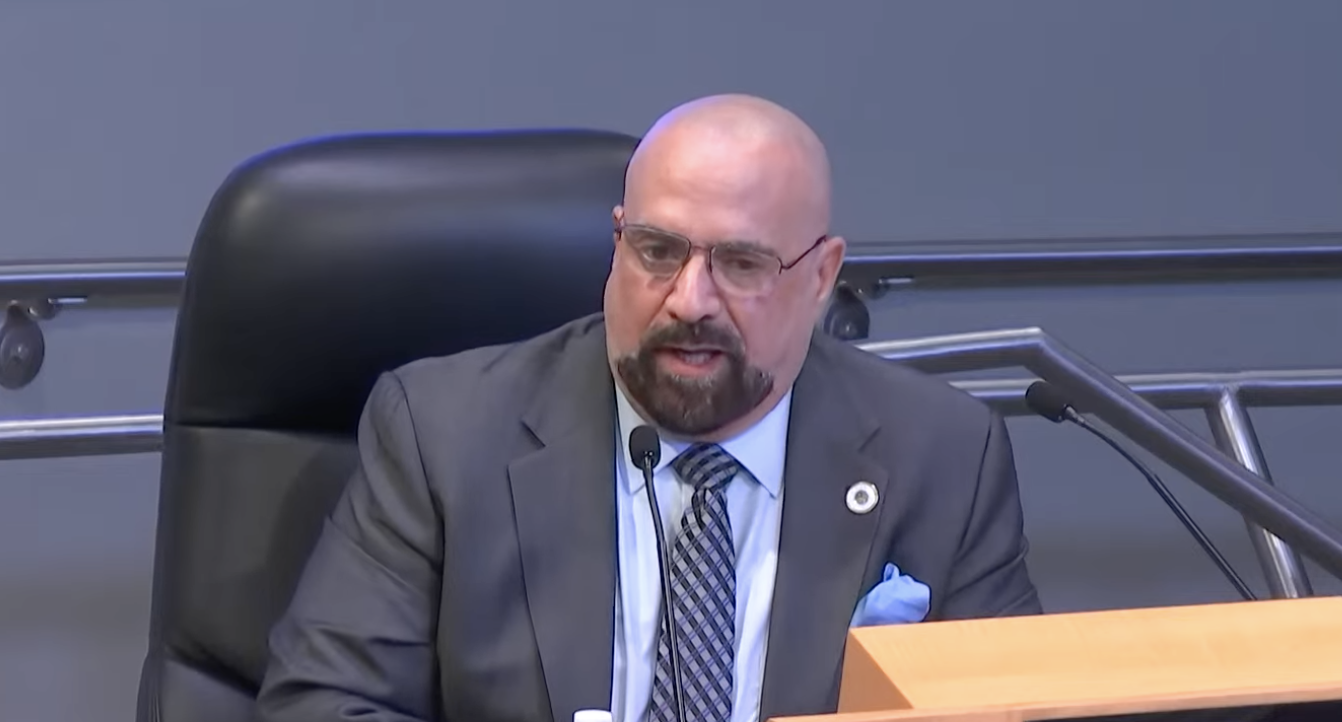 the resiliency fund— $35,000 per extra unit — Miami will magically become flood-resilient.
But let’s face it, this is a gift to developers. When you’re selling million dollar condos, thirty-five grand is basically couch change.
The pitch hasn’t changed: More density will lower prices! More density will pay for resilience! More density will somehow fix the problems caused by too much density!
It’s zoning logic so circular it should come with its own traffic circle.
Read related: Miami: Damian Pardo has a developers’ dream in density-for-dollars deal
And it also flies in the face of Pardo’s campaign promises. In a door hanger he left for voters in 2023, Pardo said he opposed large-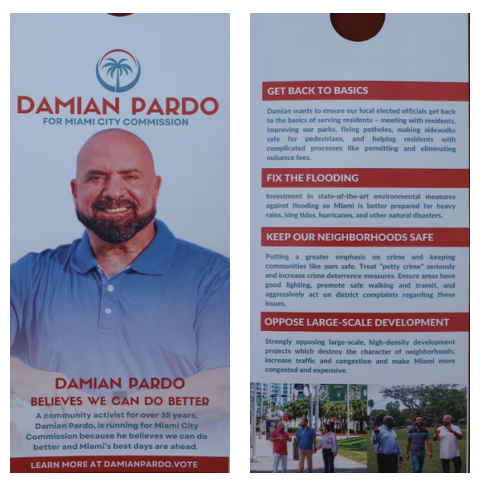 scale developments. From the actual text: “Strongly opposing large-scale, high-density development projects which destroy the character of neighborhoods, increase traffic and congestion and make Miami more congested and expensive.”
Um, what happened? This is the same guy who also championed the fire sale of 3.2 acres on Watson Island for $29 million to make way for luxury condos and a hotel and restaurant complex on one of the most valuable — and controversial — pieces of city-owned land left on Biscayne Bay.
At a Zoom meeting before the vote, Pardo said this was all done at the request of a group called “Concerned Citizens of Edgewater.” Touching name. Even more touching? The group’s officers include longtime real estate agents and investors, the late owner of a company that owns a commercial property in Edgewater worth $2.7 million, and the owner of Global Investment Realty is a leading commercial real estate brokerage group located in Miami, FL, specializing in a diverse range of property services — all of whom could directly benefit from doubling density,
Concerned, indeed. Mostly about maximizing square footage.
Meanwhile, residents raised actual concerns — traffic, water pressure, sewage capacity, garbage, parking, evacuation times, parks-per-capita — you know, quality of life. Those questions, according to resident Elvis Cruz, were politely ignored. Twice.
Silence, in Miami, is often the loudest answer.
Cruz and several other residents have asked newly-elected Mayor Eileen Higgins to veto the ordinance. She has until Sunday the 18th or Tuesday the 20th, depending on whether Sundays are included in the 10 day window to issue the veto.
Read related: Parting gift: Miami commission pushes through Watson Island fire sale
Pardo has repeatedly said that the density bonuses are already in the code, and that this just establishes a fund specifically for resilience infrastructure. But here’s the inconvenient truth the ordinance tries very hard to bury: Miami already has money for flood mitigation. Miami Forever Bond. Stormwater Utility Fees. Impact fees. FIND grants.
 In fact, Chief Financial Officer Erica Paschal Darling (photo, right) explained that $127 million in the Miami Forever Bond account have not been issued yet because the projects that money would fund are not yet ready to go and the city does not want to pay interest.
And now Pardo wants to float another bond — on the same agenda last week — that would fund infrastructure without doubling density. Oops. That kind of ruins the whole “we have no choice” narrative, doesn’t it?
And if it is such a great idea, why did Chairwoman Christine King insist it not apply to any property in District 5?
Let’s call this what it is: This isn’t about resilience. It’s about using flooding as political camouflage for another developer giveaway.
If you’ve ever tried driving Biscayne Boulevard north of downtown, congratulations, you made it out. An FDOT “Level of Service” 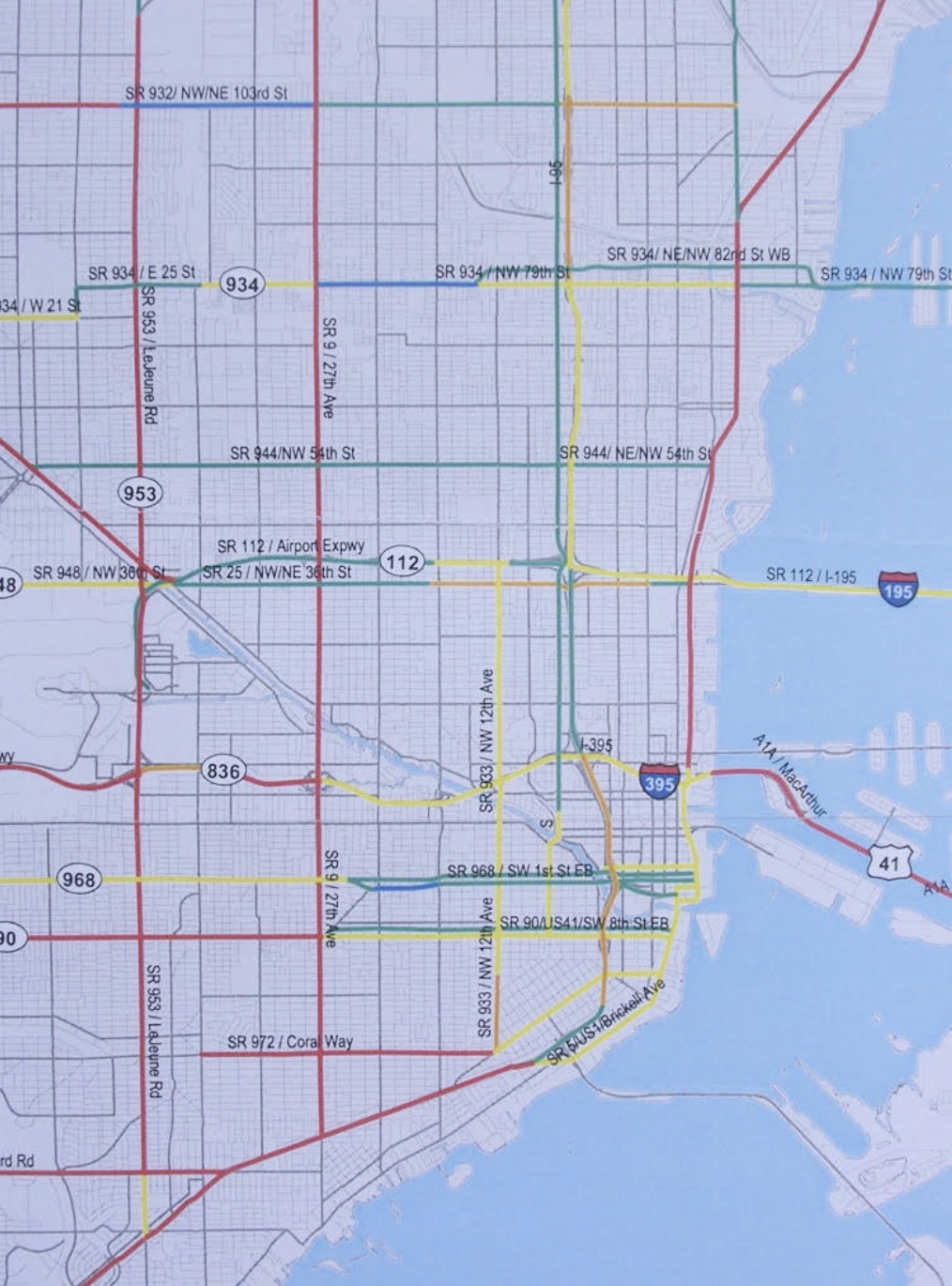 map from 2005 — the red line on the right edge of this map — rated that stretch “F.” As in failure. As in don’t add more people here. Twenty years later, traffic is worse, not better.
Yet the city’s response is essentially: Let’s double the number of residents and see what happens.
Spoiler alert: nothing good.
“Traffic congestion is a major hot-button problem with most Miamians, as the City keeps promoting and allowing more and more high-rise construction, regardless of how it affects our quality of life,” Cruz said.
Read related: Miami commission pushes climate fix by doubling development density
City Hall insists this is only for Edgewater. For now. Sure. Just like every zoning “exception” that later metastasizes across the map. From Coconut Grove to Liberty City. Upper Eastside to Allapattah and Coral Way to Flagami, developers are already warming up the talking point: “You gave it to them — now give it to me.”
And Pardo is helping them make the case, citing Rapid Transit Zoning and the Live Local Act — two already controversial density boosters — as justification for piling on even more.
That’s not leadership. That’s precedent laundering.
And here’s a detail Ladra can’t unsee: The ordinance applies to T4, T5, and T6 zoning — even though Edgewater has no T4 or T5.  So why include them?
Because this thing was never meant to stay put. It’s pre-packed for expansion. The city may dangle removing T4 and T5 as a “compromise,” but the blueprint is already drawn.
It’s the oldest Miami story there ever was.
Almost every zoning law benefits developers. Developers make most campaign contributions. And somehow we’re supposed to believe this is all coincidence.
Meanwhile, Edgewater will still flood if someone sneezes near Biscayne Boulevard.
The only thing rising faster than the water? The density.
This kind of independent, government watchdog reporting is crucial to transparency and democracy. And more so every day. Help shine a light on the darker corners of our community with a contribution to Political Cortadito. Click here. Ladra thanks you for your support.

Damian Pardo passes double-density double-down for Miami developers added by Ladra on
View all posts by Ladra →
