
Miami Beach commissioner: ‘Let’s fight back in court’
So this is how zoning works now. When developers can’t get approval from local boards, residents or even the area’s own elected officials, they simply go shopping for a different government — one 400 miles away.
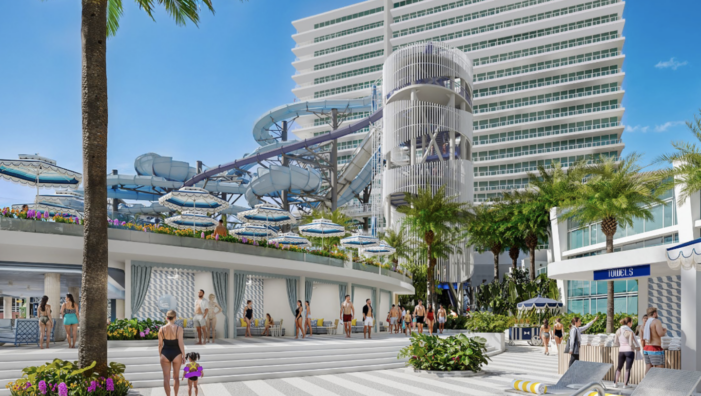
Under a bill passed Friday in Tallahassee, the legendary Fontainebleau Miami Beach will likely get the green light to build a controversial rooftop water park, complete with slides towering over nearby homes, whether Miami Beach wants it or not.
Local opposition? Overruled. Historic Preservation Board concerns? Bypassed. Home rule? Cute concept.
The Fontainebleau project ran into heavy resistance at the local level, where residents packed hearings to oppose what they see as a massive tourist attraction plopped into a residential area.
Enter Tallahassee.
Read related: Unlikely allies rally to save Miami-Dade UDB from Tallahassee’s talons
State Rep. David Borrero of Doral — which is 18 miles to the west, but he’s really trying to make a name for himself — quietly inserted an amendment into Florida House Bill 399 after hotel lobbyists came calling. He admitted to the Miami Herald that he worked with a lobbyist from the Fountainebleau on the tweak. The provision orders the city to “administratively approve” the necessary changes to the building — meaning no meaningful local review.
How? It will force local governments to administratively approve certain applications for special exceptions or variances submitted by a large destination resort, which is defined as “a public lodging establishment… that is comprised of at least 5  contiguous acres owned and controlled by the same business entity, containing at least 500 guest rooms, and that has had an average occupancy rate of at least 70 percent in the past 3 years.”
So, basically, it’s just what the Fountainebleau wants. Even Miami Beach’s own Republican state representative, Fabián Basabe, opposed the move and voted no. He called it what it is: a special carve-out for a single property that undermines local control.
Basabe was more optimistic than most this week when reached by Political Cortadito to comment on the bill’s passage. “The city of Miami Beach still controls significant regularity authority,” Basabe told Ladra. “Any proposal would still have to go through site plan approval, traffic and infrastructure studies, resiliency and drainage requirements and full building permitting. These are meaningful tools that determine whether and how a project proceeds.
“Residents should expect those tools to be used transparently and consistently,” Basabe said. “The story does not end with a. vote in Tallahassee. The next chapter belongs to Miami Beach.”
But Miami Beach Commissioner Alex Fernandez isn’t taking any chances and wants to fight back.
“The city may still have technical review authority over concurrency and other issues, but that does not excuse stripping residents of their voice in the process or forcing this zoning decision in a nationally designated historic site,” Fernandez told Political Cortadito. “We are here to protect the rights of the residents, not the bureaucracy.”
Fernandez, who says the law allows the Fontainebleau Hotel to silence resident opposition and forces a massive attraction next to where people live, has proposed a 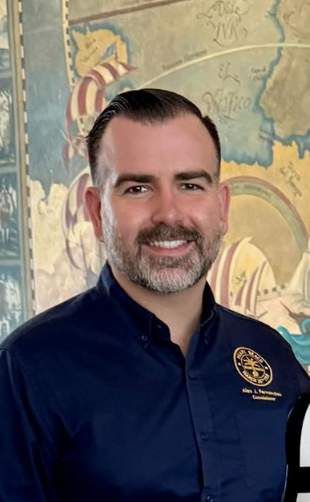 resolution at Wednesday’s commission meeting that would authorize the city attorney to sue the state if necessary, citing “potential legal claims” the city attorney has already identified.
“Clearly, this bill egregiously interferes with our residents’ right to public input and local land-se authority,” Fernandez said. “If signed into law, Miami Beach must be prepared to defend the rights of our residents and the city’s responsibility to govern.”
A court battle could be long and expensive. Jeffrey Soffer, the billionaire who owns the Fountainebleau has resources. Lots of ’em.
The hotel, for its part, insists the project is merely a “thoughtful upgrade” consistent with zoning. And that may be true — now that zoning has been rewritten to fit it.
Read related: Miami Realtors crown Vicki ‘Live Local’ Lopez ‘Housing Advocate of the Year’
Sen. Shevrin Jones warned during debate that the Fontainebleau provision was usurping local decision-making. He tried — and narrowly failed — to strip it out. The final Senate vote was close enough to show discomfort, not close enough to matter.
Governor Ron DeSantis could still veto the bill, though insiders say that’s unlikely given leadership involvement in crafting it.
The real story isn’t one water park. It’s the roadmap. If this stands, any developer blocked locally now has a new playbook: If you 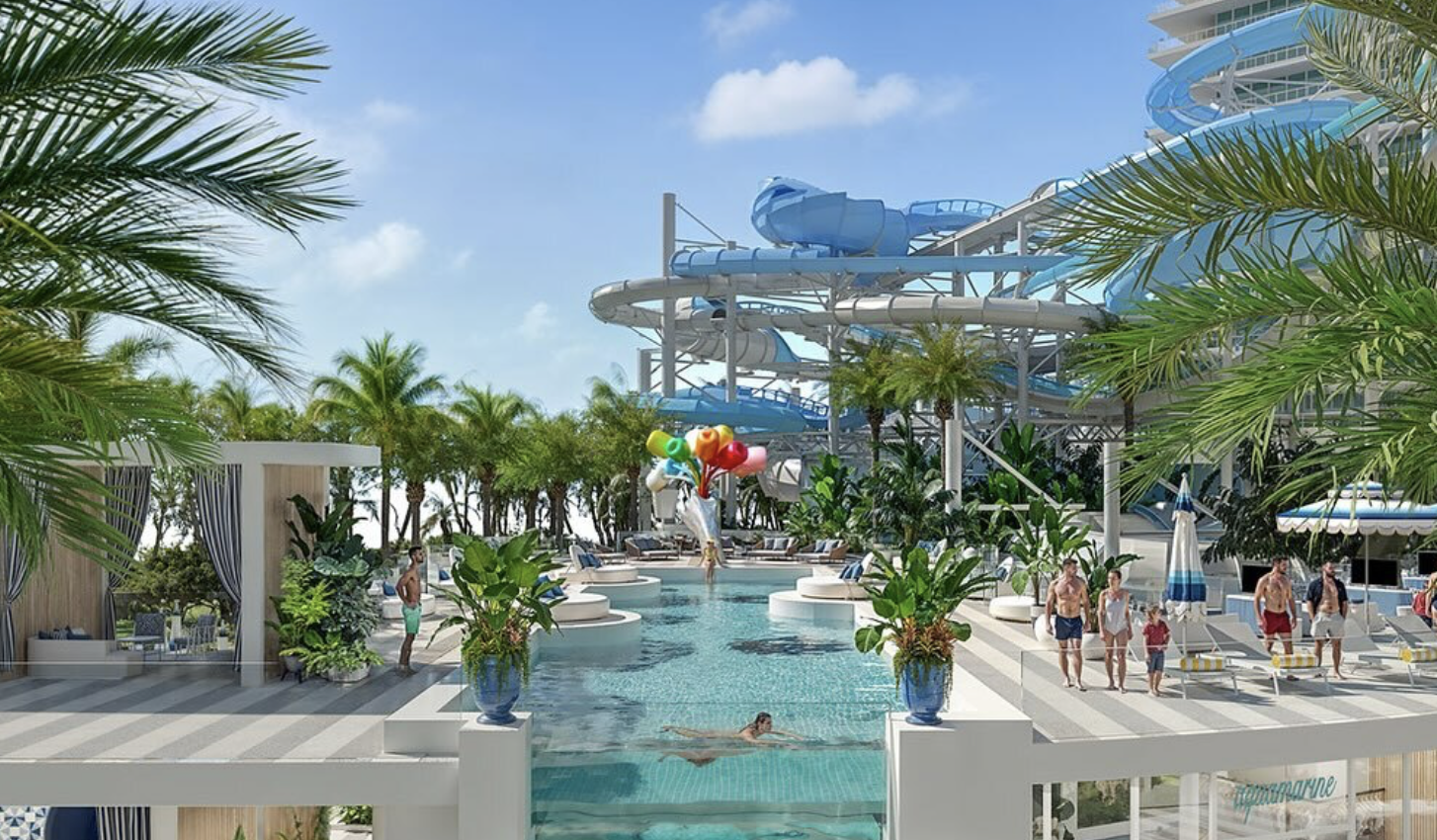 lose at City Hall, hire lobbyists, get a friendly legislator and, voila, rewrite the rules from Tallahassee. Then call it progress.
No messy public hearings. No inconvenient neighborhood groups. No pesky local boards with opinions.
Just a neat little clause in a statewide bill.
The law doesn’t explicitly approve construction — only the application process. But once a city is forced to approve the application, the outcome is about as mysterious as a Florida summer thunderstorm.
A five-year sunset clause was included, presumably to make lawmakers feel better. It won’t matter. The slides, once built, won’t evaporate when the clock runs out.
Miami Beach has long struggled with overdevelopment, traffic congestion and infrastructure strain. Residents say they want redevelopment that fixes problems, not attractions that intensify them. Instead, they got a reminder of who really holds power when big money meets state politics. Not the city commission. And certainly not the residents or voters.
In Florida, if you can’t get your project approved at home, there’s always Tallahassee — where your neighbors don’t get a vote, but your lobbyist does.
Hold onto your beach chairs. The splash zone is coming.
The city of Miami Beach meeting starts at 8:30 a.m. Wednesday at City Hall, 1700 Convention Center Dr., and is also available via zoom (Join webinar at https://miamibeachfl-gov.zoom.us/j/81392857671 or call 305-224-1968 or 888-475-4499. Webinar ID is 813 9285 7671). Go to www.miamibeachfl.gov for agendas and video “streaming” of all commission meetings.
This kind of independent, government watchdog reporting is crucial to transparency and democracy. And more so every day. Help shine a light on the darker corners of our community with a contribution to Political Cortadito. Click here. Ladra thanks you for your support.

Fontainebleau water park slides past local opposition — through Tallahassee added by Ladra on
View all posts by Ladra →