
In Coral Gables, fighting human trafficking is a priority. As long as it involves motels.
But when the conversation shifts to training the people most likely to encounter victims — firefighters and paramedics — things suddenly need to slow down.
At a recent city commission meeting, Commissioner Melissa Castro proposed something that sounded fairly straightforward: specialized, trauma-informed training to help first responders recognize potential trafficking victims during medical calls. There must be something better than calling the Department of Homeland Security, which is what the Blue Campaign card directs 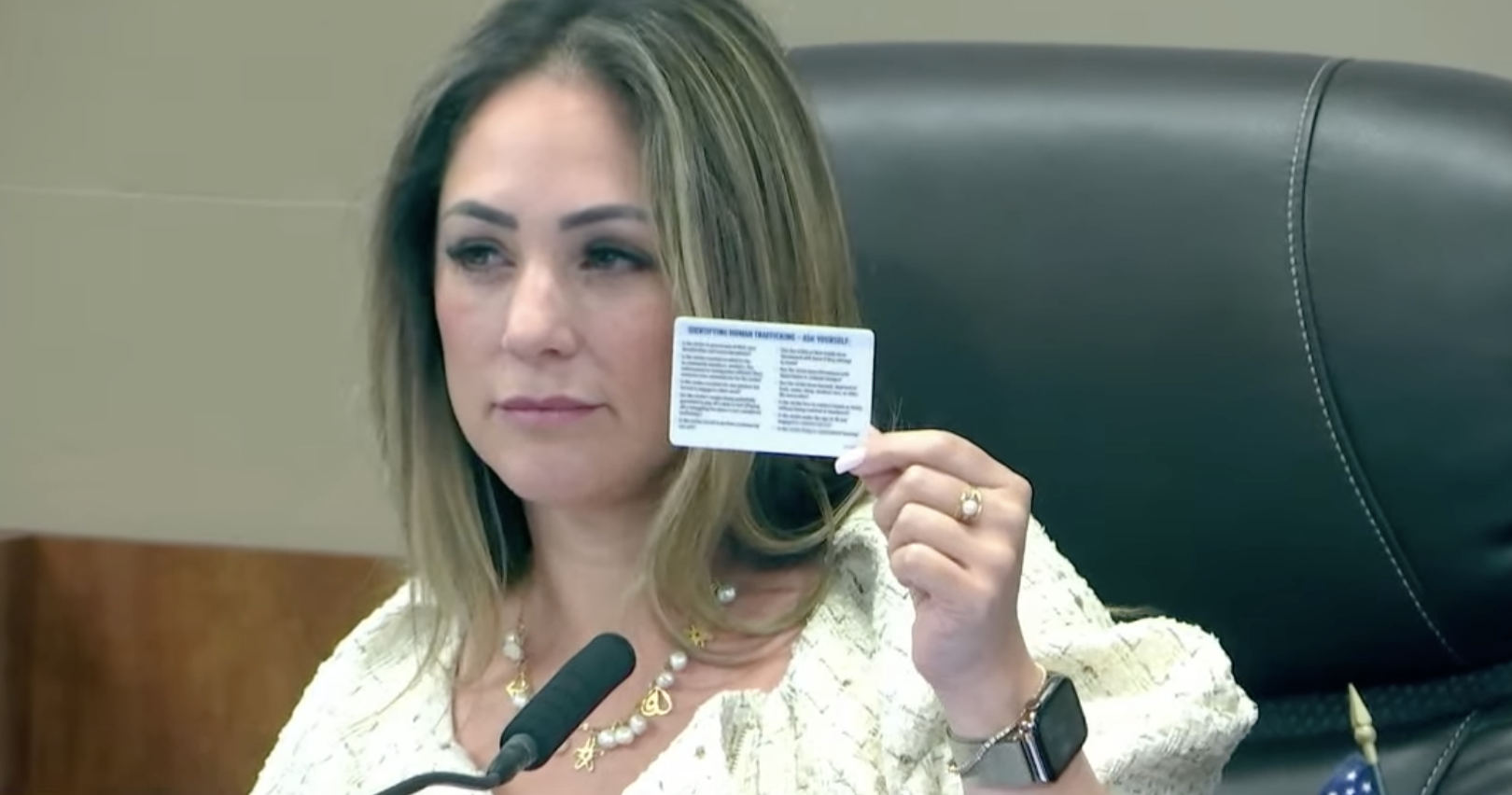 people to do.
It’s not a radical idea. In fact, victim advocates say EMS and firefighters often encounter trafficking victims before police ever do, especially during medical emergencies.
Castro’s item would have simply directed the city manager to work with experts from the Miami-Dade Sexual Assault Response Initiative, a non-profit run by forensic nurses who work directly with sexual assault and trafficking victims across Miami-Dade, to develop a program for the city’s first responders. At absolutely no cost to the city because MDSARI will be working with grants.
Read related: Mayor Obsession: Vince Lago takes his Melissa Castro fixation to Tallahassee
Instead of a vote, the idea got something else. A delay. And that, after nearly two hours of pointless discussion that had one aim: tear down the legislation as weak and undefined.
The pushback would seem counterproductive. This was a no-brainer, right? It wouldn’t cost the city a thing. Nothing like this  training exists. But it was rejected simply because it was Castro’s idea. And Mayor Vince Lago can’t let her have a win. Even if it is good for the community.
Lago was backed, of course, by his echo chamber — Vice Mayor Rhonda Anderson and Commissioner Richard Lara. The mayor also had the city manager bring in city leadership to argue that the training already in place was sufficient. Police Chief Edward Hudak and Fire Chief Marcos De La Rosa told commissioners the city already provides instruction on dealing with vulnerable populations and human trafficking.
Really. Because additional, specialized training at no cost to the city is superfluous?
Read related: Coral Gables Mayor Vince Lago has a terrible track record with public safety
Let Ladra tell you that what the two chiefs of public safety said does not jive with the records.
The training framework referenced during the meeting by de la Rosa relies in part on standards developed by the Texas Health 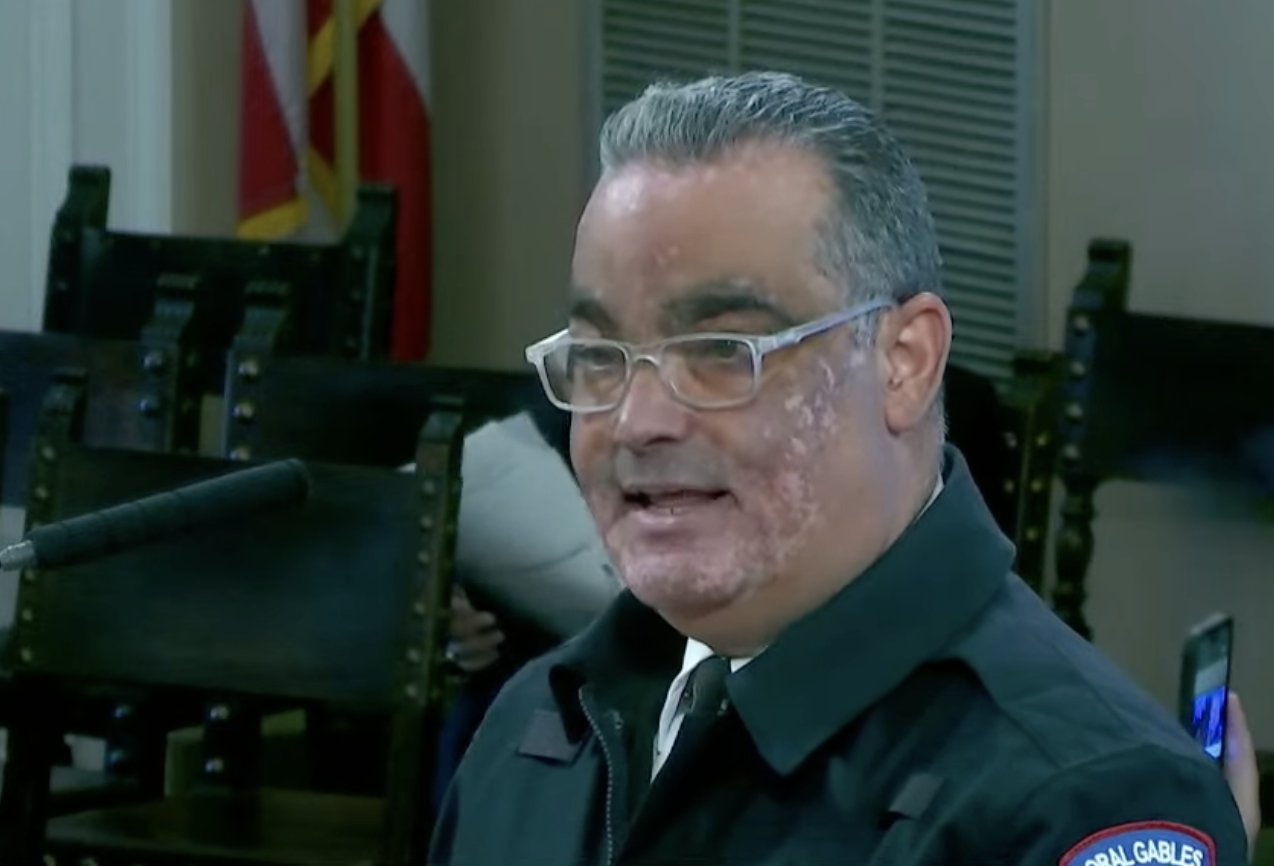 and Human Services Commission and materials tied to the U.S. Department of Homeland Security Blue Campaign, a national awareness initiative aimed at helping first responders identify trafficking victims.
First of all, the laws and circumstances around human trafficking in Florida are way different than they are in Texas. Secondly, at one point in the discussion, Hudak said he wasn’t familiar with the Blue Campaign — despite its presence in the trafficking training materials the city allegedly uses.
That doesn’t exactly inspire confidence in what he says.
Lastly, it looks like the online training devotes one whole hour to human trafficking. That looks more like a footnote.
The debate also highlighted something longtime observers of Gables politics have noticed: When Coral Gables talks about human trafficking, the conversation often drifts to Southwest 8th Street, the stretch along the Miami border where the city has focused enforcement for years. As if that is where the crime is contained.
The city banned hourly motel rentals back in 2016. Later came joint enforcement agreements allowing Coral Gables police to  operate along parts of that corridor in cooperation with Miami. More recently, Lago appeared before the Miami City Commission to support discussions about acquiring problem properties along the strip (which would make them ripe for development).
Read related: Human trafficking as a zoning strategy: Vince Lago takes his act to Miami
Those policies target locations where trafficking might occur. What they don’t necessarily address is what happens when a victim ends up in the back of an ambulance.
That was Castro’s point.
There are generally two ways cities approach trafficking policy. One focuses on enforcement — raids, patrols, nuisance properties and corridor policing. The other focuses on identification and victim response — training healthcare workers, paramedics and social-service providers to recognize warning signs and connect victims with help. Both approaches matter.
But in Coral Gables, the enforcement side has historically moved much faster.
Castro spent months researching best practices and coordinating with local experts to bring the training proposal forward.
For now, it’s parked.
And you can bet it’s personal.
“This is a resolution that puts it on the right track. We are kicking the can down the road two weeks just because it wasn’t our idea, it was Mellisa Castro’s idea,” Commissioner Ariel Fernandez said, adding that “many ideas come up here as resolutions without a plan.”
And, in fact, there have been several resolutions that simply ask or direct the city manager to negotiate the details. And, in fact, Vice Mayor Anderson has such a resolution directing the city manager to conduct a public awareness campaign linked to the FIFA World Cup. No details on how much this would cost or how he would do it. Just a directive. Like dozens of votes have been.
Like Castro’s item was at the last meeting.
But Ladra bets that Commissioner Lara won’t find the details scant this time. Because that’s only because it’s not Castro’s idea.
This kind of independent, government watchdog reporting is crucial to transparency and democracy. And more so every day. Help shine a light on the darker corners of our community with a contribution to Political Cortadito. Click here. Ladra thanks you for your support.

Coral Gables puts hold on victim-centered human trafficking training added by Ladra on
View all posts by Ladra →
