
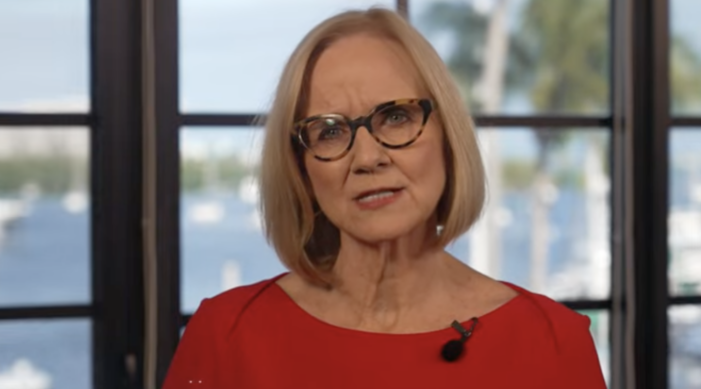
Miami didn’t need a State of the City address at the end of the month. Not technically. Not politically. Not theatrically.
Outgoing Mayor Francis Suarez had already taken his victory lap — his last SOTC address — on January 15, neatly buttoned up, ribbon tied, legacy laminated. Under the city charter, this annual report must be delivered between November 1 and January 31. So the box was checked. Curtain call completed.
Which is exactly why newly-elected Miami Mayor Eileen Higgins doing one anyway matters. Because this wasn’t about obligation. It was about ownership.
Just six weeks after being sworn in, Higgins delivered her first SOTC via video on Saturday — low on pomp, high on intent — and framed it not as a reset, but as a hand on the wheel. It wasn’t so much a speech about what she inherited, as it was about what she plans to fix.
“It has been a pleasure to sit on the dais with our commissioners as we work together to shepherd in a new era of civility,” she 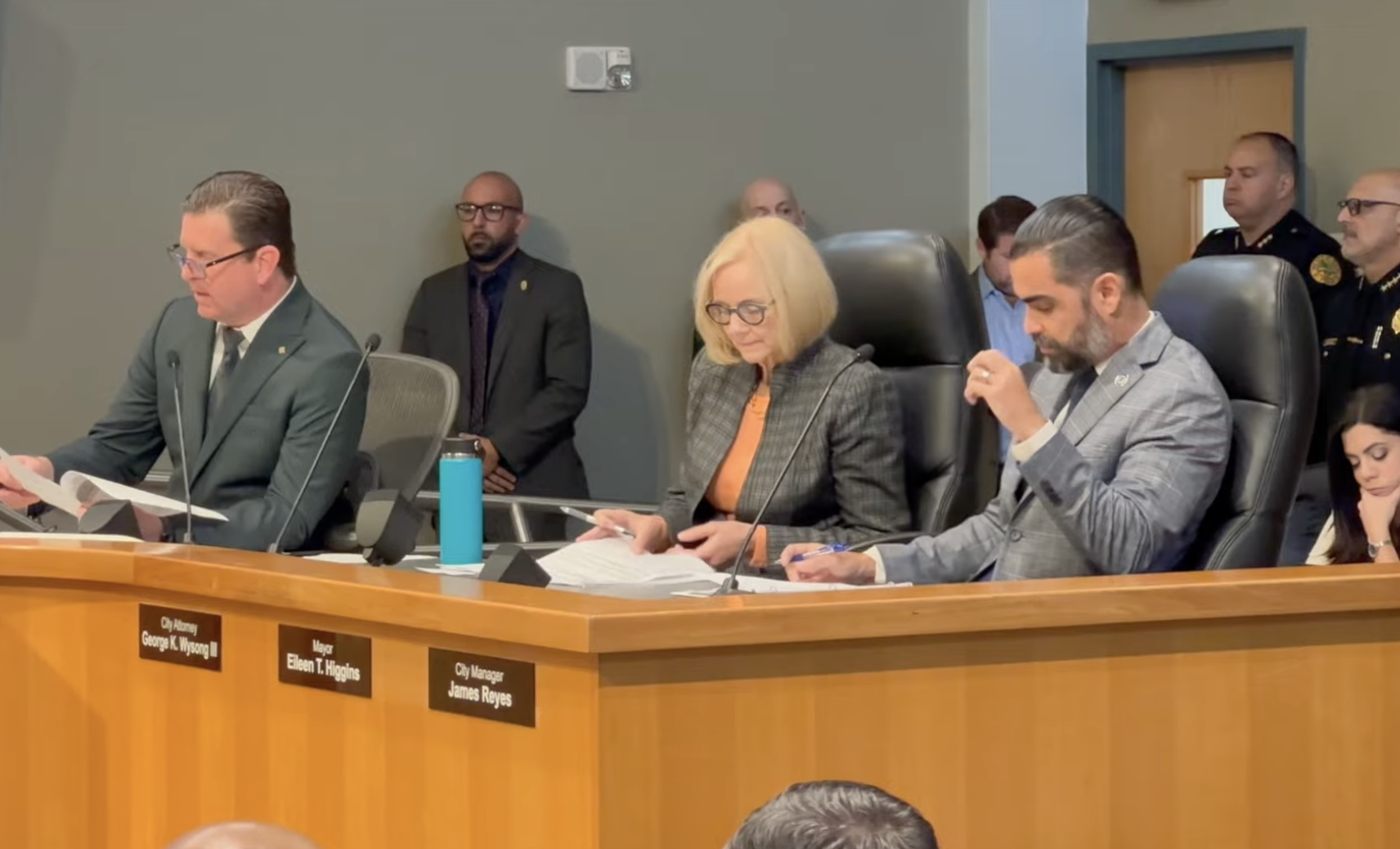 starts, firing off the things to be proud of: Low crime, low unemployment, and more than 2,000 small businesses opening.
“But the state of a city is more than numbers on a page. It can be found in the words of its people. Estoy escuchano, listening to residents telling me what they need… and listening to city workers, who are showing me what’s broken and what they are ready to fix,” Higgins said.
Those lines alone told you everything Suarez-era Miami rarely did: This mayor is looking down the organizational chart, not just up at donors, developers, or cable news cameras.
Read related: Eileen Higgins goes into Miami City Hall with a fire extinguisher and a smile
Higgins’ address was spare — just over five minutes long — and almost stubbornly unflashy. No skyline poetry. No crypto cameos. No audition for higher office. Instead, she leaned into a deceptively radical idea for Miami City Hall, an idea she has been hammering at since the campaign: “People want a City that treats them like customers, solves problems, and delivers results.”
In Miami, where government has often treated residents like interruptions, that’s a small sentence with big implications.
She announced that she had moved the mayor’s office from the sailboat-lined, ceremonial Dinner Key City Hall, to the administration building, known as the Miami Riverside Center, where most of the central city staff works.
“It’s beautiful but it’s not where the people work,” Higgins said about City Hall. “I don’t want public servants driving 20 minutes 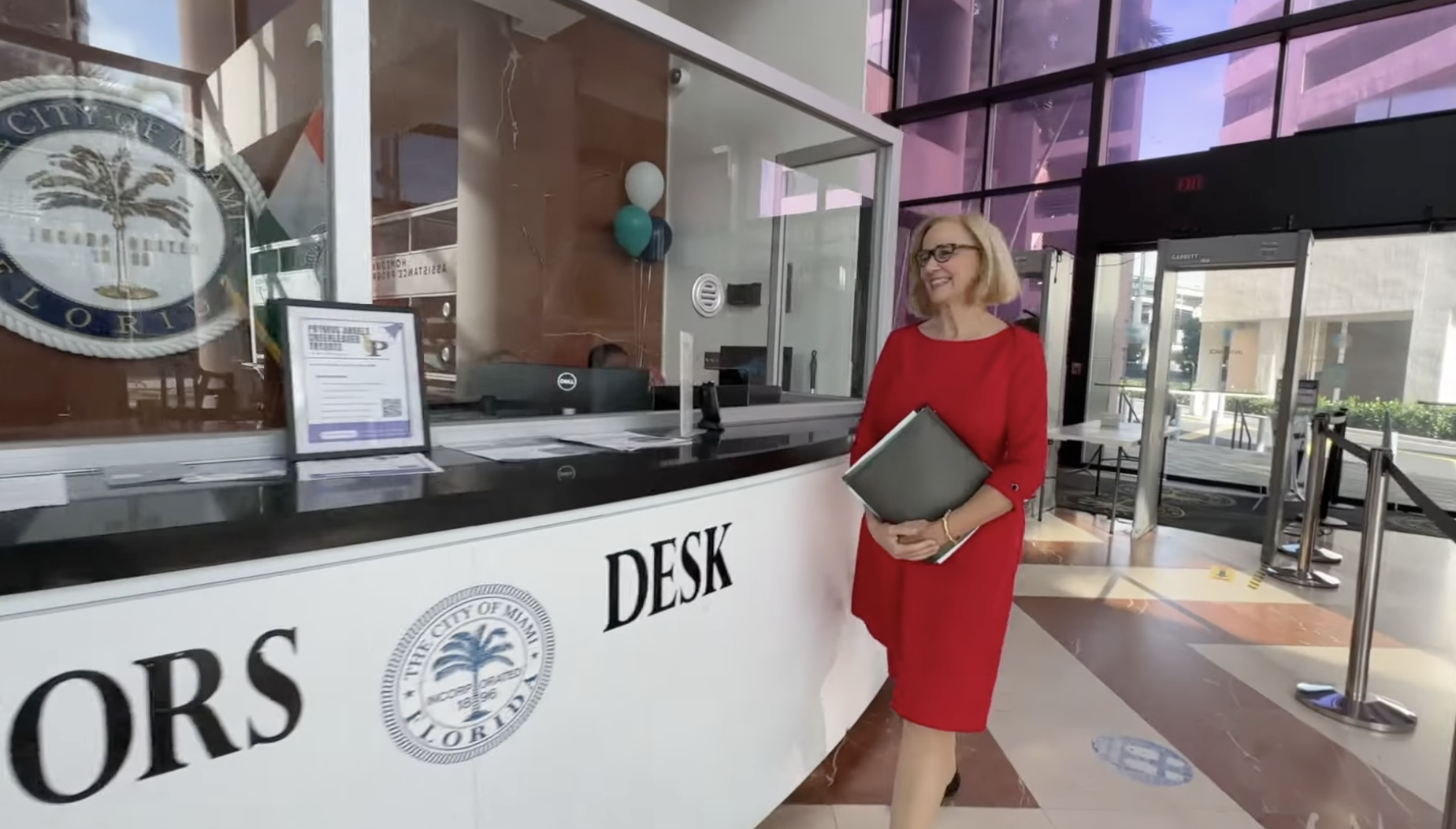 to see their mayor. I want to be with them, supporting them, getting the work done. For you.
“This will be the place where we propel the state of our city forward from strong to stronger. We’ve a city ready for change. A team ready to deliver it. And a government ready to work for you.”
She talked about that team, led by City Manager James Reyes — chosen for his “transformational leadership style” — and Chief of Staff Maggie Fernandez and including an economic team, a legislative team, and a community engagement team “to be my eyes and ears, listening to residents and ensuring projects get done.
“Together, we’ll reshape how the city of Miami works,” Higgins said, announcing “sprint teams” to solve neighborhood problems. “When we can implement changes immediately, we’ll do it that day. when we need to adapt city code, we’ll do it that month.
Read related: Miami Mayor Eileen Higgins names James Reyes warden, er, city manager
Most of the speech, which was peppered with Spanish, centered on service delivery — the unsexy stuff that actually defines quality  of life: permitting delays, responsiveness, coordination, accountability. Higgins didn’t announce grand new programs. She signaled a culture change, which is harder and far more threatening.
Her message, repeated in different ways, was clear: City Hall should work for people, not make them work around it.
Housing hovered just beneath the surface — as it always does in Miami — with Higgins pointing to the need to modernize systems that slow construction and drive up costs. Transit and connectivity got nods. Public safety was framed not as bravado, but as neighborhood trust. And threaded through it all was a quiet rebuke of the chaos residents have come to accept as normal.
“This State of the City is about where we are, and where we are going,” she said, “toward a safer, stronger, more responsive Miami that works for you.”
Notice the pronoun. Not for investors. Not for the brand. For you.
Read related: La Gringa Eileen Higgins makes history with Miami mayoral election victory
And here’s the political subtext Ladra can’t ignore: Higgins didn’t have to do this speech. She chose to.
Doing a second State of the City in the same month risked comparisons — and that may have been the point. Suarez’s farewell was 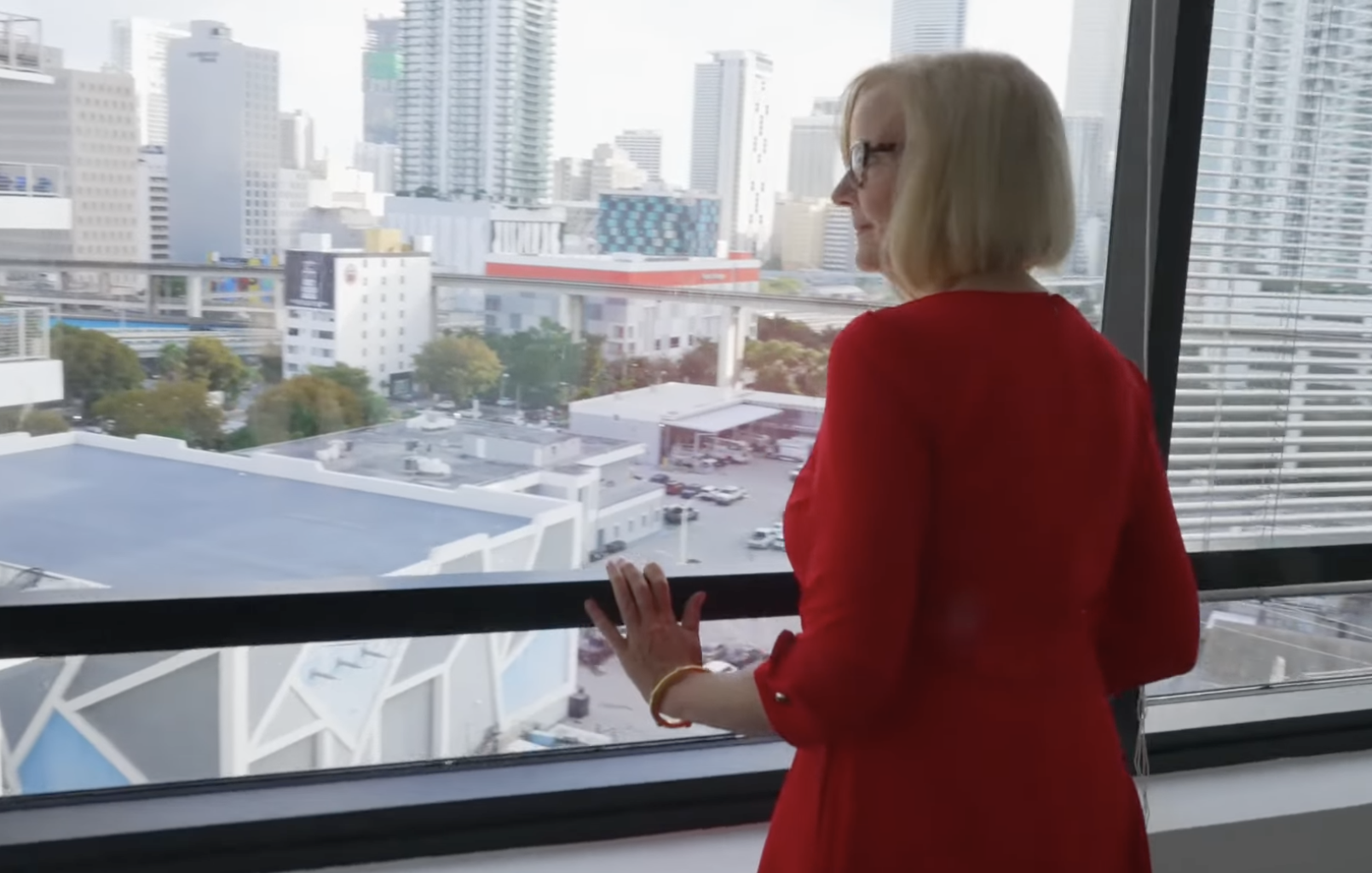 about legacy. Higgins’ debut was about operations. One looked backward with polish; the other looked forward with a checklist. One might first assume it’s an ego thing, but did Ladra mentioned it was five minutes long. And she didn’t promote it. In fact, there’s been no news coverage on it.
In Miami, where mayors often govern like influencers, Higgins is signaling she intends to govern like a manager. Whether that survives commission politics, union realities, and Miami’s allergy to patience remains to be seen.
But the message was unmistakable: The campaign is over. The listening has begun.
And the city is no longer the backdrop — it’s the job.
If you like what you read on Political Cortadito, please consider making a contribution to support the independent, government watchdog journalism on this website. Thank you!

Miami Mayor Eileen Higgins is quick to offer a bonus State of the City address added by Ladra on
View all posts by Ladra →
