
UPDATE: This item has been deferred because there was no proper notice. We can’t make this shit up.
There is a rare and fragile bird sanctuary in the middle of Kendall.
Not a planned one. Not a county-created one. An organic one — a tree island in a lake on the long-shuttered Calusa Country Club golf course where egrets, anhinga, wood storks, spoonbills, white pelicans and tri-colored herons, a state-protected threatened species, have decided, on their own, to build a thriving rookery in the middle of suburbia.
And now, once again, a developer wants to kill it.
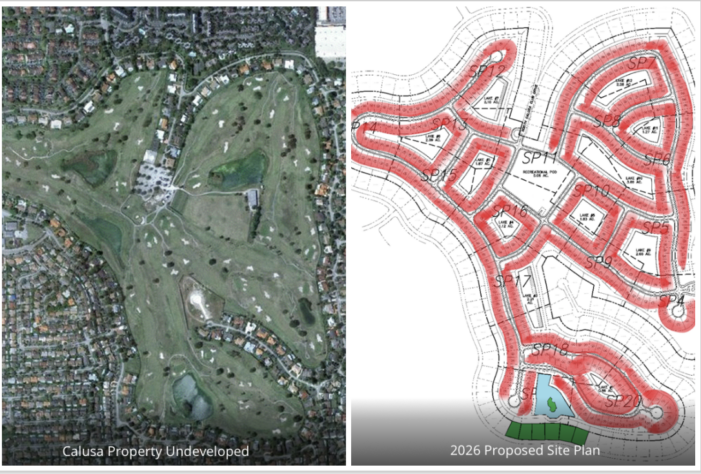
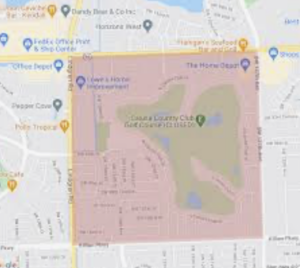
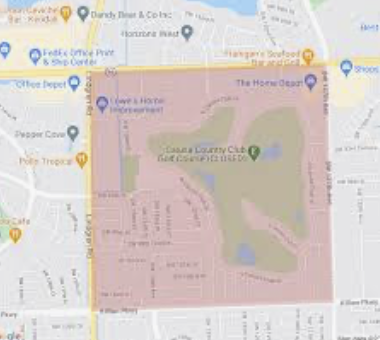
Nearly five years after Sunrise-based GL Homes — the second largest homebuilder in South Florida after Lennar– won approval 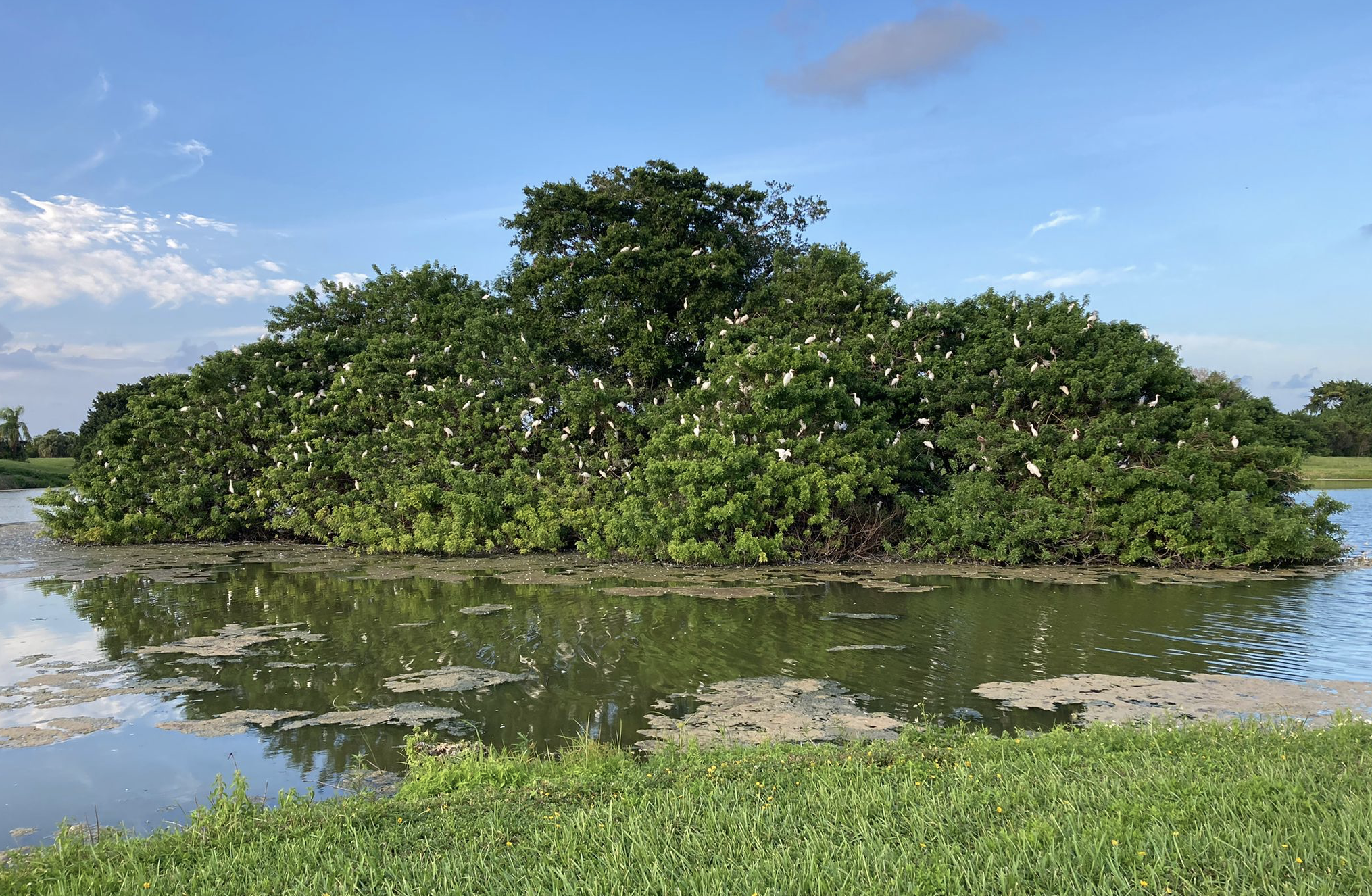 to redevelop the former golf course, the developer is back before the Miami-Dade County Commission this week seeking approval for an application to build 540 homes in a gated community on land that will continue to be zoned parks and recreation. They want tennis courts. Pickleball. A clubhouse. And a ring of houses encircling a living bird sanctuary.
If this story feels familiar, that’s because it is.
In 2021, the County Commission approved essentially the same project — until neighbors sued and won. Not because the project was rejected on its merits, but because the county failed to provide proper public notice for the final zoning hearing. The Florida Supreme Court agreed and refused to hear an appeal of a lower judge ruling that the county had to start over.
Read related: Calusa development on hold as appeals court upholds overturn of zoning vote
So here we are. Round two.
Same developer. Same site. Same neighbors. Same rookery. Same concerns. And, remarkably, the same public notice problems.
On Tuesday night — less than 48 hours before the project is scheduled to go before commissioners — the county held a webinar about the development. It was announced only hours before it happened.
Apparently, Miami-Dade learned absolutely nothing from losing a Supreme Court case over inadequate public notice.
And it was not entirely helpful. There was no new information. No opportunity to speak or ask questions.
Neighborhood activist Amanda Prieto, who leads the Save Calusa fight and has become a wildlife and botany expert to  save her community, says the new version of the plan still asks for too much and still puts the rookery at risk.
The revised proposal shaves just ten houses off the original plan. Ten. So, it goes from 550 to 540. That’s not a compromise. It’s a marketing adjustment dressed up as environmental concern. It’s a slightly greener paint job. And it’s the planning equivalent of saying you’re on a diet — and switching from two croquetas a day to one and a half.
Read related: Calusa developers try to scare away wildlife before county mandated study
Also the rookery lake would be partially filled, which means decimating the birds’ habitat and foraging grounds. Homes would sit roughly 100 feet from the nesting island — and for the first time, houses would surround the rookery on all four sides, with no binding restrictions on noise or lighting.
“They’re setting the rookery up to fail,” Prieto told Political Cortadito. “This is a peaceful oasis in the middle of urban Kendall where they nest and thrive. We can’t just keep destroying their habitat.”
GL Homes Senior Vice President Dick Norwalk has always said he doesn’t have to negotiate. The land is zoned for up to 1,100 homes, But he knows no commission would approve that, which is why he is presenting roughly half. Like it’s a favor. The company insists the “scaled down” plan doesn’t just tolerate the wild birds, it now “enhances” the rookery — maintained by HOA fees — and notes the Florida Fish and Wildlife Commission has signed off. But environmental groups remain unconvinced.
After all, this is the same company that denied any endangered birds nested on the property when they came before the commission in 2021. The same company that paid off the homeowners adjacent to the golf course — known as “the ring owners” — in the hundreds of thousands of dollars to vote to dissolve the covenant. The same developer that started construction, to scare away the wildlife, even after a judge said the vote didn’t count because there was no proper notification.
It’s not exactly like they’ve been acting in good faith.
Read related: Construction disruption starts at Calusa after court invalidates zoning change
Two years ago, Miami-Dade officially agreed the island was a significant rookery. There is evidence of nests and fledglings from tri-colored herons and other birds. County staff — who sounded on Tuesday’s webinar like they were making the developer’s case — have said there were no fledglings in 2023 or 2025, but Prieto says that’s unlikely. They’ve seen the young, flightless birds 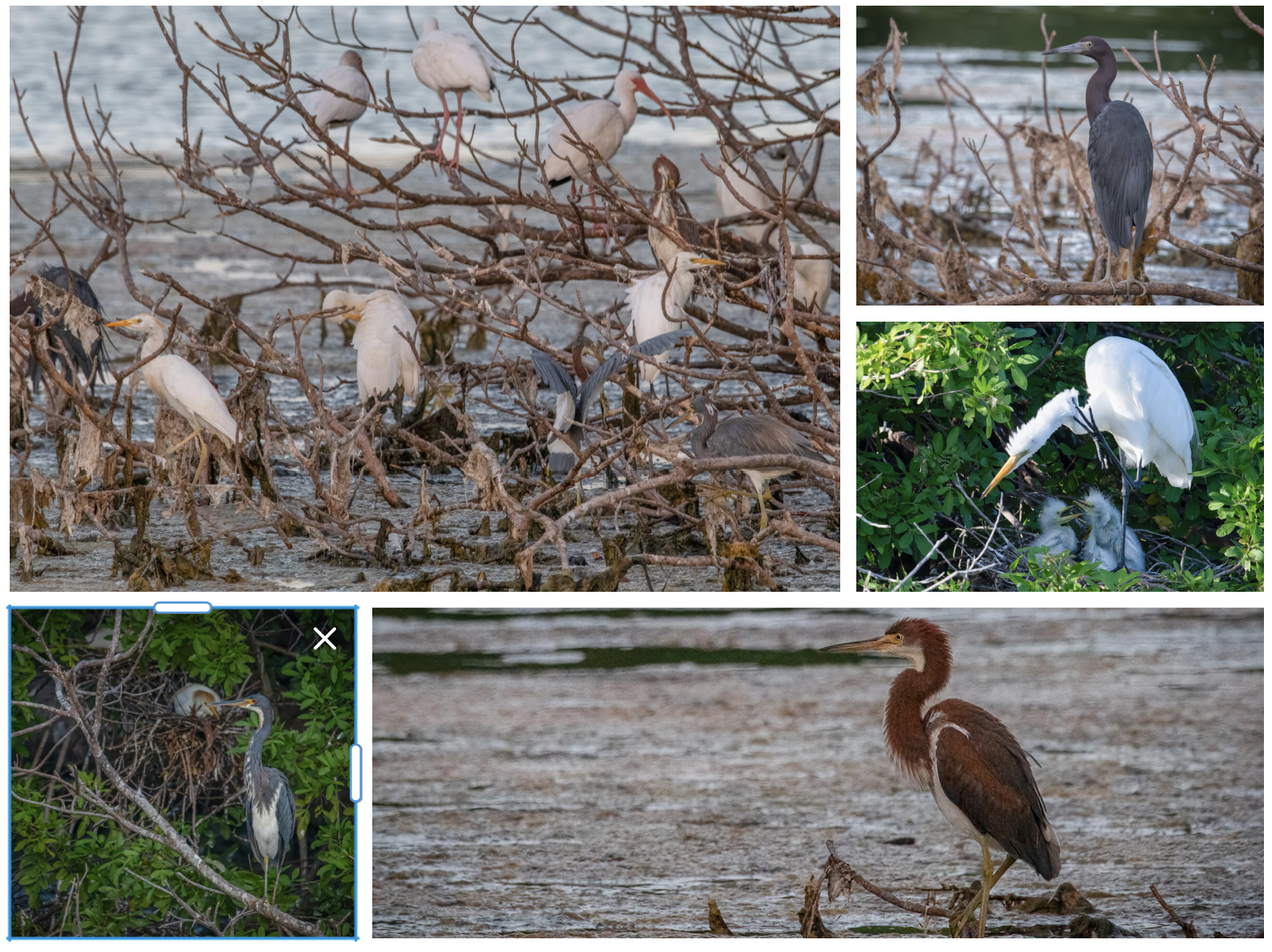 emerge from the dense trees. Just because you don’t see the nests, doesn’t mean they aren’t there.
Other protected birds may not nest there, but they feed and forage there, Prieto said.
Dennis Horn, a wildlife photographer who lives nearby, has documented the presence of many birds, including young tri-colored herons last summer. “The Calusa Rookery has been very busy this summer with all the new chicks. The new arrivals include tricolored heron, great egret, anhinga and cattle egret chicks,” Horn posted on NextDoor, with a series of photos. “We also have had little blue herons and a woodstork make an appearance.”
The Tropical Audubon Society has asked for a much larger buffer zone between the rookery and the homes. Science says it should be at least 330 feet from the edges of the lake. The developer has said they won’t have any construction on the homes within the 330 foot buffer during nesting season, but that doesn’t matter. Construction outside nesting season will still scare them away. Duh. But the admission indicates that they know their development will disrupt the wildlife.
Prieto would like to see 20 acres kept as a preserve around the lake and the rookery.
Read related: Calusa rookery shows active nesting where they want to build 550 homes
Let’s do the math. If there were only 250 homes built, instead of 540, and sold at the average of $1 million a piece, that still nets $250 million. At the bargain price of $800,000 a home, the developer would still make $200 million. A tidy little profit, since GL Homes paid $32 million to buy the West Kendall property from entities owned by the Bacardi family in a deal that closed in February 2021. The purchase was made by Kendall Associates I LLLP, a group managed by GL Homes.
By the way, Kendall Associates I gave $15,000 to Miami-Dade Commissioner Raquel Regalado, according to her last campaign 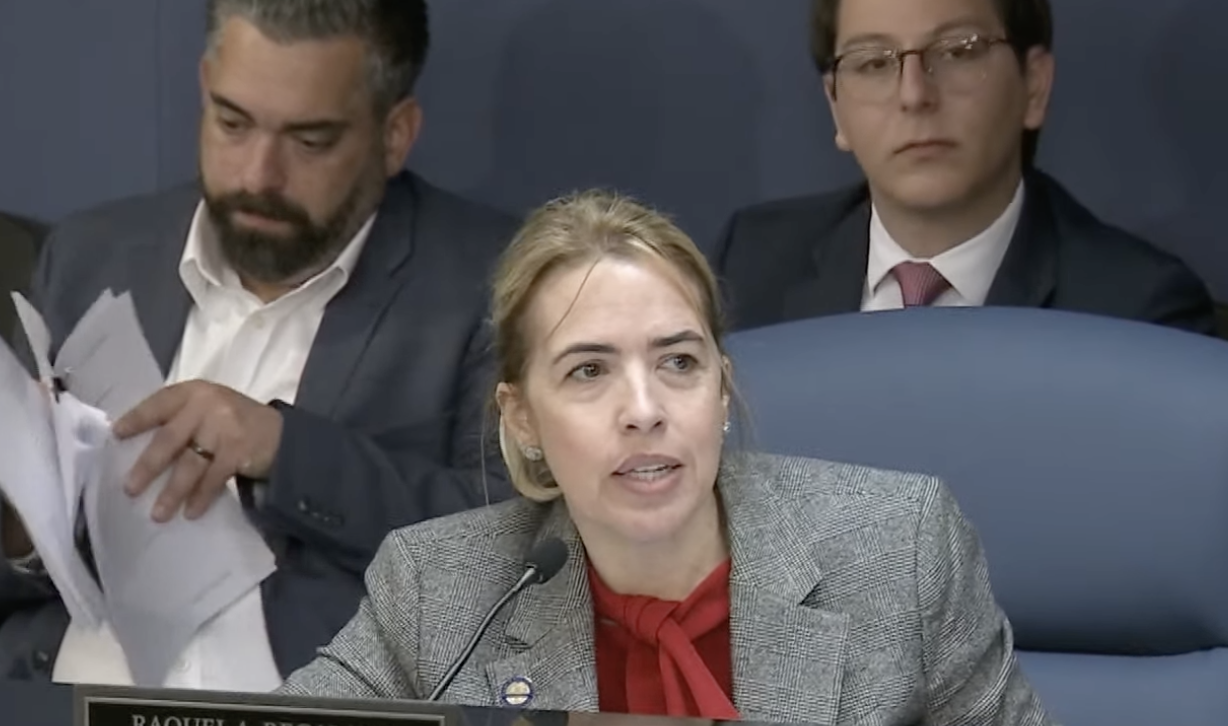 report filed for the final quarter of 2025. The District 7 commissioner, which covers Calusa, also got another $10,000 from companies with the names of the two addresses of he homes that the developer bought to tear down and build an entrance to the gated community. That’s at least one fourth of what Miami Herald reporter Doug Hanks said GL Homes contributed last year to all the commissioners’ PACs combined. Ladra suspects it is much more.
So, while Prieto and her neighbors are barred by county rules from privately lobbying commissioners on the zoning case, GL Homes has been busy participating in a different kind of process: political fundraising. Check. Or checks, as it were.
But there are several new commissioners who have never had a chance to vote on Calusa: Roberto Gonzalez, Marleine Bastien, Vicki Lopez, J.C. Bermudez, Mickey Steinberg, Anthony Rodriguez and Natalie Milian Orbis.
And then there’s traffic.
Because beyond the birds, there’s a very human concern: thousands of new daily car trips funneled through narrow neighborhood roads that were never designed for it.
A Miami-Dade Department of Transportation and Public Works (DTPW) review dated January 16 quietly adds a new condition: the developer must submit an additional traffic study to evaluate whether traffic calming improvements are needed along Calusa Club Drive — the two-lane, winding road residents already rely on to get in and out of their community of about 5,000.
That’s a pretty important detail. Except residents have not seen that additional study. And the zoning vote is happening anyway.
“Residents deserve to see this traffic study and weigh in on any proposed traffic calming improvements before public comment is provided and a zoning vote is held,” Prieto told county staffers in an email.
She has also raised detailed technical questions that DTPW has yet to answer.
- How will a proposed “turbo lane” on SW 104th Avenue function when there is a bus stop and crosswalk in the middle of the
 block — and no swale separating sidewalk from street?
 - Why is there no analysis of traffic impacts on Calusa Club Drive, when every resident of the new community will have to cross or use it to reach their homes?
- How is a December 10 traffic study sufficient when it collected only one day of turning-movement data — the same limited approach used in 2019 — for a development of this scale in an area never originally intended for dense residential construction?
- And if the county is serious about walkability, why not require an additional pedestrian entrance on the west side of the project, where an empty lot already exists, instead of forcing long internal walks just to reach schools or transit?
Prieto says she posed these questions during a December DIC meeting, followed up by email on January 5 and 6 — and has yet to receive answers from DTPW staff.
But the item moves forward anyway.
Read related: Court nixes zoning change on Calusa, and proven rookery must be preserved
That is the irony at the heart of the Calusa saga.
Neighbors fought the first approval because the county failed to properly notify the public. They won. The courts ordered a redo. And now, in the redo, the county is again rushing notices, holding last-minute webinars with no opportunity to engage, advancing votes while studies remain unfinished, and leaving resident questions unanswered.
Meanwhile, the birds continue nesting. Unaware that their home is the subject of legal filings, rezoning maps, traffic models, and political fundraising spreadsheets.
Thursday’s commission meeting will decide whether the Calusa sanctuary remains an organic refuge in the middle of Kendall — or becomes a decorative centerpiece in a ring of million-dollar homes.
And the neighbors? They’ll be back in their green Save Calusa shirts. Again.
Because in Miami-Dade, sometimes you don’t just have to fight City Hall. You have to fight it twice.
The county commission’s zoning meeting begins at 9:30 a.m. Thursday in commission chambers at County Hall, 111 NW First Street, and can be seen on the county’s website and on YouTube.
If you like what you read on Political Cortadito, please consider making a contribution to support the independent, government watchdog journalism on this website. Thank you!

Calusa project is back at Miami-Dade County — so is developer’s checkbook added by Ladra on
View all posts by Ladra →
