
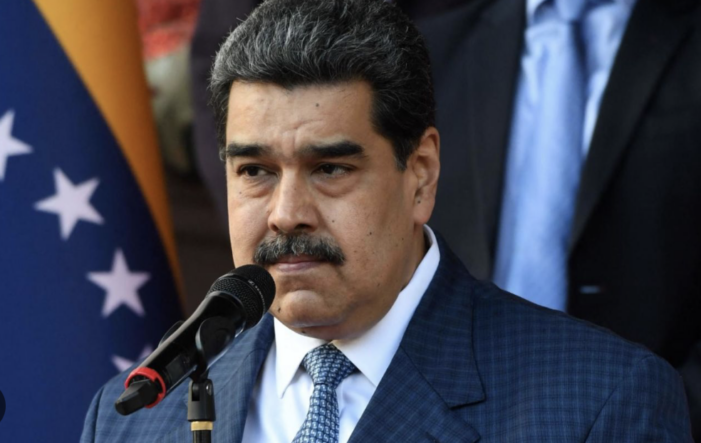
Trump talks oil, we watch a regime change in real time
So let’s dispense with the fairy tale right away.
This past weekend, the United States didn’t “assist democracy,” didn’t “help the Venezuelan people,” and didn’t conduct some tidy law-enforcement operation against a bad hombre with a cocaine habit.
The U.S. bombed a sovereign nation and abducted its sitting president and first lady.
And then, the next morning, the president of the United States stood at a podium and talked about oil infrastructure.
If you’re experiencing déjà vu, congratulations — you’ve lived long enough to recognize a pattern.
This was not a raid. This was a message.
Shortly after midnight Saturday, U.S. airstrikes lit up Caracas and surrounding regions. Targets weren’t just symbolic — they were 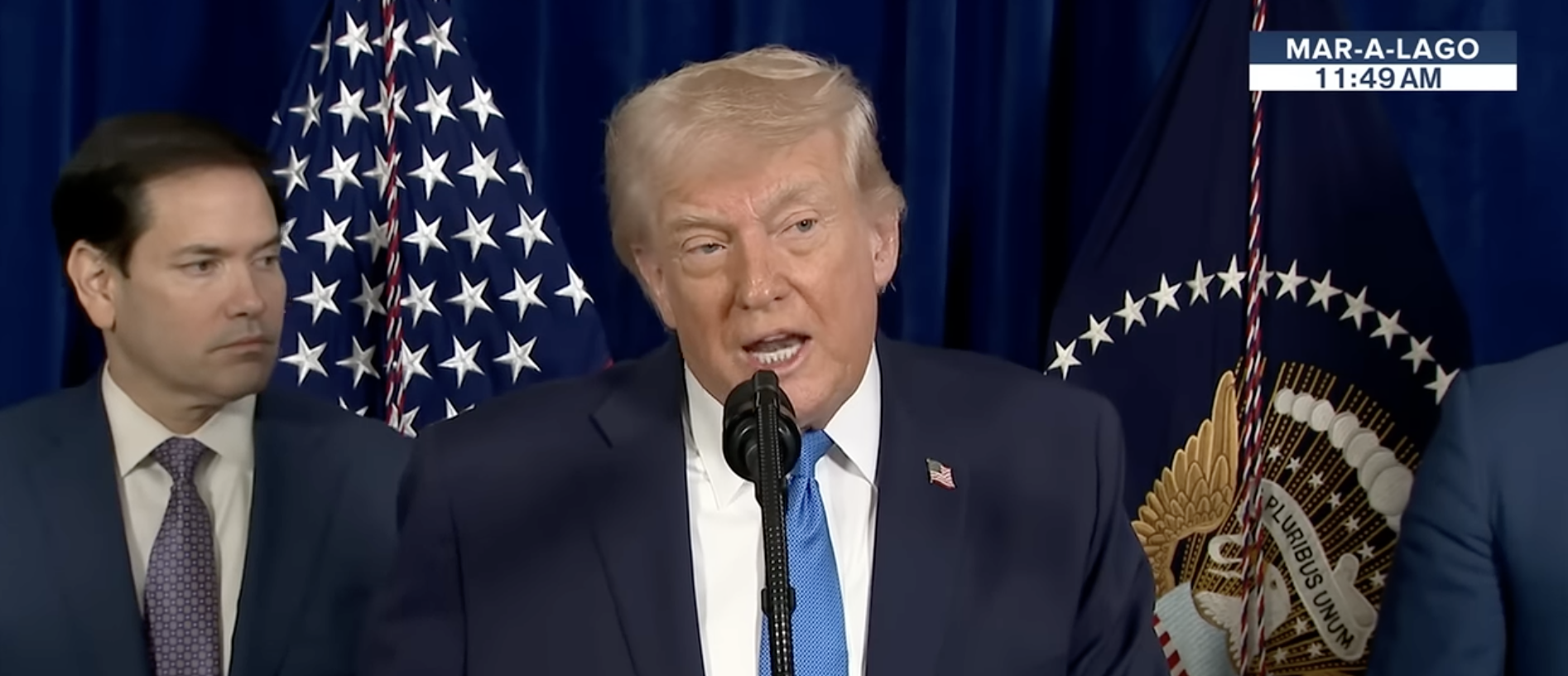 strategic: communications, military facilities, and government strongholds. Then came the headline that would have sounded unthinkable in any other era: Nicolás Maduro and his wife, Cilia Flores, were captured and flown out of the country by U.S. forces.
Not arrested. Not extradited. Extracted.
The administration’s justification? Narco-terrorism.
A phrase so elastic it now apparently authorizes bombing a country, overthrowing its leadership, and hauling a foreign head of state to New York to face charges — all without a declaration of war, congressional authorization, or meaningful international support.
That’s not law enforcement. That’s regime change with a badge slapped on it.
Read related: Maria Elvira Salazar’s immigration epiphany: Is it just late or performative?
Here’s where the mask slipped.
At the hours-later morning press conference, President Trump barely lingered on the legality, morality, or global fallout of the operation. Instead, he lingered on Venezuela’s oil potential, the need to “rebuild infrastructure,” and how the U.S. would temporarily run things to make sure everything was done “right.”
Right for whom, exactly?
Venezuela has the largest proven oil reserves on Earth. That fact didn’t suddenly appear overnight. It has hovered over every U.S.–Venezuela interaction for decades, like a neon sign screaming INTEREST HERE.
This wasn’t about drugs. This wasn’t about justice. This was about leverage, control, and resources — with narco-terrorism serving as the talking point.
Every empire needs a moral pret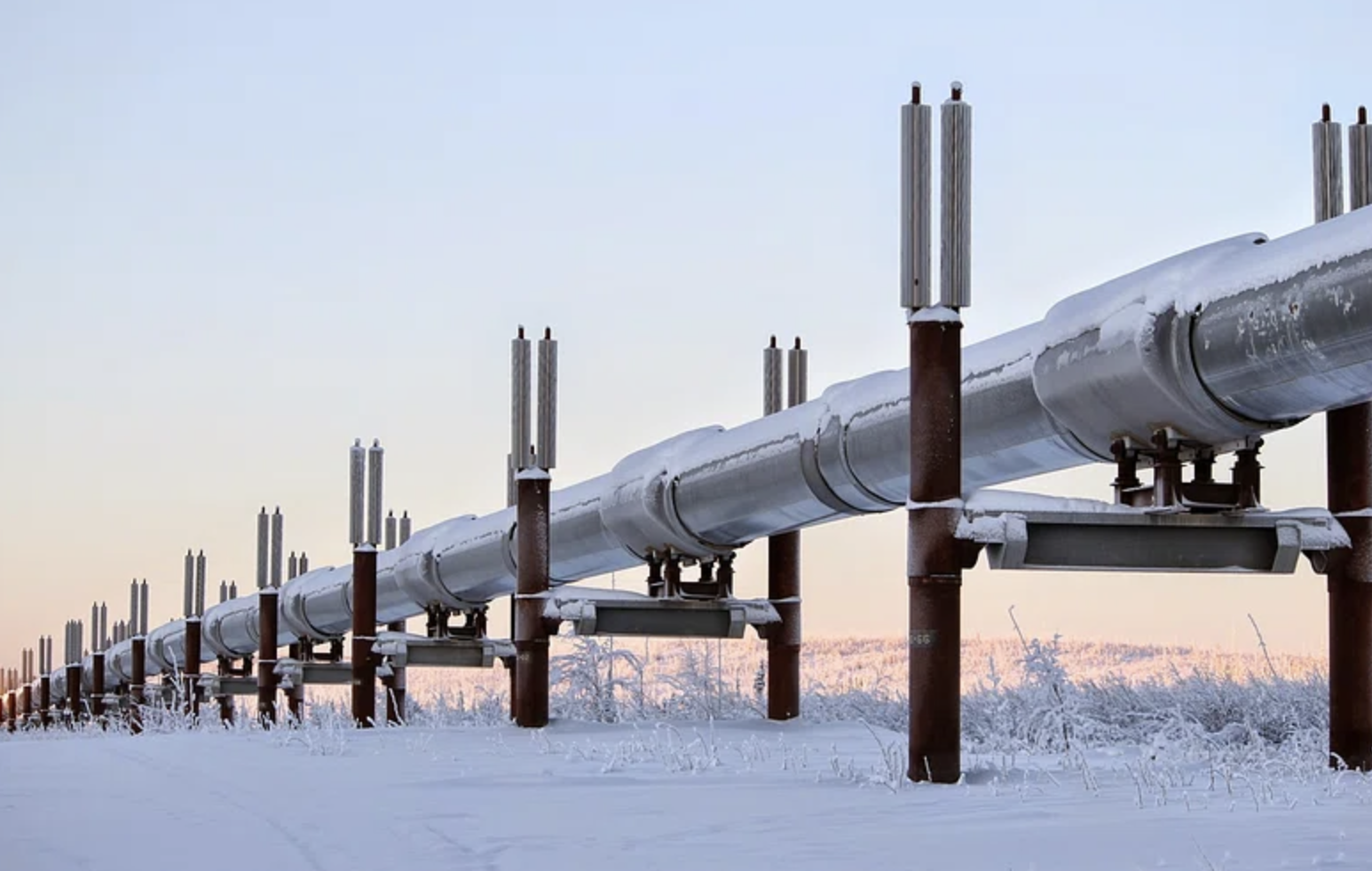 ext. This one just happens to come with pipelines.
Around the world, the reaction was swift and furious. Allies called it reckless. Rivals called it an act of war. Legal scholars used words like illegal, unprecedented, and dangerous.
Because here’s the uncomfortable truth: If the United States can unilaterally decide that a foreign leader is a criminal, bomb his country, and drag him onto a U.S. plane — then the entire concept of sovereignty is optional.
And no, this won’t only apply to dictators everyone loves to hate. Precedents never stay neatly contained. Maduro can be awful — and this can still be wrong.
Let’s be clear before the trolls warm up their keyboards: Nicolás Maduro is no hero. His regime has been corrupt, repressive, and catastrophic for millions of Venezuelans.
But international law doesn’t work on a vibes-based system.
You don’t get to ignore borders because the target is unpopular. You don’t get to skip due process because you don’t like the defendant. And you don’t get to rebrand military intervention as a drug bust just because it polls better.
Two things can be true at once: Maduro can be terrible. And what the U.S. did can still be terrifying.
Read related: Donald Trump’s Thanksgiving social screed serves hate instead of turkey
Now comes the part Washington is studiously avoiding:
- Who governs Venezuela now?
- How long is “temporary” U.S. control?
- Which American companies get first crack at rebuilding and extracting?
- And what happens when Venezuelans decide they don’t want a foreign power “running” their country?
Because history has a way of answering those questions — and it’s rarely politely.
But don’t ask our esteemed Secretary of State Marco Rubio, who seems to have no plan except to tell Venezuela not to worry. This is not a war, he says. It just looks, sounds, and smells like one.
Rubio spent his Sunday morning talk-show tour assuring America — and presumably anyone still listening south of the Florida Straits — that the United States is merely “at war against drug trafficking organizations,” not against Venezuela itself. A comforting distinction, if you ignore the bombings, the seizures, the sanctions, and the thinly veiled threats.
On NBC’s Meet the Press, Rubio made it clear that oil sanctions will remain firmly in place, because nothing says narco-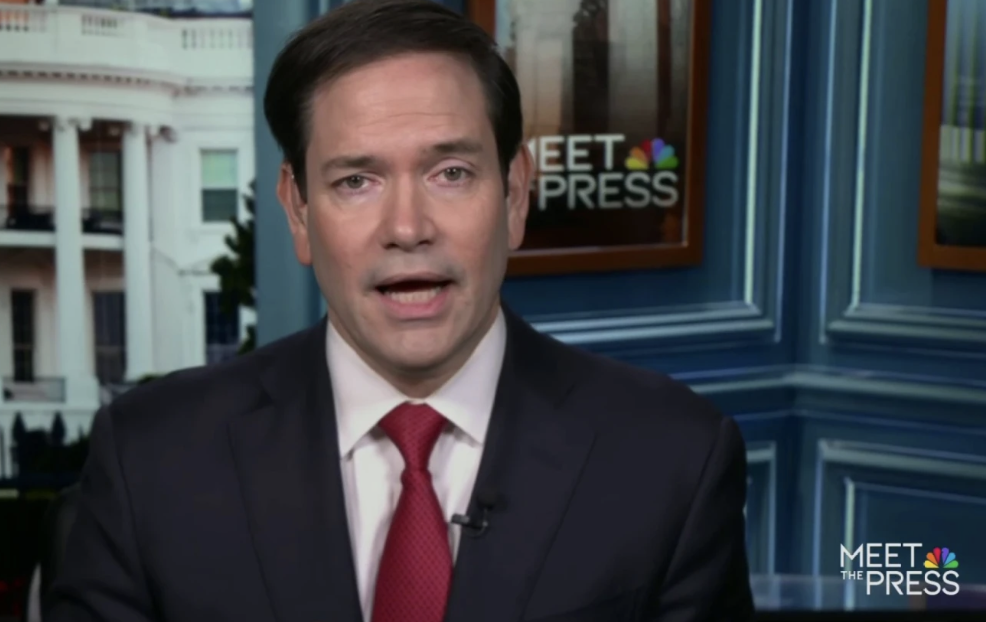 enforcement like strangling a country’s economy while openly reserving the right to strike “drug boats” headed toward the U.S. That, apparently, is what passes for precision these days.
Then came CBS’ Face the Nation, where Rubio insisted the U.S. is not occupying Venezuela — a denial carefully phrased to leave the door wide open. Asked whether that could change, Rubio didn’t exactly say no. Instead, he explained that President Trump doesn’t like to “publicly rule out options” available to the United States.
Translation: don’t rule anything out.
“What you’re seeing right now,” Rubio said, “is a quarantine that allows us to exert tremendous leverage over what happens next.”
A quarantine. Not a blockade. Not an occupation. Not a war. Just a whole lot of leverage, military force, economic pressure, and executive ambiguity — all in the name of fighting drugs, while openly protecting oil interests and keeping future escalation comfortably on the table.
And while Rubio was busy threading needles on Sunday morning television, the reaction on the ground — right here at home — was anything but theoretical.
Read related: Miami icons step up where politicians won’t to denounce ICE raids, tactics
Even before the sun came up Saturday, Venezuelans in exile were already gathering at El Arepazo, the Doral restaurant that long ago stopped being just a place to eat and became a kind of unofficial town square for a displaced nation. By noon, the crowd had swelled into the hundreds. Music blared. People chanted. Cars crawled past honking horns, Venezuelan flags waving out of windows, joy and disbelief spilling into the streets.
For many, there was real relief. Maduro, the man they blame for Venezuela’s economic collapse and political repression, was finally gone. That alone felt like something worth celebrating. But beneath the noise and the flags, there was also something else: uncertainty.
That unease deepened after Trump’s Saturday press conference, when he casually declared that the United States was “going to run” Venezuela through a team supposedly “working with the people of Venezuela.” Run it how? For how long? With whose consent? The answers were, predictably, not provided.
But for now, Maduro is gone. That is like a drug.
Confusion turned to irritation, however, when Trump suggested that opposition leader María Corina Machado lacks the support or respect to govern — a statement that landed like an insult in a community that has spent years organizing, voting, and lobbying around her leadership. But, c’mon, he’s still salty about the Nobel Peace Prize going to her. Talk about lack of support, huh?
Some bristled even more at the implication that figures from the Maduro regime, including Vice President Delcy Rodríguez, might somehow be part of Venezuela’s future. In Doral, that idea is a nonstarter.
Many here believe that Edmundo González Urrutia, the opposition candidate in the 2024 election, legitimately won — a  result dismissed by Maduro’s controlled electoral apparatus but recognized by the United States, which has already labeled González the “president-elect.” After Maduro’s capture, Machado herself called for González to be formally recognized as Venezuela’s rightful leader, a position that resonates loudly at El Arepazo and beyond.
The European Parliament, for example considers them leaders and honored them in December 2024.
So yes, there were cheers in Doral. But there were also furrowed brows.
Because exile communities know this better than most: the fall of a dictator is only the beginning. And when Washington starts talking about “running” another country, even the happiest celebrations come with a sharp edge of suspicion.
This wasn’t a strike against narco-terrorism. It was a demonstration of power, a reminder that the U.S. believes it can still redraw the map when it wants to — as long as it uses the right buzzwords.
Oil was the tell. It always is.
And while the bombs may have stopped, the consequences are just getting started.
Political Cortadito can only exist with the financial support from readers like you. If you like what you read here, please consider making a contribution to support the independent, government watchdog journalism on this website. Thank you!

U.S. bombs Venezuela, snatches Nicolas Maduro — and calls it a drug bust added by Ladra on
View all posts by Ladra →
