

SB 700 takes aim at Alligator Alcatraz shenanigans
Florida lawmakers may finally be waking up and smelling the cortadito.
After years of the governor stretching “states of emergency” like chicle viejo to move money around with zero oversight, Sen. Carlos Guillermo Smith has filed SB 700— a bill that basically says “oye, enough of the permanent emergencies already.”
And make no mistake: this bill, filed Tuesday, has Alligator Alcatraz written all over it. In neon letters. Visible from the Turnpike.
Because what better reason to rein in emergency powers than the largest, most expensive, most secretive, most environmentally 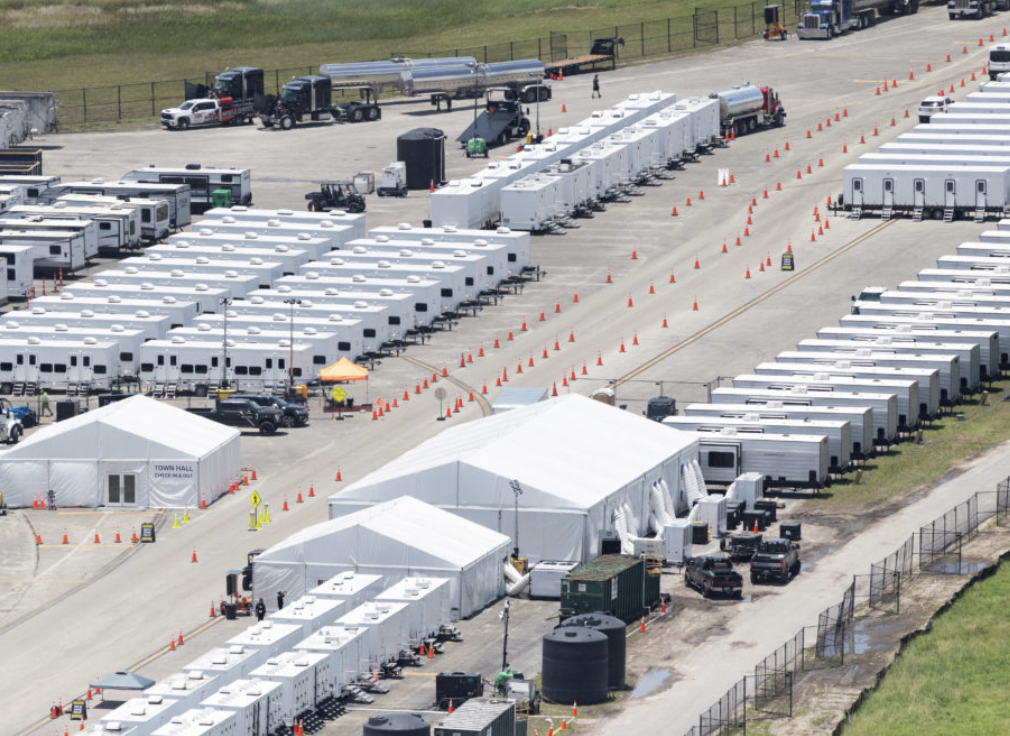 disastrous boondoggle Florida has cooked up in decades?
That’s right. Ladra is talking about the infamous, billionaire-sized swamp headache known as Alligator Alcatraz, the “temporary” migrant concentration camp that was built on an “emergency” order that just kept being extended… and extended… and extended… while the state signed enough no-bid contracts to make every lobbyist in Tallahassee salivate like a hungry pitbull.
Read related: Daniella Levine Cava finally takes a tougher stand vs Alligator Alcatraz
Under SB 700, a governor can’t just keep renewing an emergency forever — or for two years, or three, or however long it takes to funnel hundreds of millions of dollars into politically connected contractors. One year. That’s all the guv gets. ¡Y basta!
The bill says:
- Any state of emergency renewed by the governor expires after one year.
- After that, the only way to keep it going is a two-thirds vote of both chambers.
- And the Legislature has to put a firm end date — before the next regular session ends.
- Oh, and if lawmakers pull the plug? The governor has to immediately issue an order ending it.
- AND he can’t declare a “substantially similar” emergency right after to get around it. Bravo.
Let’s remember how we got here.
 Gov. Ron DeSantis declared an “immigration emergency” and, with that magic wand, bypassed standard procurement rules — you know, the boring democratic, open, transparent ones — and green-lit a massive detention camp in the Everglades on the Dade-Collier airstrip.
Within days — not weeks, not months, days — the state signed an avalanche of contracts:
- $78.5 million to Critical Response Strategies for guards, management, IT staff, and the “warden”
- $25.6 million to Longview Solutions for site prep, fencing, roads
- $22 million for portable toilets and shower trailers
- Over $21 million for access control and ID systems
- Dozens more contracts for meals, maintenance, security, transport, and equipment
- Total initial contracting: about $245 million
- Projected annual operating cost: around $450 million per year
This was an economic miracle — not for taxpayers, but for every vendor with a lobbyist and a pulse.
And what did Floridians get for their half-billion-dollar swamp palace? A legal battle. After spending all that money in that “emergency urgency,” after all that environmental and community bulldozing, the place was shut down in August by a federal district court judge who ruled that its hasty construction in the fragile Everglades violated federal environmental laws. At first, it looked like Alligator Alcatraz was done. Authorities were shipping out the detainees and shutting down operations.
Then an appeals court overturned that decision. The judges were appointed by Donald Trump and one of them is married to an attorney whose firm has gotten millions from the DeSantis administration . Their pause allowed Alligator Alcatraz to stay open.
“It’s roared back into action,” said Noelle Damico, the director of social justice at the Workers Circle, an advocacy group that has helped organize vigils attended by hundreds of protesters at the jail every weekend since it opened in early July. Immigration activists who have maintained a near constant presence at the gates say they have witnessed countless buses coming and going as the 3,000-capacity camp rapidly fills up again; attorneys for some of the detainees say Immigration and Customs Enforcement (Ice) officials are escalating efforts to block access to their clients.
Read related: Independent medical access must be given to detainees at Alligator Alcatraz

SB 700 also tightens financial oversight. Once an emergency hits one year, the Auditor General must audit quarterly, not annually.
Quarterly audits mean you can’t bury the receipts in a box labeled “mañana” and pray no one notices for 12 months. Quarterly audits mean Alligator Alcatraz-style spending sprees won’t be able to hide behind stacks of emergency paperwork and political fog machines. Quarterly audits mean someone, somewhere, is going to have to answer for the money.
Okay, so SB 700 doesn’t fix everything. The Legislature still has to want to challenge the Governor — which historically, in Florida, has been about as likely as the Dolphins making the Super Bowl.
But it’s a start.
Because this habit of using “emergency powers” as an ATM for pet projects, political theater, and sweetheart contracts has gotten muy fuera de control. When an “emergency” lasts longer than some marriages, it stops being an emergency and starts being, well, a business model.
Alligator Alcatraz wasn’t a glitch. It was the logical outcome of a system with no brakes.
SB 700 is at least a brake pedal.
Let’s see if lawmakers have the cojones to step on it.
If you like what you read on Political Cortadito, please consider making a contribution to support the independent, government watchdog journalism on this website. Thank you!

How long should Florida’s guv be able to spend on a ‘State of Emergency’? added by Ladra on
View all posts by Ladra →
