
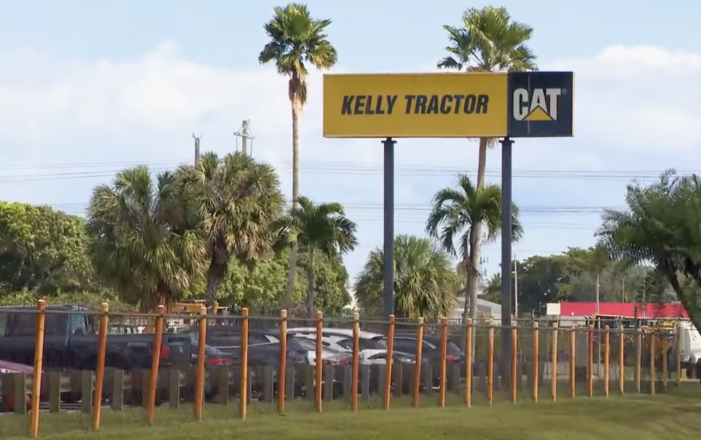
Family wants to build on 246 acres of wetlands
The bulldozers are still in the parking lot. And the Urban Development Boundary is back on the agenda.
Again.
After months of delays, negotiations, a veto, reconsiderations and enough procedural gymnastics to qualify for the Olympic team, Miami-Dade commissioners are scheduled Tuesday to once again decide whether Kelly Tractor can build its massive new headquarters on a 246-acre tree farm outside the county’s Urban Development Boundary.
But somewhere along the way, this stopped being a story about Kelly Tractor.
It’s become a referendum on whether the UDB still means anything to anybody. Or whether it’s becoming more of a mere suggestion.
Read related: Daniella Levine Cava vetoes approval of Kelly Tractor complex across UDB
The project itself is enormous.
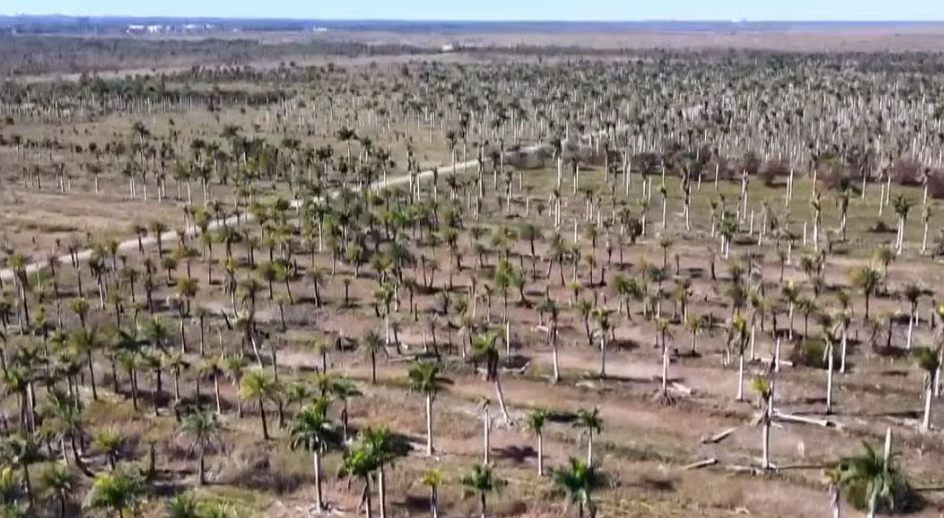
Kelly Tractor wants to relocate and expand its operations onto a site west of Sweetwater near where the Dolphin Expressway eventually runs out of road and patience. The proposal includes more than 2 million square feet of offices, repair facilities, storage areas, rail access, fueling operations, 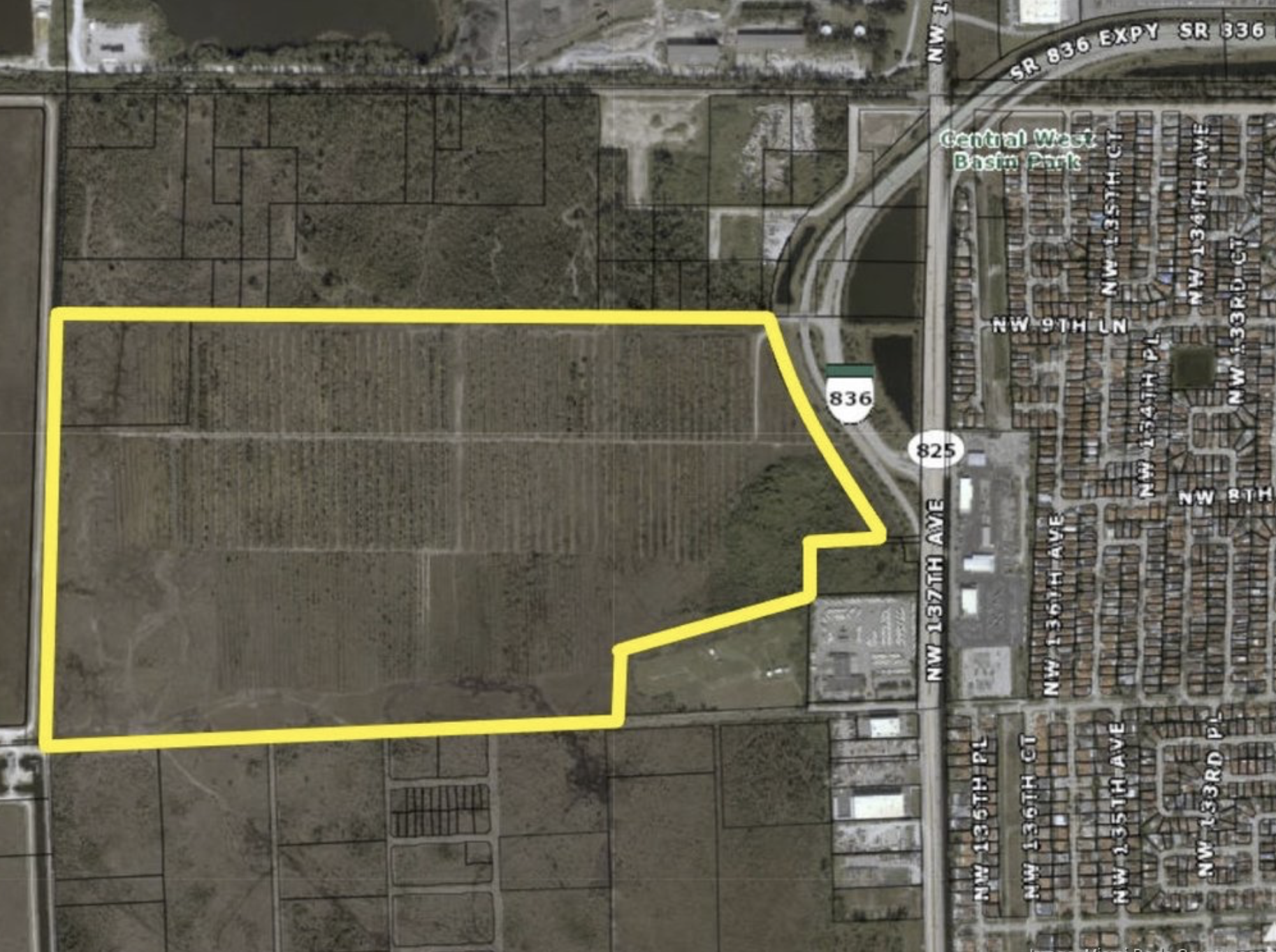 truck washing facilities and even a helicopter pad.
Supporters say the project would preserve high-paying industrial jobs and keep one of South Florida’s most established family-owned companies in Miami-Dade.
Critics say that’s not the point.
The point, they argue, is where it’s being built. And how.
The Kelly Tractor family will say that this is not an application to move the UDB. And that’s true. It’s an application to change the “text amendment” — but it basically accomplishes the same thing, and allows the construction of a massive facility across the urban development line. The family will say that this site is not inside Everglades National Park. And that’s true. But it is in the broader Everglades ecosystem and immediately adjacent to wetlands that connect to the Everglades. It is on roughly 246 acres of mostly wetlands that exist between urban development and the western conservation areas as part of the greater Everglades watershed.
In a Facebook post and a statement released online, to drum up support or thwart opposition, Christopher Kelly, says that the county had considered the site in 2017 for a wastewater collection site and that his use is not going to be worse than that. He also promised economic development and environmental stewardship.
“Today, Kelly Tractor employs 400 colleagues throughout South Florida, most of whom live in Miami-Dade County. The proposed project would 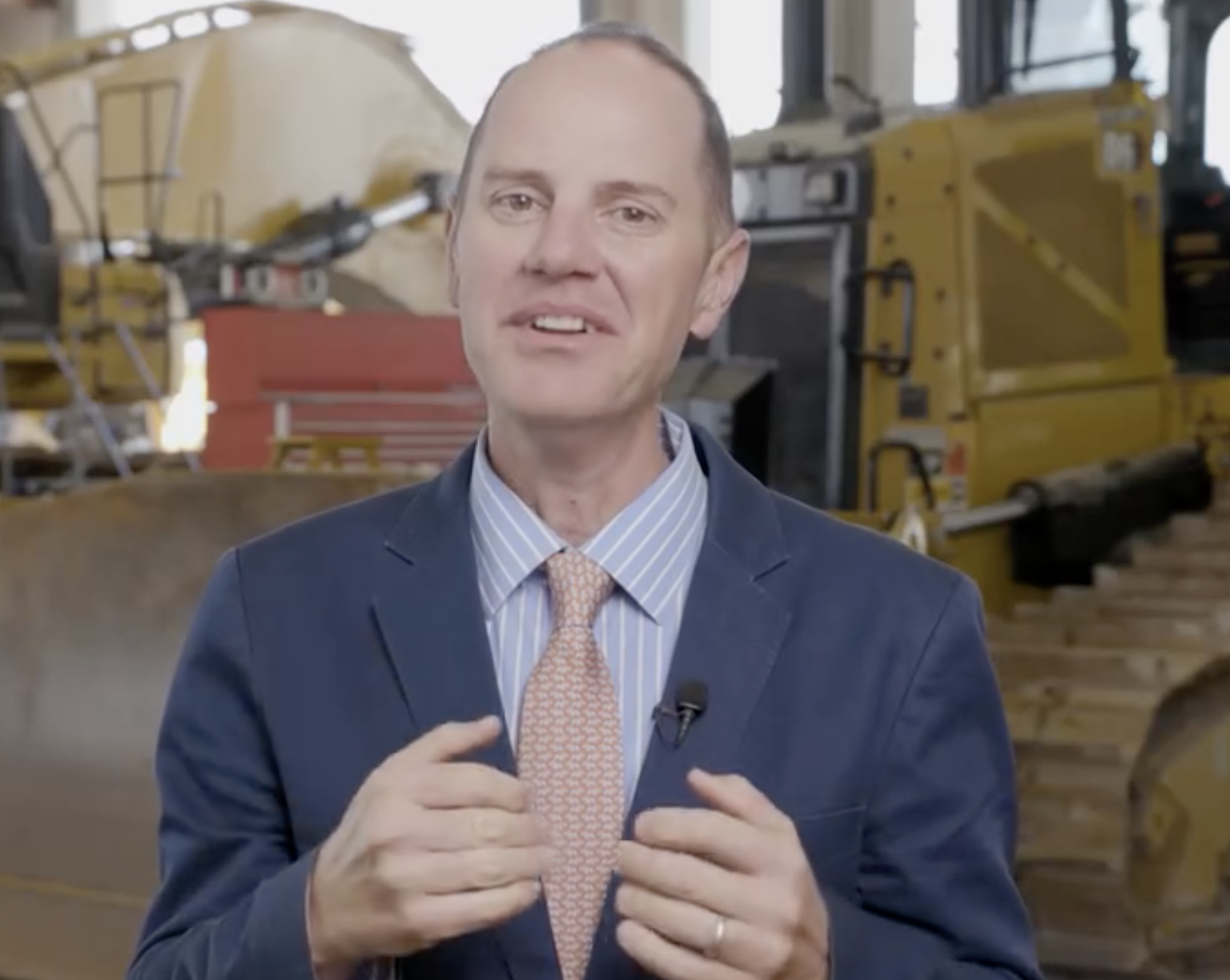 create 1,000 permanent jobs, generate meaningful local tax revenue and deepen workforce partnerships with Miami-Dade County Public Schools. These are real careers that support real families, the multigenerational livelihoods at the heart of our company’s promise to this community,” Kelly says in his statement.
“I ask our leaders and neighbors to consider the full record: the historical context, the independent analyses, the environmental safeguards, the public-safety benefits and the economic opportunity for working families. Let decisions be guided by facts, fairness and a long-term vision worthy of Miami-Dade’s future,” he added. “We remain committed to listening, engaging constructively and doing the hard work necessary to reconcile differing interests with solutions that protect our natural resources while enabling responsible growth.”
Yeah, yeah, yeah.
For decades, the Urban Development Boundary has served as Miami-Dade’s growth-control line, separating urban development from agricultural land, wetlands and environmentally sensitive areas connected to the Everglades.
The line has always been controversial. Developers hate it. Environmentalists love it. Politicians usually claim to support it until somebody important (read: rich) wants to build something on the other side. And somebody always does. There have been an increasing number of applications for development across the UDB.
Which brings us to Kelly Tractor.
Read related: Kelly Tractor showdown delayed as Miami-Dade commission sidesteps veto
In January, the commission voted 9-2 in favor of the project. Mayor Daniella Levine Cava vetoed it, arguing that Kelly had failed to demonstrate why it could not build inside the UDB and why an exception should be made for a private industrial headquarters.
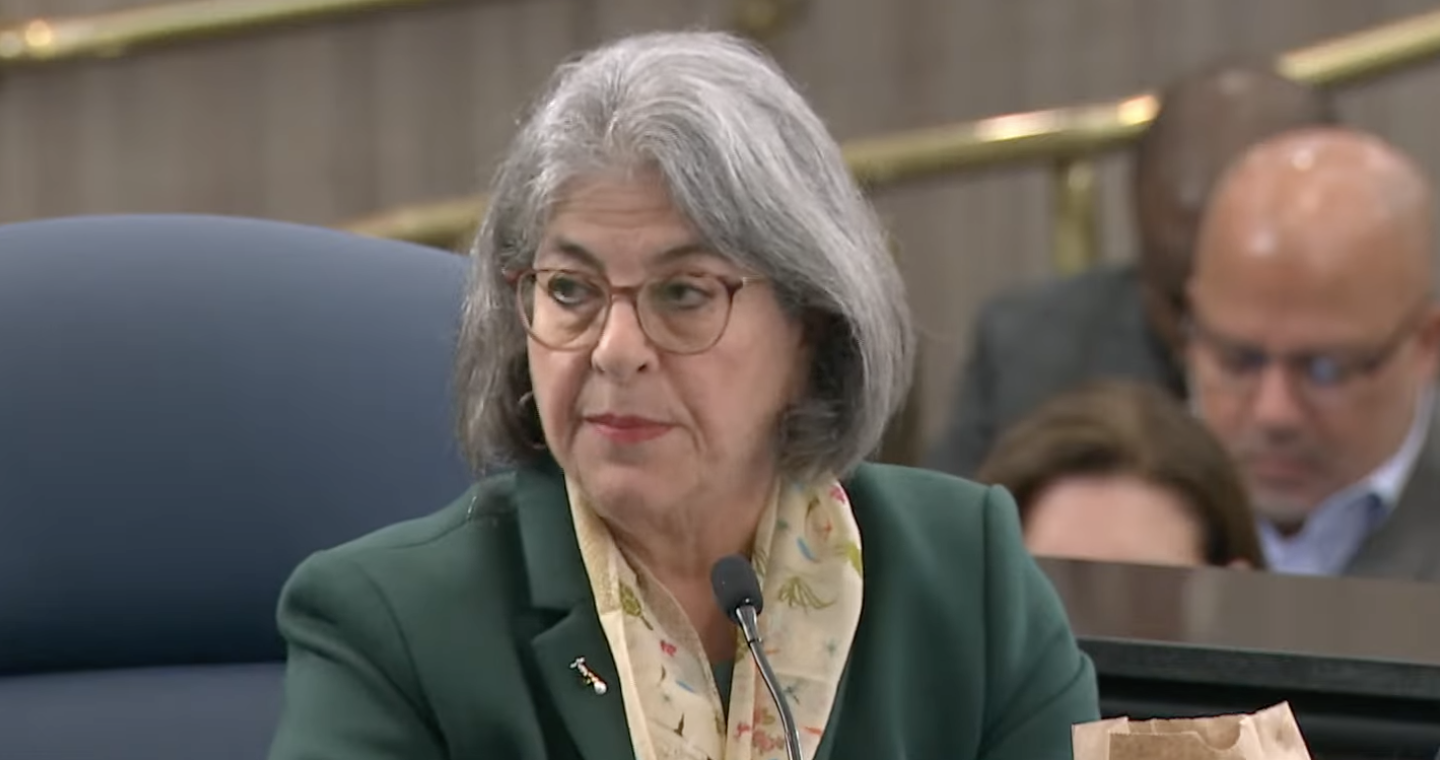 “The Urban Development Boundary exists for a reason,” the mayor said.
Environmental groups agree.
They argue that once Miami-Dade starts approving large-scale development outside the line special exceptions and text amendments, the question isn’t whether more projects will follow. It’s how many.
And that’s the concern being shouted from rooftops by groups like Hold the Line Coalition.
They’re not particularly worried about Kelly Tractor. They’re worried about what comes after Kelly Tractor.
Because precedents have a funny habit of becoming policy.
Today it’s a respected family-owned equipment company. Tomorrow it could be somebody proposing warehouses. Or commercial development. Or something even larger.
Once the door opens, critics say, it becomes harder to explain why the next applicant should be denied.
Kelly Tractor insists those fears are overblown and agreed to a delay after losing Commissioner Raquel Regalado, who flipped and sided with the mayor after the veto. The applicant needed all 9 votes to override the veto.
The company has spent months revising its proposal, preserving additional wetlands and providing more detailed explanations of why it needs a large, contiguous site that it says simply doesn’t exist elsewhere inside the UDB. Company officials have repeatedly argued that they are not seeking 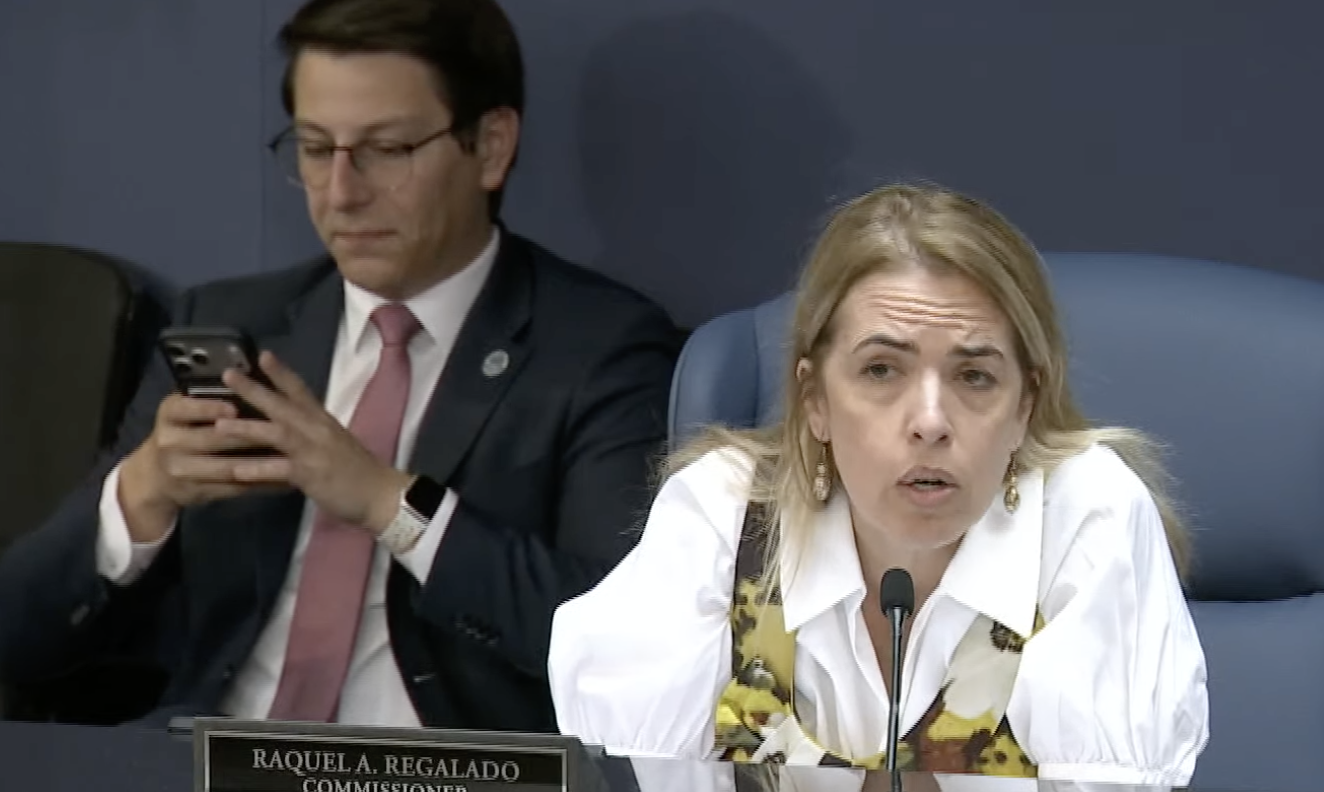 to move the boundary itself and that the project is uniquely suited to this particular property.
Regalado now appears to hold the political fate of the proposal in her hands. More recently, she has indicated that Kelly’s revisions have addressed many of her concerns. At one point she declared the parties were “90% there.”
In Miami politics, of course, the final 10% is usually the expensive part.
Read related: Miami-Dade considers an industrial hub on 245 acres of protected wetlands
If Regalado returns to the project’s column, Kelly likely reaches the magic number of nine votes needed to approve the proposal and potentially override another mayoral veto.
If she doesn’t, the project could remain stuck in limbo.
Meanwhile Commissioner JC Bermudez has made clear that he sees the debate as bigger than this one application.
“It was never meant to be a permanent line,” Bermudez said of the UDB.
 Environmentalists nearly fainted. Because for them, that’s exactly what this fight is about.
Not Kelly Tractor. Not Caterpillar equipment. Not warehouses. Not helicopters.
The line.
Whether it still means something.
And whether future applicants will be able to point to Kelly Tractor and say: “You let them do it.”
Commissioner Danielle Cohen Higgins said that a vote to approve the Kelly Tractor application would create an avalanche of such applications. “And our Urban Development Boundary is going to cease to exist.”
That’s why Tuesday’s vote matters.
One side sees a respected local company trying to expand and create jobs. The other sees the first crack in a wall that has protected western Miami-Dade for decades. Kelly Tractor may win. Kelly Tractor may lose.
But one thing is already clear: This was never a story about tractors.
This kind of independent, government watchdog reporting is crucial to transparency and democracy. And more so every day. Help shine a light on the darker corners of our community with a contribution to Political Cortadito. Click here. Ladra thanks you for your support.

The Kelly Tractor fight really isn’t about tractors at all — it’s about the UDB added by Ladra on
View all posts by Ladra →
” Unfortunately, in the end, Raquelita always folds.”
I would say she puts on a show to make it look like she cares but in the end she takes that special interest money because the ” consultation fee ” they can legally get is BIG money .
Why is this vote not being put to the People? The People have no financial interest. That’s why 11 people have no right to allow anyone to go over that UBD line.
IT’S THERE FOR A REASON!
In 1970, the Urban Development Boundary (UDB) originated for a critical survival reason: to safeguard crucial natural resources such as the Everglades and the Biscayne Bay watershed, ergo the water we drink! In future decades, perhaps now, water is the defining natural resource of the 21st century. The decision to keep the UDB inviolate is a commitment to future generations who will count on clean water for their survival. Commissioner Rachel Regalado’s vote in support of holding the UDB will echo in eternity as the Miami-Dade County Commissioner who stood against ravenous development and for the people of Miami-Dade. Politically, it will signal whether she has the mettle to be Miami-Dade’s next strong mayor.
The BCC will vote to move the UDB and so it will continue until there is no UDB left. Miami Dade County as it currently stands is on an unsustainable path for several reasons. Please remember that the average resident cannot compete with developers. They have the money and unfettered access to your elected officials. The residents, on the other hand, are lucky if we get a response to our emails. The only ones to blame are us, the residents. We continue to vote for these career politicians that betray their duty and commitment to residents. If this passes, please make sure you look at how your commissioner voted and work to vote them out.
Racquel Regalado always shows her greedy side. She votes for developers and for scammers who fund her campaigns. Nature is crucial to South Florida. We need fresh water. We need the UDB to be protected.
OUR CORUPT POLITICIANS and Their Lobbyist ? Same Answer$$$$$$$$$$$$$$$$$$$!
It is also about jacking up the price of the land to the south ahead of potential highway in order to cash in for the political contributors who have been speculating on land for the past several years. This is disgraceful.
Jobs, affordably priced housing vs. “infill development” read that, continue the pile-up traffic on already congested roads…we all know there isn’t much land left….but it’s not the Maginot Line either, people.
Unfortunately, in the end, Raquelita always folds. If she does this time, this constituent is done with her.
Is the UDB re-evaluated at certain intervals? Is it supposed to be as it currently is in perpetuity? We know that developers are dying to build beyond the current limit. A system built on perpetual growth is unsustainable.